Last Updated on June 17, 2026 by Melissa
Yellowstone covers more than 2.2 million acres of geysers, hot springs, and wildlife corridors. Grand Teton rises nearly 7,000 feet straight out of the valley floor with some of the best hiking in the American West. Together they make up one of the most spectacular national park road trips you can do — and one that rewards anyone who shows up with a solid plan.
We visited both parks as part of our goal to complete all 63 U.S. national parks, and this combination is one of the most spectacular trips in the country. This guide covers what actually works — logical routing, the best lodging bases, what to prioritize, and a full day-by-day itinerary.
2026 Updates Worth Knowing Before You Go:
- Death Canyon Trailhead in Grand Teton is closed for the entire 2026 season for major construction — plan hikes accordingly as this will push more traffic toward Jenny Lake trailheads.
- Non-U.S. residents now pay an additional $100 per person surcharge at both Yellowstone and Grand Teton as of January 2026.
- Always check the NPS website for current road conditions and closures before each driving day — Yellowstone road construction is ongoing in summer months.
Why Visit Yellowstone and Grand Teton Together
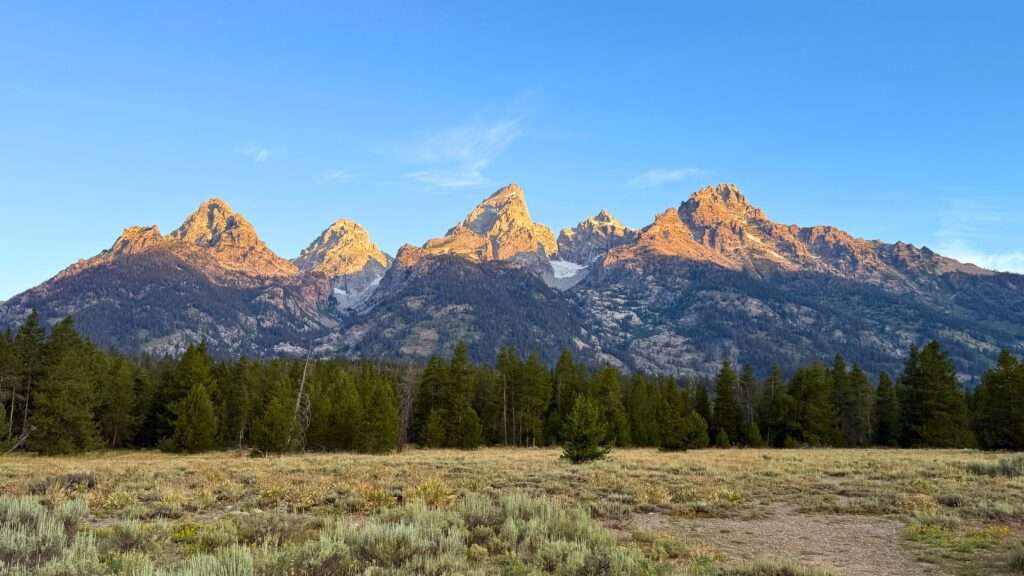
The parks share a border, which makes combining them a natural logistical win. The bigger reason is contrast. Yellowstone is volcanic and geothermal — it looks like it is still being made. Grand Teton is jagged and alpine, with peaks that rise nearly 7,000 feet directly from the valley floor with almost no foothills in between.
Together you get geysers, hot springs, and bison herds in Yellowstone, and glacier-carved canyons, mirror lakes, and some of the best hiking in the American West in Grand Teton. We actually visited each park on separate long weekends and had an incredible time both ways — but if you have the flexibility, a full week lets you go deeper without feeling like you are rushing between stops.
Best Time to Visit
The best time to visit Yellowstone and Grand Teton is late June through September, when roads and trails are fully open.
- Late May–June: Fewer crowds and excellent wildlife activity, but higher elevation trails like Cascade Canyon and Amphitheater Lake may still have significant snow through mid-June.
- July–August: Peak season with full access and wildflowers at maximum bloom. Old Faithful, Grand Prismatic Spring, and Jenny Lake will all be busy. Arrive before 8 a.m. to beat the crowds.
- September: Our personal favorite month. Crowds drop after Labor Day, temperatures are ideal for hiking, fall color starts late in the month, and wildlife is very active. Some services begin closing toward the end of September — check schedules before you go.
Tip: Early mornings are the most productive time in both parks for wildlife, photography, and parking. Plan to be at your first stop by sunrise whenever you can.
Planning Essentials
Getting There
The most convenient airport for this trip is Jackson Hole Airport (JAC), which sits inside Grand Teton National Park and puts you minutes from park attractions. If you are starting in Yellowstone and heading south, Bozeman Yellowstone International Airport (BZN) is your best bet for the northern entrance. Idaho Falls (IDA) is a lower-cost alternative with a longer drive.
Which Park Should You Visit First?
The answer mostly depends on which airport you fly into. If you are flying into Jackson Hole (JAC), start with Grand Teton and work your way north into Yellowstone — it is the most logical routing and means you are not backtracking. If you are flying into Bozeman (BZN), do the opposite: start in Yellowstone from the north entrance and finish in Grand Teton before flying home from Jackson. Either direction works well for a week-long trip. The parks connect seamlessly via the John D. Rockefeller Jr. Memorial Parkway, so the transition between the two is a scenic drive rather than a logistics headache.
Good to Know Before You Go
- Cell service: Almost nonexistent inside Yellowstone. Download offline maps before you enter the park — we use AllTrails for trail navigation and the NPS app for geyser eruption times.
- Parking: Yellowstone’s most popular areas fill fast in peak season. Old Faithful and Grand Prismatic lots are often full by 9 a.m. in July and August. Arrive early or plan to walk from overflow areas.
- Crowds: We visited Yellowstone in mid-July and it was genuinely packed — but showing up at sunrise and staying until the evening made an enormous difference. The parks empty out mid-morning and fill again around noon.
- Camping: Camping inside Yellowstone is one of the best ways to maximize your time, especially on a shorter trip. We camped during our visit and it meant zero commute time — we were at trailheads and viewpoints at first light every day. Campsites book up fast; reserve well in advance on Recreation.gov.
If you are trying to fit Yellowstone into a weekend like we did, check out our complete guide to seeing Yellowstone in a weekend for a realistic itinerary.
Passes and Fees
A 7-day vehicle pass costs $35 for each park — $70 total if purchased separately. The America the Beautiful Annual Pass ($80 for U.S. residents) covers both parks and pays for itself fast if you visit more than two national parks in a year. For more ways to save, check out our guide to visiting national parks on a budget.
Note for international visitors: As of January 2026, non-U.S. residents pay an additional $100 per person surcharge at both Yellowstone and Grand Teton. The annual pass for non-residents is $250.
What to Pack

Weather changes fast in both parks even in midsummer. Afternoon thunderstorms are common in July and August, and temperatures can swing 30 degrees between morning and midday. Pack layers, a rain jacket, and broken-in hiking shoes. Bear spray is strongly recommended and available at visitor centers near every entrance. Bring binoculars — you will use them constantly in both parks.
Where to Stay
In-park lodging at both parks books up months in advance — sometimes a full year ahead for peak summer dates. Book as early as possible. If in-park options are unavailable, gateway towns are a solid backup. Hotels and vacation rentals are available in West Yellowstone, Gardiner, and Cody for Yellowstone, and in Jackson and Teton Village for Grand Teton.
Yellowstone
| Lodge/Area | Pros | Cons | Best For |
|---|---|---|---|
| Canyon Village — Book | Most central location; access to both loops; most dining options in the park | Busy; cabin-style rooms | Multi-day stays covering the full park |
| Old Faithful Inn — Book | Historic 1904 log landmark; steps from the Upper Geyser Basin; fills first | Far from northern attractions; no WiFi or TV | Geothermal-focused itineraries; bucket list stay |
| Grant Village— Book | Closest Yellowstone lodge to Grand Teton; Yellowstone Lake views | Long drives to Lamar Valley and northern features | Travelers entering from Jackson or Idaho |
| West Yellowstone — Book | More lodging and dining variety; close to West Entrance | Outside the park; adds commute time | Budget travelers or last-minute planners |
| Gardiner, MT— Book | Year-round North Entrance access; closest base for Mammoth and Lamar Valley | Limited options; books fast | Wildlife-focused trips emphasizing Lamar Valley |
Grand Teton
| Lodge/Area | Pros | Cons | Best For |
|---|---|---|---|
| Jenny Lake Lodge— Book | Walk to boat shuttle and major trailheads | Very expensive; extremely limited rooms | Serious hikers; splurge trips |
| Signal Mountain Lodge — Book | Jackson Lake access with Teton views; close to scenic drives | Remote; limited dining | Photography, paddling, moderate hiking |
| Jackson Lake Lodge— Book | Iconic mountain lobby views; central location; family-friendly | Higher prices; busy in peak season | Families; general Grand Teton exploration |
| Jackson / Teton Village — Book | Most dining and lodging variety; multiple price points | 20–45 min drive into the park | Groups; backup when in-park lodging is unavailable |
Yellowstone Highlights
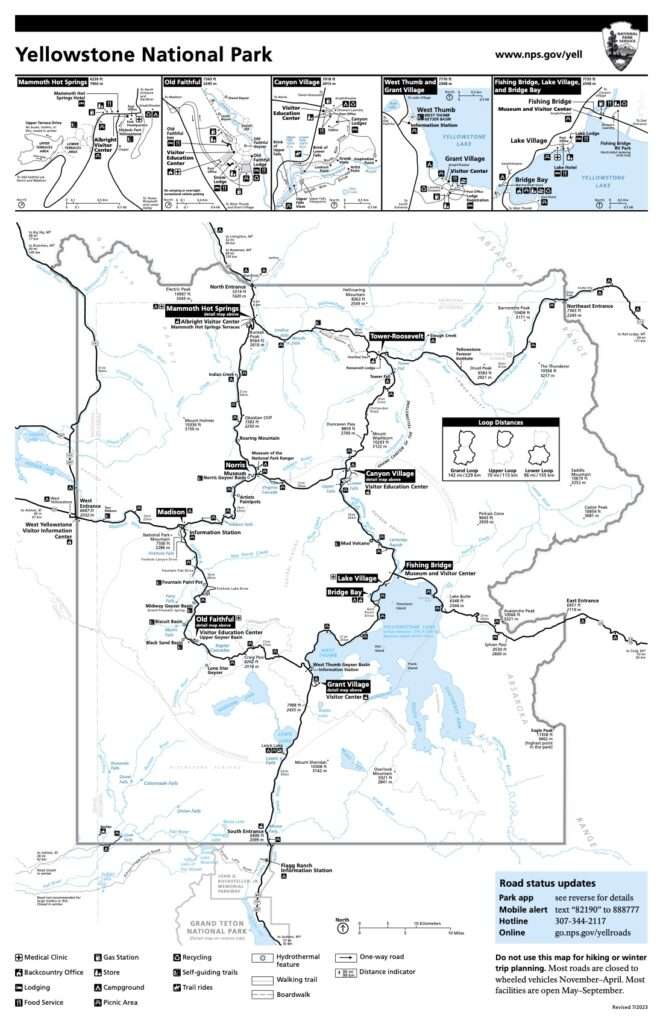
Upper Geyser Basin and Old Faithful
Old Faithful erupts roughly every 90 minutes, shooting 100–180 feet into the air. But the Upper Geyser Basin is the real draw — it contains the highest concentration of geysers on Earth. Walk the full boardwalk loop past Castle Geyser, Riverside Geyser, and Morning Glory Pool. Check the eruption prediction board at the visitor center before you start so you can time your return. Plan 2–3 hours minimum. Arrive before 8 a.m. or after 5 p.m. to avoid the biggest crowds.
Midway and Lower Geyser Basins
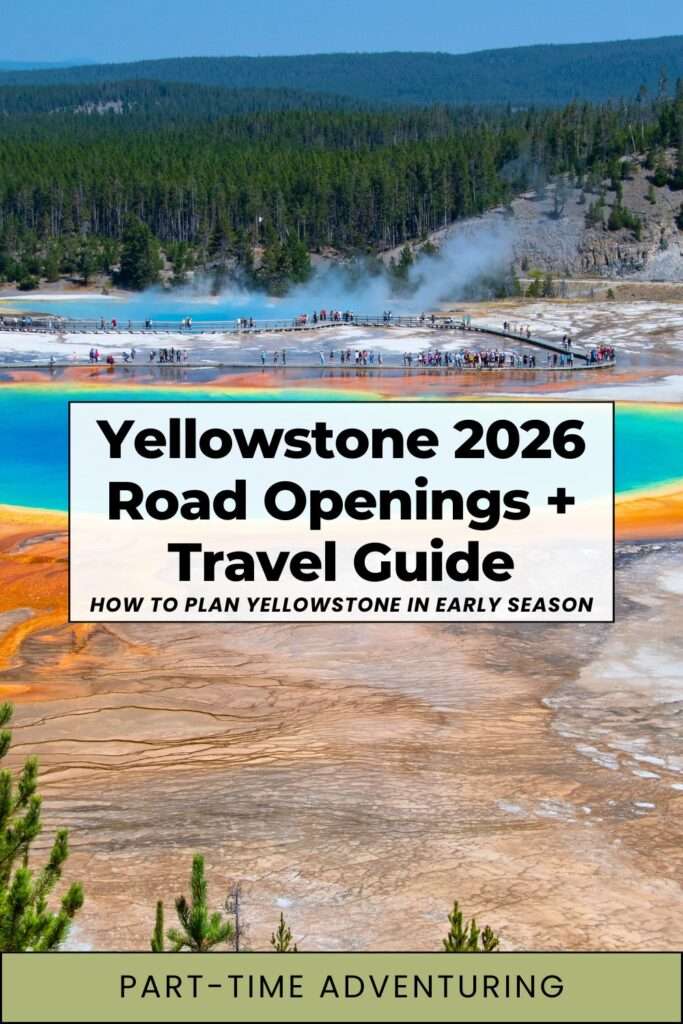
Grand Prismatic Spring is one of the most visually striking things in any national park — a massive hot spring ringed in vivid bands of orange, yellow, and green from heat-tolerant bacteria, with deep blue water at its center. The boardwalk puts you at the edge, but the aerial view requires the Grand Prismatic Overlook Trail, a short and steep 1.6-mile round trip. Visit in the afternoon — morning steam is heaviest and will block your view of the colors. Fountain Paint Pot nearby adds mudpots and smaller geysers and only takes about 45 minutes to walk.
Grand Canyon of the Yellowstone
The Grand Canyon of the Yellowstone stretches 20 miles long with walls up to 1,200 feet deep, colored in vivid yellows, oranges, and reds from hydrothermal activity. The Lower Falls drop 308 feet — nearly twice the height of Niagara Falls. Artist Point on the South Rim is the classic viewpoint. Lookout Point on the North Rim gives a different angle on the Upper Falls. Morning light hits the canyon walls beautifully — make this an early stop.
Hayden Valley and Lamar Valley
These are the two best wildlife corridors in Yellowstone and among the best in the entire Lower 48. Hayden Valley, just north of Yellowstone Lake, reliably produces bison herds and grizzly bears. Lamar Valley in the northeast corner is especially known for wolf sightings — wolf-watching groups with spotting scopes set up roadside at dawn and are worth stopping to check out. Drive slowly, pull over when others have stopped, and allow at least two hours per valley. Early morning and late afternoon produce the most sightings by far. For more on what wildlife to expect and when, check out our national parks by month guide.
Mammoth Hot Springs
The terraced travertine formations at Mammoth Hot Springs look unlike anything else in the park — pale limestone terraces built up over centuries by mineral-rich thermal water. The lower terraces are boardwalk-accessible and the upper terrace drive is one of the most photogenic short routes in Yellowstone. Elk frequently wander through the adjacent historic village during the day.
Norris Geyser Basin
The hottest and most geologically volatile geyser basin in Yellowstone. Norris is home to Steamboat Geyser — the tallest active geyser in the world. About 2 miles of boardwalk split between two connected sections. Less crowded than Old Faithful and worth building into your itinerary.
Grand Teton Highlights
Scenic Stops
Mormon Row Historic District is one of the most photographed spots in the entire national park system — historic homestead barns set directly against the Teton peaks. Sunrise here is exceptional and was a highlight of our Grand Teton trip — the light on those peaks in the early morning is something you will not forget. Get there early; it draws a crowd quickly after dawn.
Schwabacher’s Landing and Oxbow Bend both offer calm river reflections ideal for early morning photography and wildlife spotting. Moose, beaver, and great blue herons are regularly seen at both. Snake River Overlook, made famous by Ansel Adams, gives a sweeping valley view with the Tetons as backdrop — a quick roadside stop worth making.
Jenny Lake is the hub for hiking and the boat shuttle that saves 4 miles of walking round trip on the approach to Hidden Falls and Cascade Canyon.
Hikes
Easy to Moderate:
- Taggart Lake (3 miles RT): Gentle elevation gain, great Teton views, good for families or a lighter day.
- String Lake Loop (4 miles): Flat, lakeside scenery with wildlife spotting opportunities.
- Hidden Falls and Inspiration Point (2 miles RT from the boat dock): Take the Jenny Lake boat shuttle, hike to a 200-foot waterfall, then climb 250 feet to Inspiration Point for panoramic views over Jenny Lake and Jackson Hole. The shuttle runs May 15–September 30, with peak season hours of 7 a.m.–7 p.m. from June 6–September 7. No reservations — buy tickets at the East Boat Dock. The parking lot fills by 8 a.m. on summer weekends, so arrive before 7:30 a.m. or after 3 p.m.
Moderate to Strenuous:
- Cascade Canyon (up to 13.6 miles RT): The signature Grand Teton hike. Take the shuttle across Jenny Lake, pass Hidden Falls and Inspiration Point, then hike deep into a stunning glacier-carved canyon. Can be shortened at any point. For more iconic hikes across the national park system, see our 10 best hikes in U.S. national parks.
- Lake Solitude via Cascade Canyon (~4.8 miles one-way from the canyon forks): Continues into high alpine terrain with fewer people and incredible lake reflections.
- Delta Lake Trail (8.1 miles RT, ~2,300 ft gain): One of the most stunning hikes in the entire park and one we did on our visit. The trail follows the Amphitheater Lake route for the first 3 miles before veering off onto an unmaintained scramble up boulder fields to a milky turquoise-green alpine lake with the Grand Teton rising directly above it. It is not an official maintained trail, requires route-finding, and the final push is steep and exposed — but the payoff is unlike anything else in Grand Teton. Arrive at the Lupine Meadows Trailhead before 7 a.m. in peak season; the lot fills fast.
- Amphitheater Lake (10 miles RT, ~3,000 ft gain): We combined this with Delta Lake in one big day and it was a serious effort — but doing both in a single push from Lupine Meadows is absolutely doable for strong hikers with an early start. Amphitheater sits in a dramatic alpine cirque with sweeping views across the entire Jackson Hole valley.
After a big hike day, Dornans in Moose is the move — pizza and a cold beer with a direct view of the Tetons. It is right inside the park, unpretentious, and genuinely good after a long day on the trail.
Note: Death Canyon Trailhead is closed for all of summer 2026 for a major construction project, which will push more traffic toward Jenny Lake. Plan accordingly.
7-Day Itinerary
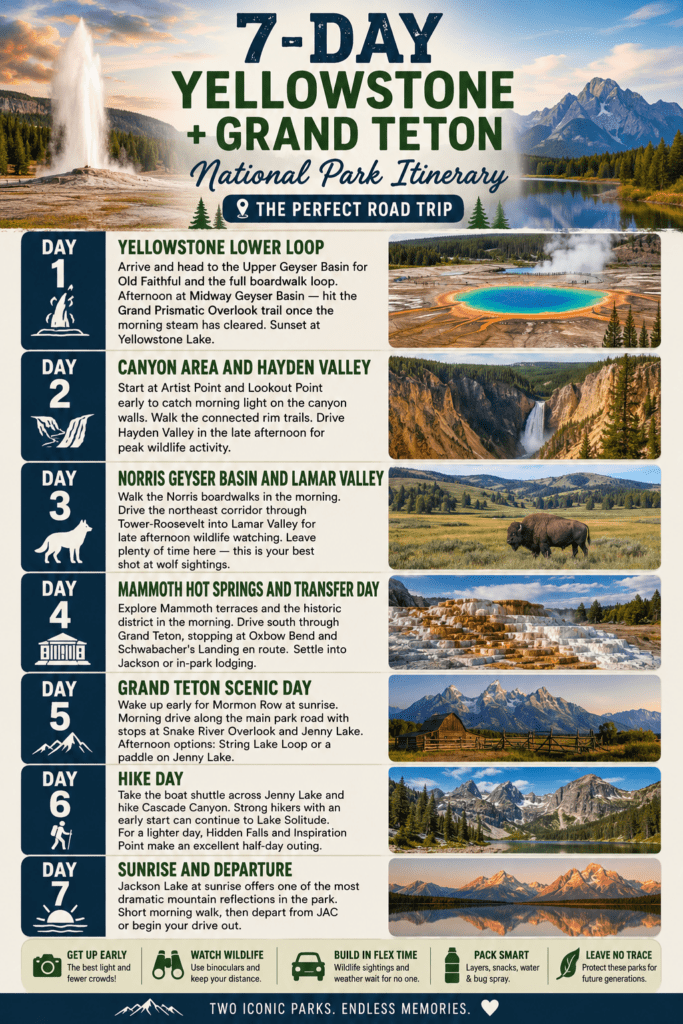
Day 1 — Yellowstone Lower Loop: Arrive and head to the Upper Geyser Basin for Old Faithful and the full boardwalk loop. Afternoon at Midway Geyser Basin — hit the Grand Prismatic Overlook trail once the morning steam has cleared. Sunset at Yellowstone Lake.
Day 2 — Canyon Area and Hayden Valley: Start at Artist Point and Lookout Point early to catch morning light on the canyon walls. Walk the connected rim trails. Drive Hayden Valley in the late afternoon for peak wildlife activity.
Day 3 — Norris Geyser Basin and Lamar Valley: Walk the Norris boardwalks in the morning. Drive the northeast corridor through Tower-Roosevelt into Lamar Valley for late afternoon wildlife watching. Leave plenty of time here — this is your best shot at wolf sightings.
Day 4 — Mammoth Hot Springs and Transfer Day: Explore Mammoth terraces and the historic district in the morning. Drive south through Grand Teton, stopping at Oxbow Bend and Schwabacher’s Landing en route. Settle into Jackson or in-park lodging.
Day 5 — Grand Teton Scenic Day: Wake up early for Mormon Row at sunrise. Morning drive along the main park road with stops at Snake River Overlook and Jenny Lake. Afternoon options: String Lake Loop or a paddle on Jenny Lake.
Day 6 — Hike Day: Take the boat shuttle across Jenny Lake and hike Cascade Canyon. Strong hikers with an early start can continue to Lake Solitude. For a lighter day, Hidden Falls and Inspiration Point make an excellent half-day outing.
Day 7 — Sunrise and Departure: Jackson Lake at sunrise offers one of the most dramatic mountain reflections in the park. Short morning walk, then depart from JAC or begin your drive out.
Wildlife Safety
Both parks have grizzly and black bears, bison, moose, wolves, and elk. Carry bear spray and know how to use it. Stay at least 100 yards from bears and wolves and 25 yards from all other wildlife. Bison injure more visitors in Yellowstone each year than bears do — never approach them on foot regardless of how calm they look.
Build extra time into every drive. Wildlife jams in Yellowstone can add 30–60 minutes without warning. Check the NPS website or the Yellowstone app for current road conditions before each driving day.
Dining and Supplies
On-site dining is limited in variety and slow during peak hours. Bring a cooler with snacks and picnic supplies — it saves time and money. General stores at Canyon Village, Old Faithful, and Colter Bay carry groceries, prepared foods, and camping essentials. Fill water bottles at every visitor center.
Gateway Towns Worth Knowing
Staying outside the parks is often the practical choice — and in some cases the better one. Here is a quick rundown of the main gateway towns for both parks.
Jackson, Wyoming (Grand Teton Gateway)
Jackson is the most full-service gateway town in the region and one of the most charming Western towns in the country. It sits about 10 miles south of the Grand Teton entrance and makes an excellent base, especially if in-park lodging is unavailable.
Town Square is the heart of downtown — four corners marked by iconic elk antler arches, surrounded by boutiques, art galleries, and restaurants. In summer evenings, a free cowboy shootout reenactment happens nightly at 6 p.m. on the northeast corner (except Sundays) and is worth catching if you happen to be around. The Million Dollar Cowboy Bar, open since 1937 with saddle bar stools and live country music, is a Jackson institution. For dining, Jackson has far more variety than anything inside either park — Snake River Grill is a local favorite for upscale dining, and Pinky G’s Pizzeria is a solid casual option. Teton Village, about 12 miles northwest of Jackson at the base of Jackson Hole Mountain Resort, is another lodging hub with its own restaurants and a more resort-focused vibe.
Jackson also has the National Museum of Wildlife Art and is adjacent to the National Elk Refuge, where thousands of elk winter from November through April.
West Yellowstone, Montana (Yellowstone West Entrance Gateway)
West Yellowstone is the closest and most convenient gateway if your itinerary is geyser-focused. The West Entrance is 3 miles from the center of town, putting you within about 30 minutes of Old Faithful and under an hour from Grand Prismatic Spring. It is a small, no-frills town built almost entirely around park tourism — one main street of outfitters, souvenir shops, and restaurants. It lacks the charm of Jackson but makes up for it in pure convenience.
The Grizzly and Wolf Discovery Center is a worthwhile stop if you want guaranteed wildlife viewing, with resident grizzly bears and gray wolves in large naturalistic habitats. For food, Beartooth BBQ and Running Bear Pancake House are two of the most consistently recommended spots in town. Look out for regional specialties — bison, elk, trout, and Montana huckleberry in any form are worth trying while you are here.
Other Gateway Towns
Gardiner, Montana at the North Entrance is the best base for wildlife-focused trips centered on Lamar Valley. It is the only gateway with year-round road access into Yellowstone and has a more authentic small-town feel than West Yellowstone. Cody, Wyoming to the east is worth mentioning for the Buffalo Bill Center of the West, one of the best Western history museums in the country, and makes sense as a base if you are entering through the East Entrance.
We’ll be going deeper on each of these gateway towns in a future post — there is genuinely a lot to cover.
Frequently Asked Questions
How many days do you need for Yellowstone and Grand Teton? We visited each park on a separate long weekend and had great trips both times. That said, a full week gives you more breathing room — 4 days in Yellowstone and 3 days in Grand Teton is a popular split if you are combining both in one trip.
Can you visit Yellowstone and Grand Teton on the same trip? Yes, and it is one of the best combinations in the national park system. The parks share a border and are connected by a short scenic drive. Most people fly into Jackson Hole or Bozeman and loop through both parks in 5 to 7 days.
What is the closest airport to Yellowstone and Grand Teton? Jackson Hole Airport (JAC) is the closest airport to Grand Teton and southern Yellowstone — it sits inside the park boundary. Bozeman Yellowstone International Airport (BZN) is the best option for northern Yellowstone. Both have direct flights from major cities in summer.
Do you need separate passes for Yellowstone and Grand Teton? Yes, each park charges its own entrance fee of $35 for a 7-day vehicle pass. The America the Beautiful Annual Pass ($80) covers both parks and is worth it if you are visiting more than two national parks in a year.
When is the best time to visit Yellowstone and Grand Teton? Late June through September is when roads and trails are fully open. September is our personal favorite — crowds thin after Labor Day, temperatures are comfortable, and wildlife is very active.
Is it safe to visit Yellowstone and Grand Teton? Both parks are safe to visit with basic precautions. Carry bear spray, stay on boardwalks in thermal areas, and maintain safe distances from all wildlife. Bison injure more visitors in Yellowstone each year than bears do — never approach them regardless of how calm they appear.
Final Thoughts
A week in Yellowstone and Grand Teton gives you geothermal wonders, big wildlife, alpine hiking, and mountain scenery that is genuinely hard to match anywhere in the country. Get up early, group attractions by location to minimize backtracking, and leave buffer time in every day. In these parks, the unexpected — a grizzly bear roadside, a wolf pack crossing Lamar Valley, a bison herd deciding to cross the road in front of your car — is usually the best part.
Looking for more inspiration? Check out our guide to the best national parks for 4-day trips and our list of underrated national parks worth adding to your list.