Last Updated on June 17, 2026 by Melissa
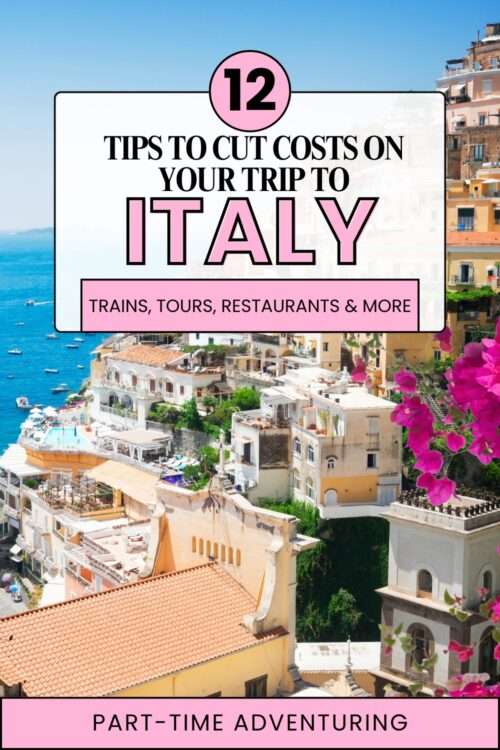
If you want to spend a lot of money in Italy, it’s easy. Book a hotel two blocks from the Colosseum, sign up for guided group tours at every attraction, and eat at any restaurant with a laminated photo menu. You’ll drain your budget fast and spend most of your trip surrounded by other tourists doing the same thing.
Here’s what we learned actually traveling Italy as a couple: the expensive version and the incredible version aren’t the same trip. The budget moves we made didn’t feel like compromises — many of them led to better experiences than the tourist-trail alternatives. Bologna and Naples, the two cities most travelers skip, were our personal favorites in all of Italy. We walked past validation line chaos at train stations every single morning. We ate better food for less money by walking three blocks off the main squares.
This guide covers everything we’d tell a friend planning their first Italy trip: how to avoid the markups, what hidden charges to watch for before you sit down at a restaurant, which regions punch way above their price point, and where the best free experiences actually are.
Disclaimer: This post contains affiliate links. If you book or purchase through them, we may earn a small commission at no extra cost to you. We only recommend things we’ve personally used and trust.
Table of Contents
- Know the Hidden Restaurant Charges Before You Sit Down
- Skip Group Tours and Book Directly
- Buy Train Tickets Through the Official Apps
- Base Yourself in One City, Stay in a Rental, and Take Day Trips
- Eat Like a Local, Not Like a Tourist
- Use the Aperitivo Hour
- Drink Coffee Standing at the Bar
- Use Free Public Fountains for Water
- Consider Southern Italy and Lesser-Known Regions
- Travel in Shoulder Season
- Take Advantage of What’s Free
- FAQ
Know the Hidden Restaurant Charges Before You Sit Down
Two things catch American travelers off guard at almost every sit-down meal in Italy. Knowing them before you go saves both money and confusion — and makes the whole dining experience less stressful.
Coperto: Many Italian restaurants add a per-person cover charge called the coperto — typically €1.50–€3 — to your bill when you sit down. It covers the table setting, linens, and usually the bread basket. It is not a tip, it’s not a scam, and it’s non-negotiable at places that charge it. Think of it as the cost of occupying the table. Check the menu when you sit down — it should be listed there. In tourist-heavy areas the coperto runs higher, which is another reason to walk a few blocks from major landmarks before choosing a restaurant. Worth noting: coperto is technically banned in the Lazio region (which includes Rome), though some restaurants there will still try to charge a separate bread fee — you can simply decline the bread basket at the start of the meal.
Tipping: Unlike in the US, tipping is not expected in Italy. Servers earn a living wage and not leaving a tip is completely normal — not rude, not unusual. If service was genuinely excellent, rounding up the bill or leaving a euro or two is a kind gesture, but 20% tips are not the cultural standard. Across a full two-week trip, not over-tipping adds up to real savings.
Skip Group Tours and Book Directly
This is the single biggest money saver in Italy, and it’s easier than most people think.
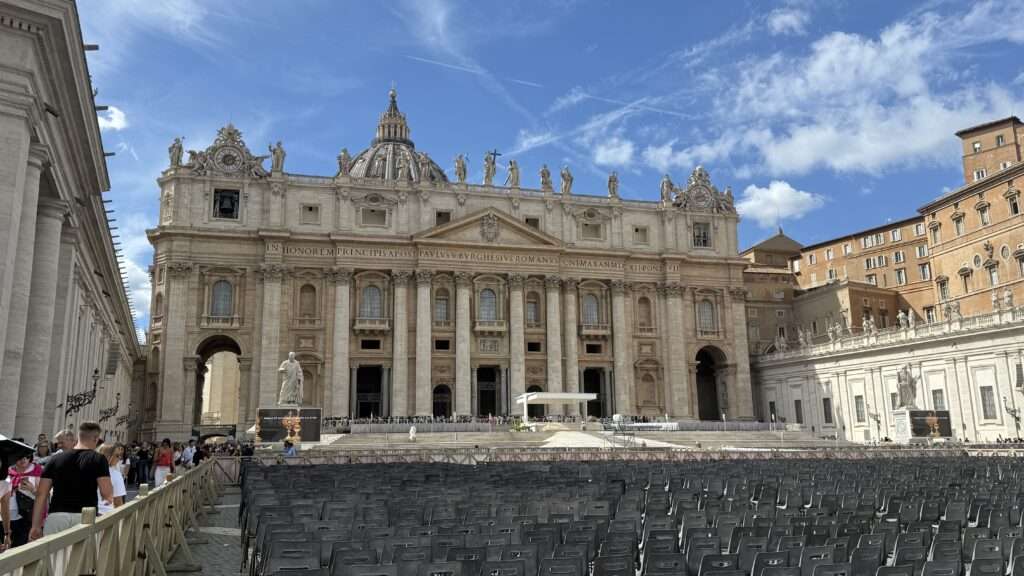
Guided group tours for places like the Colosseum, Vatican Museums, or Pompeii typically run $60–$120 per person. The standard ticket to walk in yourself? Usually $15–$30. For two people over a two-week trip, that difference adds up to hundreds of dollars.
We booked every major attraction directly through the official websites — no third-party booking platforms, no tour aggregators. It’s cheaper, and you skip the middleman markup entirely. Booking early matters too: tickets for popular sites like the Vatican Museums and the Colosseum often sell out weeks in advance, and last-minute availability tends to come only through expensive guided packages.
One important warning: when searching for official ticket sites, be careful. There are many counterfeit websites designed to look exactly like the real thing. Always do extra research to confirm you’re on the actual attraction’s official site before entering payment details. If the URL looks slightly off or the price seems inflated compared to what you’ve read elsewhere, close the tab and search again.
For context and storytelling without the tour price tag, we used Rick Steves’ free audio tours, available through his free mobile app. They cover Rome, Florence, Venice, and other major destinations with detailed historical commentary — at no cost. You get the depth of a guided experience without the group pace or the price.
That said, we didn’t skip every tour — and our experiences were mixed. We did a paid group tour of Pompeii and Herculaneum with an archaeologist and it was worth every euro — Pompeii is genuinely dense enough that expert context transforms the visit. The Vatican Museums were the opposite. We splurged on a private guided tour and wouldn’t recommend it: rushed, hard to hear, and we had no ability to linger where we wanted. Once the tour ends, you’re done — there’s no going back through on your own. For a place like the Vatican where you could spend a full day and still feel like you rushed it, a direct ticket and Rick Steves’ audio tour would have served us far better. The broader lesson: tours cost more but often give you less control. Save them for sites where context genuinely changes what you’re seeing, and book direct everywhere else.
Buy Train Tickets Through the Official Apps
Italy’s train system is excellent, and for most travelers it completely eliminates the need to rent a car. But the same rule applies here as with attractions: buy direct.
The two main high-speed operators are Trenitalia (Frecciarossa), Italy’s national rail service, and Italo, a private competitor with competitive pricing and sleek trains. Both have official apps and websites. Booking early through these directly can save up to 50% compared to last-minute fares — and significantly more than buying through third-party travel sites that tack on their own fees.
Popular high-speed routes and approximate times:
| Route | High-Speed Time | Approx. Budget Fare (booked early) |
|---|---|---|
| Rome → Florence | ~1.5 hours | €19–€29 |
| Florence → Milan | ~2 hours | €19–€35 |
| Rome → Naples | ~1 hour | €19–€25 |
For shorter day trips — Florence to Pisa, Rome to Orvieto — regional trains are slower but much cheaper, often just a few euros, and usually don’t require advance seat reservations.
One thing we noticed at almost every station: clusters of tourists scrambling to find the yellow validation machines on the platform before their train left. Long lines, confused looks, missed trains. When you book through the official Trenitalia or Italo app, your phone is your ticket and there’s nothing to validate. You just board. We walked straight past those lines every single time.
On renting a car: for most Italy trips, skip it. City centers have ZTL zones — restricted traffic areas monitored by automatic cameras. Unknowingly driving into one can result in fines of €100 or more that arrive weeks after you’re home. Parking is expensive and stressful in most cities. Trains get you there faster and cheaper.
Base Yourself in One City, Stay in a Rental, and Take Day Trips
Constantly moving between hotels is one of the most expensive and exhausting ways to travel Italy. A smarter approach: pick one hub city, rent an apartment for the week, and take day trips by train.
You unpack once, avoid nightly hotel changes, and spend your energy actually exploring — not checking in and out. Staying in the same short-term rental for five to seven nights is almost always cheaper per night than booking a string of one or two-night hotels, and having a kitchen changes the economics of the whole trip.
Groceries in Italy are excellent and inexpensive. We’d stock up on fresh bread, cheese, cured meats, fruit, and pastries for breakfasts and easy lunches. That alone saved €20–€40 per day per person compared to eating out every meal. Italian grocery stores are worth exploring on their own — look for Conad, Esselunga, or local alimentari (small neighborhood shops) that carry regional products, local wines, and fresh pasta you won’t find in tourist shops. Outdoor food markets are even better: Rome’s Campo de’ Fiori, Florence’s Mercato Centrale, and Venice’s Rialto Market all sell fresh produce, cheese, and cured meats at prices that make restaurant dining look expensive by comparison.
One tip: many Italian cities have rules against picnicking in major piazzas. Enjoy your market haul in a park or on a bench off the main squares, not on the steps of a landmark.
Strong hub cities and where they can take you:
- Florence → Pisa, Siena, Lucca, Bologna, Cinque Terre (all under 1.5 hours by train)
- Rome → Tivoli, Orvieto, Naples, Pompeii
- Milan → Lake Como, Bergamo, Verona, the Dolomites
Eat Like a Local, Not Like a Tourist
The worst value in Italian food is the restaurant directly next to a major landmark. These places count on foot traffic, not repeat customers, and the prices reflect it.
Walk two or three streets away from any major attraction and you’ll immediately find better food at lower prices. When looking for a genuinely local spot, look for a few signals: it’s small, has a chalkboard menu or no menu posted outside at all, uses the word trattoria, osteria, or ristorante, and focuses on dishes from that specific region rather than generic “Italian” cuisine. Don’t be surprised if the menu is only in Italian — that’s a good sign. Download Google Translate with Italian offline before you leave so you can read menus without cell service.
What locals actually eat for quick, affordable, great meals:
Pizza al taglio (pizza by the slice, sold by weight): €2–€4 per slice, often more interesting than sit-down pizza
Panini shops and salumerie: A custom-made fresh sandwich at the deli counter for €3–€6 — choose the bread, cold cuts, cheese, and fillings, and they charge by weight
Bakeries and focaccia shops: Perfect for breakfast or a midday snack
Rosticcerie: Small takeaway counters with ready-made hot food — arancini in Sicily, supplì in Rome, porchetta sandwiches in Lazio
Combining these casual options with grocery meals can cut your food budget significantly without sacrificing quality. In fact, you’ll eat more authentically than most tourists who stick to sit-down restaurants near the sights.
Use the Aperitivo Hour
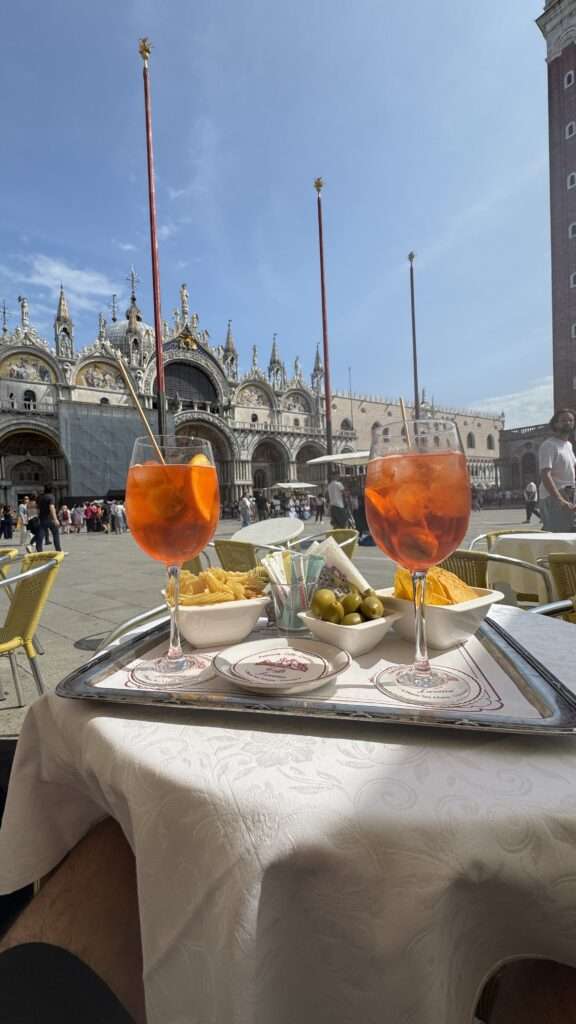
In the early evening — roughly 6 to 8 PM — many bars and cafés in Italy offer aperitivo, the Italian pre-dinner drink hour. Buy one drink (a spritz, a glass of wine, a beer — typically €5–€12 depending on the city) and snacks come with it. In our experience, that meant olives, chips, and a few small bites — a nice bonus with a drink, not a meal replacement. Some places in cities like Milan or Bologna are known for more elaborate spreads, but we wouldn’t count on it as your dinner plan without scoping the spot out first.
Milan is the epicenter of aperitivo culture, but it’s widespread in Turin, Bologna, Florence, and increasingly in Rome and other cities. The value is real — you’re getting something with your drink that you’d otherwise pay extra for — just go in with realistic expectations about what that means at any given bar.
For two people, aperitivo drinks typically run €15–€25 total. It’s a genuinely enjoyable way to ease into the evening before finding somewhere for dinner, and it puts you in the same bars as locals rather than tourist restaurants.
Drink Coffee Standing at the Bar
Italian coffee culture is built around quick, standing espresso at the bar counter. An espresso this way runs about €1–€1.50 nearly everywhere. A cappuccino standing at the bar is typically €1.50–€2. Sit down at a café table — especially anywhere near a landmark — and those prices can triple or quadruple, plus you may be charged the coperto.
There’s also just something more energizing about the Italian way: you walk in, order, drink it in about 90 seconds, and move on. No one is nursing a giant latte for two hours. Lean into it. It’s one of those small travel rituals that actually costs less than the tourist version.
One more thing worth noting: most of the Airbnbs we stayed at had either a Nespresso machine or a moka pot, both of which made genuinely excellent coffee at home. Starting your morning that way before heading out costs almost nothing and is honestly hard to beat.
Use Free Public Fountains for Water
Italian cities have an extensive network of public drinking fountains — called nasoni in Rome (named for their nose-shaped spigots) and fontanelle in other cities. The water is safe, cold, and free. Carry a reusable water bottle and refill it throughout the day.
You’ll save €2–€3 every time you’d otherwise buy a bottled water, and in a hot Italian summer that’s multiple times per day. Across a two-week trip, it adds up to a real number.
Consider Southern Italy and Lesser-Known Regions
If your Italy trip has any flexibility on destinations, this may be the single most impactful budget decision you can make.
Popular destinations like — Florence, Venice, and the Amalfi Coast — are genuinely beautiful and genuinely expensive. Southern Italy runs on a completely different price scale. Regions like Puglia, Calabria, and Sicily offer stunning landscapes, extraordinary food, and rich history at a fraction of the cost.
Puglia in particular — with its trulli houses in Alberobello, the dramatic coastline around Polignano a Mare, and beautiful baroque towns like Lecce — offers a daily cost that can run 30–40% lower than Florence or Venice. Meals that would cost €20 per person in Florence run €10–€12 in a Puglian osteria. Accommodation is similarly cheaper, and the towns are far less crowded.
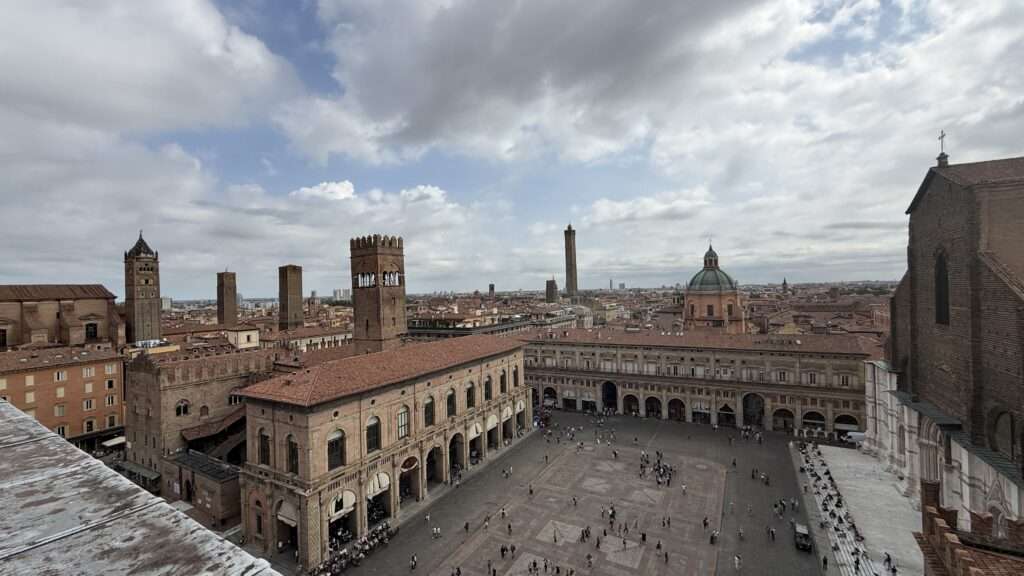
We’d put Bologna and Naples at the top of any budget Italy list — honestly, they were our two favorite stops in all of Italy. Bologna is one of the country’s great food cities (it’s where ragù actually comes from), has extraordinary medieval architecture with its iconic arcaded porticos, and sees a fraction of Florence’s tourist traffic. Naples is chaotic and loud and completely alive in a way that no other Italian city matches — the pizza alone is worth the trip, and the prices for everything from food to accommodation are dramatically lower than Rome. Neither city gets the credit it deserves on a typical Italy itinerary, and both will reward you for going.
Verona is gorgeous and walkable with much lower hotel prices than Venice. Urbino, a perfectly preserved Renaissance hilltown in Le Marche, can be explored for almost nothing.
The further you get from the most-photographed spots, the better the value tends to be — and often the more authentic the experience.
Travel in Shoulder Season
April, May, September, and October are the sweet spot for Italy.
Accommodation prices can run 30–40% lower than July and August peak pricing. Crowds at major attractions are significantly smaller — direct tickets are more available and easier to book. Temperatures are comfortable for walking all day without wilting. The light in spring and fall is genuinely better for landscapes and photography.
Summer is peak season for a reason — the weather is great and the energy is high — but you pay a premium across every category and compete with enormous crowds at every major site. Shoulder season Italy is a genuinely different, calmer experience. If you have any flexibility, lean toward May or September.
Take Advantage of What’s Free
Some of the best Italy moments cost nothing — and these aren’t consolation prizes for budget travelers. They’re legitimately among the best experiences the country offers.
Rome’s historic center on foot: The Spanish Steps, Trevi Fountain, Pantheon exterior, Piazza Navona, Campo de’ Fiori, and the Roman Forum exterior are all free. You can spend a full day on a self-guided walk through the ancient city without paying a single admission fee.
Churches: Much of Italy’s most extraordinary art lives inside churches, and most churches are free to enter. In Rome alone: San Luigi dei Francesi has three Caravaggio paintings. Santa Maria della Vittoria holds one of Bernini’s most famous sculptures. Santa Maria sopra Minerva contains a Michelangelo. These are world-class works — you just have to walk in.
Neighborhood markets: Not the tourist souvenir markets, but the daily or weekly food and goods markets that locals actually use. They’re free to wander and one of the best ways to see how Italians actually live.
Viewpoints: The belvedere overlooks above Florence, Rome, and dozens of hilltowns cost nothing and deliver some of the best views in Europe.
The evening passeggiata: The Italian ritual of walking and gathering in the town square as the day cools is free to join and genuinely one of the most pleasant things about Italian life. Show up to any piazza around 7 PM and just watch the country do what it does.
Italy is one of those places that rewards travelers who do a little homework. Book direct, eat where locals eat, base yourself in one place, and don’t sleep on the south — and you’ll spend less than the typical tourist while having a better trip than they did.
If you’re still in the planning stages, check out our guide to buying authentic leather in Florence directly from the artisans — the same skip-the-middleman approach that makes this whole post work.
FAQ
Do you tip in Italy? No. Tipping is not expected or required. Servers earn a living wage independent of tips, and not leaving one is completely normal. If service was exceptional, rounding up or leaving a euro or two is appreciated — but the American standard of 20% does not apply here.
What is the coperto charge in Italy? The coperto is a per-person cover charge at most Italian restaurants, typically €1.50–€3, covering the table setting and usually the bread basket. It’s not a tip and it’s non-negotiable at places that charge it. It should be listed on the menu. In the Lazio region (including Rome) it’s technically banned, though some restaurants there charge a separate bread fee instead — you can decline the bread at the start of the meal.
How much does a budget Italy trip cost per day? A budget-conscious traveler staying in a short-term rental, cooking some meals, and using regional trains can manage €80–€120 per person per day. Mid-range travelers with restaurant dinners and paid attractions typically spend €150–€200. Peak season and major tourist cities push both numbers significantly higher.
Is it worth buying a rail pass for Italy? For most travelers, no. Train prices booked early through the official Trenitalia or Italo apps are low enough that a rail pass rarely makes financial sense. Run the math on your specific itinerary, but direct booking almost always wins.
When is the cheapest time to visit Italy? November through March is cheapest overall, with fewer crowds and lower prices across the board. For the best balance of price, weather, and crowd levels, April–May and September–October are the sweet spot. July and August are peak season and the most expensive across flights, accommodation, and tours.
Is Italy more expensive than other European countries? Italy sits in the mid-range for Europe — less expensive than Switzerland, Scandinavia, or the UK, but more expensive than Portugal, Greece, or Eastern Europe. The gap between tourist-trap pricing and local pricing is wider in Italy than almost anywhere else on the continent, which is exactly why knowing these tips matters.