Last Updated on June 12, 2026 by Melissa
National parks get all the attention — but some of the best state parks in the US rival anything the National Park Service manages. After visiting 54 of the 63 US national parks, we’ve spent just as much time in state parks, and a handful of them have genuinely stopped us in our tracks. Lower fees, fewer crowds, no timed entry permits — and scenery that holds its own against the big names. Here are 7 we’d visit again without hesitation.
This post contains affiliate links. If you book or purchase through one of our links, we may earn a small commission at no extra cost to you. We only recommend places and products we genuinely use and trust. Thanks for supporting Part-Time Adventuring!
In This Post
- Why State Parks Deserve More Credit
- 1. Valley of Fire State Park, Nevada
- 2. Custer State Park, South Dakota
- 3. Waimea Canyon State Park, Hawaii
- 4. Goblin Valley State Park, Utah
- 5. Sand Harbor State Park, Nevada
- 6. Babcock State Park, West Virginia
- 7. Wild Horse Island State Park, Montana
- Tips for Visiting State Parks
- FAQ
Why State Parks Deserve More Credit
There are nearly 4,000 state parks across the US, protecting landscapes the federal system doesn’t cover — from ancient desert formations to remote island ecosystems. Entrance fees typically run $5–$20, and you’re far less likely to need a timed entry permit or spend 20 minutes looking for parking.
That said, some state parks have gotten popular enough that planning ahead still matters. Several on this list — Sand Harbor specifically — fill up fast on summer weekends and require seasonal parking reservations. The advantage over national parks is that the crowds are still manageable and the overall experience is less stressful.
The parks on this list span six states, seven completely different ecosystems, and some of the most memorable scenery we’ve encountered anywhere in the country.
1. Valley of Fire State Park, Nevada
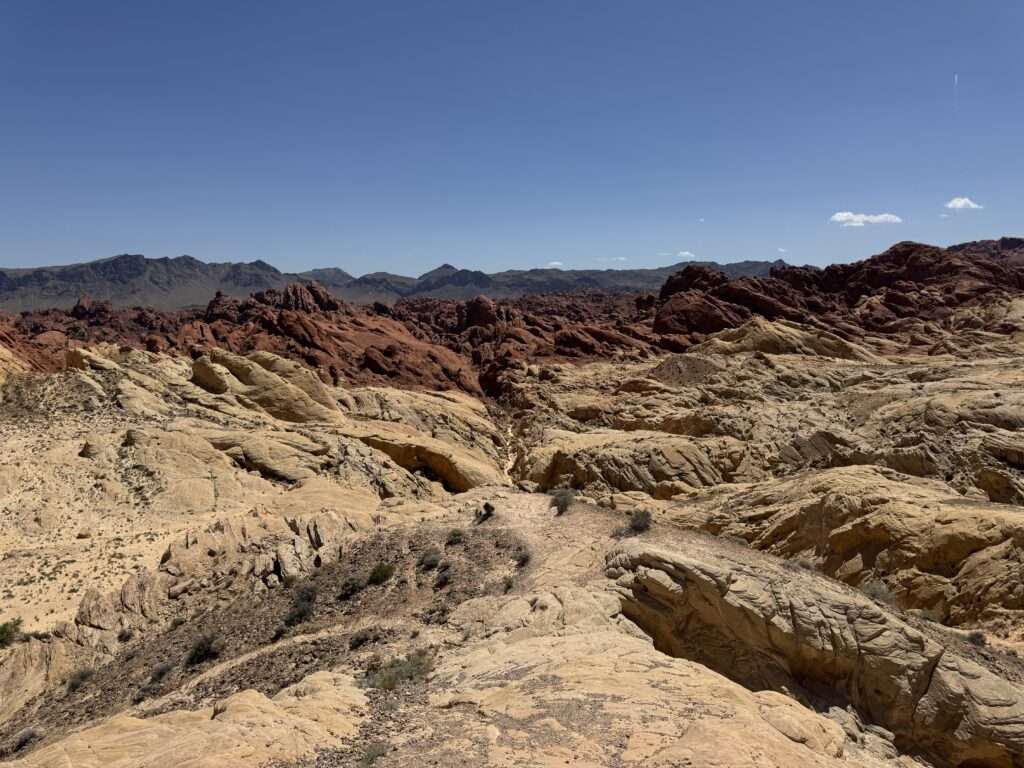
Valley of Fire State Park is Nevada’s oldest and largest state park, and it might be the most visually dramatic state park in the entire country. Located about 50 miles northeast of Las Vegas, the park’s 40,000 acres of bright red Aztec sandstone were formed from shifting sand dunes roughly 150 million years ago — and they glow in a way that photographs genuinely can’t capture.
What makes Valley of Fire special beyond the scenery is the variety. You’ve got fiery red formations, white and red striped Fire Wave patterns, petrified trees, and petroglyphs carved by the Ancestral Puebloans more than 2,000 years ago — all within the same park. It’s had a second life as a film location too: Total Recall, Transformers, and The Book of Eli have all shot scenes here.
What to Do
The Fire Wave Trail is the must-do — just under 3 miles round trip, it leads to a formation of striped white and red rock that looks almost too perfect to be real. Atlatl Rock is worth a stop for the petroglyphs, which sit right at eye level and are well-preserved. The Valley of Fire Scenic Byway is the backbone of the park — pull over frequently at Rainbow Vista and Mouse’s Tank Road for the best photo stops. A full scenic drive takes 2–3 hours with stops.
We visited over Memorial Day weekend and found several trails closed — even though temperatures were completely manageable. Check trail closure dates before you go, not just the forecast.
The park has two campgrounds with fire pits, water, and picnic tables (no showers). Sites can be booked through the Nevada State Parks reservation system. Camping adds $20–$25/night on top of the entry fee.
Important Planning Notes
Do not visit between June and September. Summer temperatures regularly hit 110–115°F, and the sandstone radiates heat at ground level. Most trails are officially closed May 15 through September 30. The best window is November through March. There are no food vendors inside the park — the visitor center sells drinks and minimal snacks only. Bring everything you need, including at least 2–3 liters of water per person. Desert temperatures can swing 30–40°F from morning to afternoon, so layers matter.
Entrance fee: $10/vehicle (Nevada residents) | $15/vehicle (out of state)
Hours: 6 AM to sunset | Visitor center: 9 AM–4 PM daily
Best time to visit: October through April
Nearest town: Overton, NV (15 miles) | Las Vegas (50 miles)
Where to Stay: Most visitors base in Las Vegas and day-trip out. Search hotels near Valley of Fire or stay in Vegas and drive out. If you want to stay closer, North Shore Inn at Lake Mead in Overton is the closest option to the park entrance.
2. Custer State Park, South Dakota
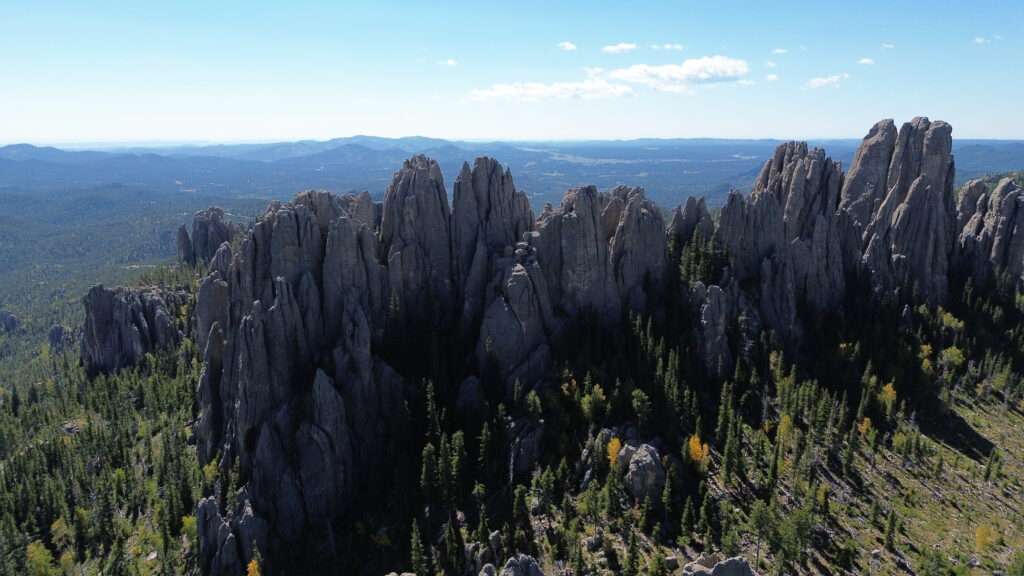
Custer State Park is the kind of place that makes you question why you haven’t been sooner. At 71,000 acres in the Black Hills of South Dakota, it’s one of the largest state parks in the country and consistently ranks among the best. The scenery shifts from rolling prairies to granite peaks to pine forests, and the wildlife viewing is legitimately comparable to Yellowstone.
The park is home to one of the largest publicly-owned bison herds in the world — over 1,400 free-roaming animals. Add pronghorn, bighorn sheep, burros, elk, and coyote, and the Wildlife Loop Road feels more like a safari than a state park drive.
What to Do
The Wildlife Loop Road (18 miles) is the centerpiece — drive it at dawn or dusk for the best animal activity. Needles Highway is one of the most dramatic scenic drives in the country, threading through towering granite spires. Black Elk Peak is Custer’s signature hike: at 7,242 feet it’s the highest point east of the Rocky Mountains, with a stone fire tower at the summit and sweeping Black Hills views. Cathedral Spires Trail is a shorter but spectacular hike through granite formations near Sylvan Lake. The park also has four lakes for swimming, kayaking, paddleboarding, and fishing.
Wildlife Loop Road delivered more bison than we could count, and Black Elk Peak is a genuine must-do — the stone fire tower at the summit is unlike anything else we’ve hiked to.
Lodging inside the park is genuinely good. Four historic lodges — including the State Game Lodge, where Presidents Coolidge and Eisenhower once stayed — offer cabins, hotel rooms, and restaurants. There are also 9 campgrounds with over 350 sites ranging from tent-only to full RV hookups. Reservations are essential for summer.
Important Planning Notes
GPS can be unreliable in the Black Hills — download offline maps before you go. Keep at least 100 feet from bison at all times; they cross roads unexpectedly and move faster than they look. Late May through early June and September through early October offer the best combination of weather, wildlife, and manageable crowds. The annual Buffalo Roundup (usually late September) is one of the most spectacular free events in the country. Custer also sits within easy reach of Badlands National Park, Wind Cave National Park, and Mount Rushmore for a longer Black Hills trip.
Entrance fee: $25/vehicle (valid 7 days)
Camping: $20–$55/night depending on site type; call 1-800-710-2267 or book online
Best time to visit: Late May–June or September–October
Nearest town: Custer, SD | Rapid City (30 miles)
Where to Stay: Browse lodge and cabin options inside the park or find hotels in Custer and Rapid City on Booking.com.
3. Waimea Canyon State Park, Hawaii
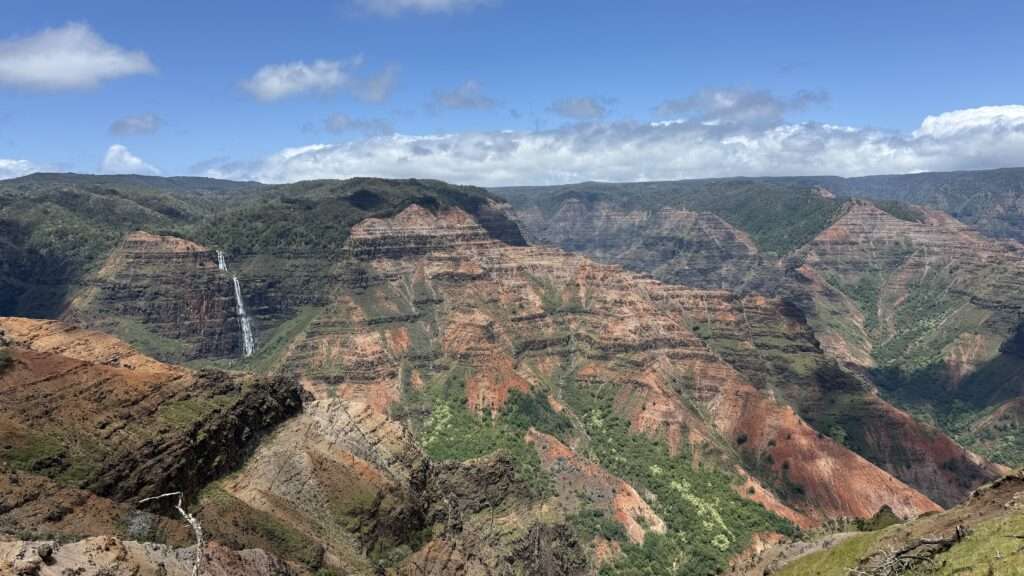
Mark Twain called it “The Grand Canyon of the Pacific,” and standing at the rim, it’s easy to understand why. Waimea Canyon on Kauai’s west side is 14 miles long, 1.5 miles wide, and plunges over 2,500 feet deep — its walls layered in yellow, orange, and rust-colored rock broken up by bright green vegetation and waterfalls cutting through after rain.
Most visitors to Kauai focus on the north shore. That means the west side sees fewer crowds, and the canyon can feel genuinely quiet on a weekday morning.
What to Do
The park is accessed via Highway 550 (Waimea Canyon Drive), which climbs from sea level in Waimea town to over 4,000 feet — an 18-mile scenic drive worth every stop. The Waimea Canyon Lookout and Pu’u Hinahina Lookout deliver classic canyon views, but don’t just drive through.
For hikers, the Canyon Trail (3.6 miles round trip) is the most rewarding moderate option — it rolls through canyon views, shaded forest, and leads toward Waipo’o Falls. The Kukui Trail is the only maintained path to the canyon floor, dropping 2,000 feet in 2.5 miles to the Waimea River — experienced hikers only. The Koai’e Canyon Trail (6 miles round trip) adds archaeological sites and swimming holes.
We arrived early and hit a wall of clouds — but we stuck around and by late morning it had cleared completely. Don’t give up on a cloudy morning here. Stay patient, it’s worth it.
Pair Waimea Canyon with Kokee State Park at the top of the same road — the Kalalau Lookout there offers aerial views of the Na Pali Coast that are among the most dramatic in all of Hawaii.
Important Planning Notes
The road is narrow with blind curves — take it slow and use pullouts to let faster cars pass. Clouds roll in frequently, especially in the afternoon, so aim for morning visits for the clearest views. Showers can happen any time; bring a rain jacket. If you’re prone to motion sickness, the switchbacks on the way up are significant — take precautions.
Entrance fee: Free (parking fees apply at some lots)
Best time to visit: May through September; mornings for clearest views
Nearest town: Waimea, Kauai (base of the canyon road)
Where to Stay: Most visitors base in Poipu or Lihue and day-trip to the canyon. Browse Kauai hotels on Booking.com.
4. Goblin Valley State Park, Utah
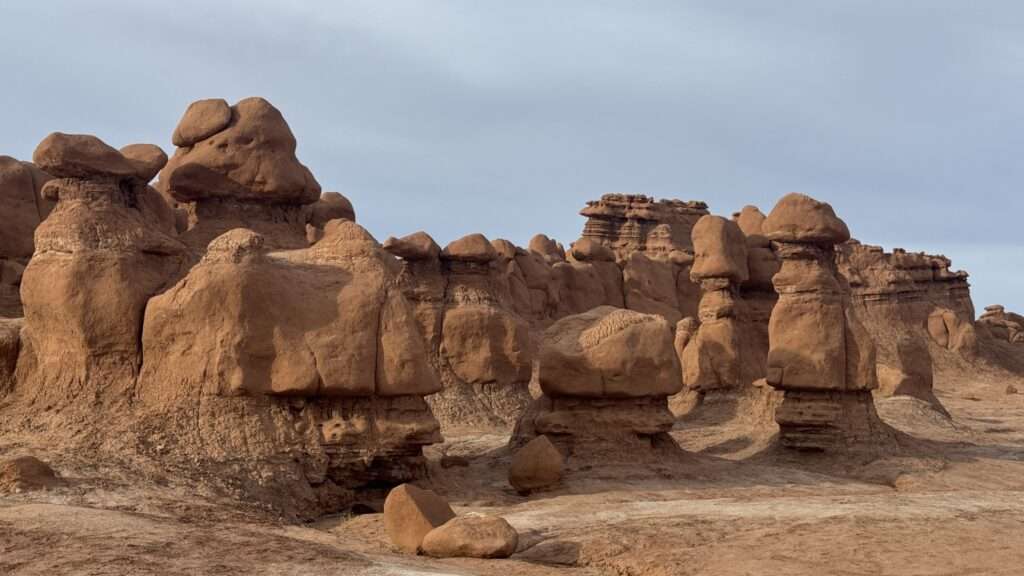
Goblin Valley State Park doesn’t look like it belongs on Earth. Thousands of mushroom-shaped hoodoos — called goblins — cover a broad desert basin in southeast Utah, and unlike most parks, you’re actually encouraged to wander among them freely. No stay-on-the-trail rules. You descend into the valley and explore.
The landscape is often compared to Mars. It sits between Capitol Reef and Canyonlands National Parks along the San Rafael Swell, which means it often gets passed over by people rushing between Utah’s Mighty 5. That’s their loss.
What to Do
The main valley is divided into three sections — Valley 1 is the most accessible and where most visitors spend their time. The Carmel Canyon Trail (1.5 miles round trip) adds a viewpoint over Molly’s Castle and passes through short slot canyon sections. For something more adventurous, Goblin’s Lair is a slot canyon on the east side where you can rappel 70 feet into a sandstone cavern — a permit is required, and groups are capped at 8.
Outside the park, Little Wild Horse Canyon (about 20 minutes away) is one of Utah’s best beginner slot canyons and pairs perfectly with a Goblin Valley day. The park also has an 18-hole disc golf course — frisbees rent for $1 at the visitor center — and a mountain bike trail system.
We made this a shorter stop, but even an hour wandering freely among the hoodoos is surreal — there’s genuinely nothing else like it.
Camping is available onsite with 25 campsites and two yurts (sleeping up to 5, with a bunk bed, table, deck chairs, grill, and propane included). Only 14 sites accommodate RVs. The campground fills up — book as early as possible for spring and fall weekends. Showers and a dump station are available onsite.
Important Planning Notes
This park is genuinely remote. The nearest town with real supplies is Hanksville, about 30 minutes away — bring everything you need. The visitor center sells very limited snacks and drinks only. Summer heat regularly hits 95–100°F with zero shade in the valleys. Spring (April) and fall (September–October) are the sweet spots. The park warns that weekend crowds during busy season can reach capacity — arrive early or later in the afternoon to avoid a wait at the entrance.
Entrance fee: $20/vehicle
Camping: Reservations required; 4-month rolling booking window
Best time to visit: March–May or September–October
Nearest town: Hanksville, UT (~30 miles)
Where to Stay: Many visitors camp onsite or base in Moab or Green River. Search nearby hotels on Booking.com.
5. Sand Harbor State Park, Nevada
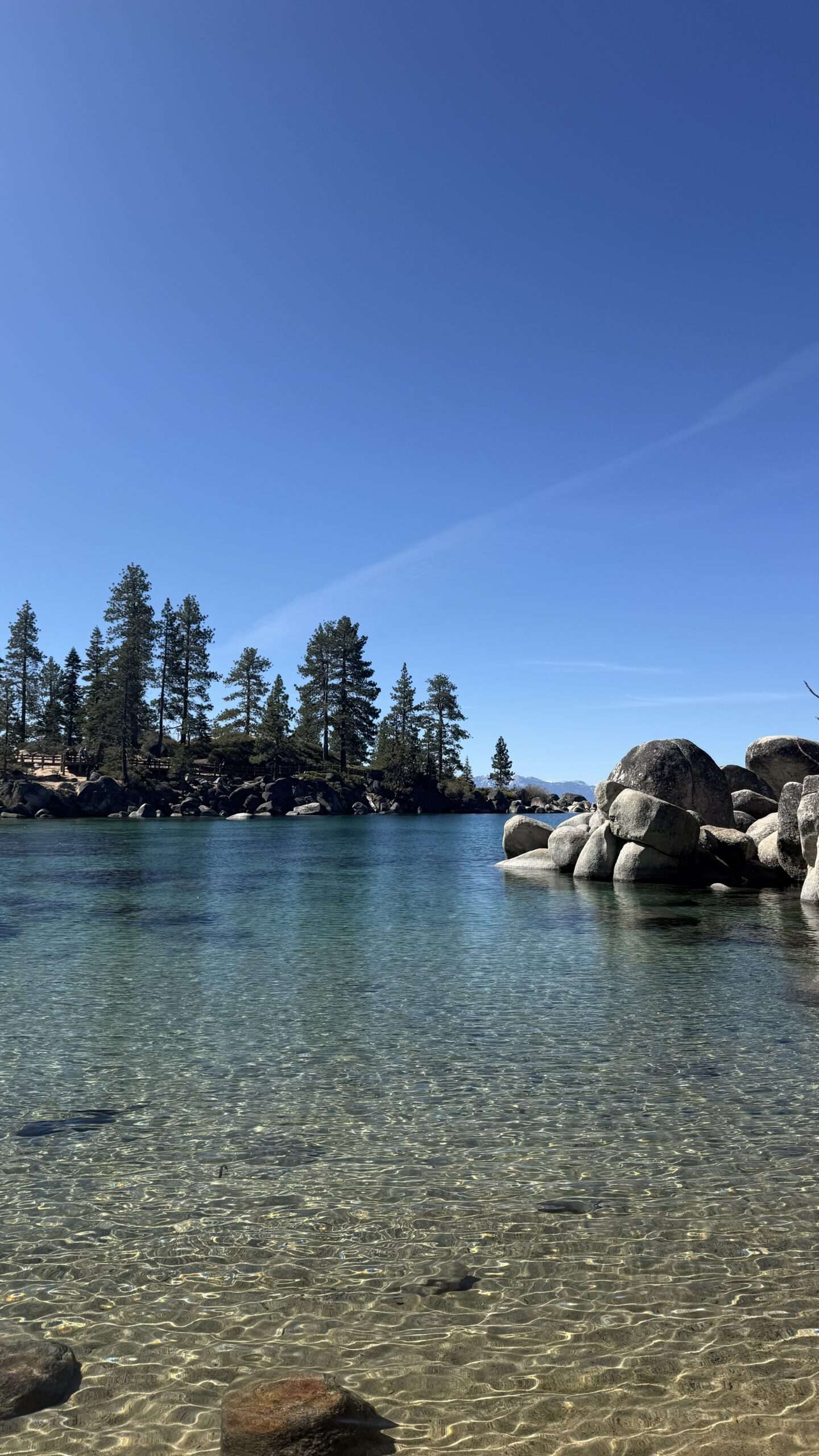
Sand Harbor State Park sits on the eastern shore of Lake Tahoe, and the water here has to be seen in person to be believed. On a clear day it runs from deep sapphire blue to turquoise to crystal clear over the sandy bottom — surrounded by massive granite boulders that tumble into the lake. It looks more like Croatia than Nevada.
Being based in Reno means this is our local spot — we’re here in under an hour. It’s one of those places we’ve brought everyone who visits us, and it lands every single time.
What to Do
Swimming is the main draw, with gently sloping beaches and boulders to jump from at the coves. The Tahoe East Shore Trail is a 3-mile paved trail connecting Incline Village south to Sand Harbor — billed as “America’s Most Beautiful Bikeway” and easy to walk or bike with continuous lake views. Kayaking and paddleboarding are popular; scuba diving is permitted given the exceptional water clarity. Each summer, Sand Harbor hosts the Lake Tahoe Shakespeare Festival on a floating stage set directly against the water — performances at sunset with the Sierra Nevada as a backdrop.
Important Planning Notes
Parking is the make-or-break factor. As of April 2025, Nevada State Parks fully implemented a mandatory day-use reservation system running April 15 through October 15. If you’re arriving by vehicle between 8 AM and 10:30 AM, you must have a reservation — no exceptions. After 10:30 AM, any unclaimed spots open first-come, first-served. Every single day from Memorial Day through Labor Day was fully reserved during the first full season, so book as far out as possible. Reservations are released in three tiers: 200 spots open 90 days out, 100 more at 30 days, and 50 more at 7 days. Book at ReserveNevada.com. There’s a $5 processing fee per reservation (same-day bookings are fee-free). If you don’t enter by 10:30 AM you forfeit your reservation — no refunds.
A free transit option exists: the East Shore Express runs daily along the east shore, connecting Incline Village to Sand Harbor. This is the easiest way to skip the reservation system entirely on busy summer days. Outside the April 15–October 15 window, entry is first-come, first-served and the park is far quieter.
Entrance fee: $15 for Nevadans, $20 for out of State (Nevada State Parks annual pass holders enter free)
Hours: 8 AM to one hour after sunset
Best time to visit: Weekday mornings in early summer or fall; avoid summer weekends without advance parking reservations
Nearest town: Incline Village, NV (3 miles) | Reno (45 minutes)
Where to Stay: Incline Village is the closest base. Browse all Lake Tahoe area options on Booking.com.
6. Babcock State Park, West Virginia
Babcock State Park doesn’t get the national attention it deserves. Ask anyone from West Virginia and they’ll tell you: the Glade Creek Grist Mill is an icon. It’s the most photographed landmark in the state — a fully functional replica mill built from parts salvaged from three historic West Virginia mills, sitting at the base of a waterfall in a narrow Appalachian gorge. In fall, surrounded by changing hardwoods, it’s one of the most photographed scenes in the entire eastern US.
The mill was completed in 1976 using parts from the 1890s Stoney Creek Grist Mill, along with components from the Spring Run and Onego mills. It still grinds cornmeal, which you can buy at the park gift shop — this isn’t just a photo opportunity, it’s a living piece of Appalachian history.
What to Do
Start at the Glade Creek Grist Mill and walk the short stone pathway down to the falls beneath it — the view from creek level is better than from the parking lot. From there, the park has 20 miles of hiking trails. The Boley Lake Loop (1.6 miles, easy) circles a scenic 19-acre lake through shaded forest. The Manns Creek Gorge Trail goes deep into the park’s rugged lower section through towering hardwoods, mountain laurel, and rhododendron. The Narrow Gauge Trail follows the bed of the historic Manns Creek Railway and doubles as a technical mountain bike trail.
We visited in fall while based at New River Gorge and the foliage around the mill was everything. The drone window (1–3 PM daily) is real — we timed our visit around it.
The park has 28 cabins, 52 tent/RV campsites, a restaurant, and an outdoor pool. It adjoins New River Gorge National Park directly, making it a strong base for a larger West Virginia trip.
Important Planning Notes
The Glade Creek Grist Mill is open mid-April through the last Sunday in October, daily from 9 AM to 5 PM. The mill and waterfall are always accessible and photographable from outside even when the mill itself isn’t operating, so an off-season visit is still absolutely worth it for fall foliage. Fall foliage (mid-October) is peak season for the mill photos. Drone use is permitted at the mill only between 1–3 PM daily; check in at the park office for other times. Cell service is limited in remote areas of the park.
Entrance fee: Free
Camping: Seasonal (spring through fall); 28 cabins also available
Best time to visit: Mid-October for fall foliage; summer for the full mill experience
Nearest town: Fayetteville, WV (20–30 minutes)
Where to Stay: Fayetteville is the most convenient base. Browse hotels near Babcock on Booking.com.
7. Wild Horse Island State Park, Montana
Wild Horse Island State Park is exactly what it sounds like. A 2,160-acre island in the middle of Flathead Lake — the largest natural freshwater lake west of the Mississippi — home to a small herd of wild horses, bighorn sheep, mule deer, bald eagles, osprey, and black bears. The only way to get there is by boat. There are no services, no food vendors, no crowds. Just the island and the wildlife.
The horses on the island are descendants of animals the Salish-Kootenai once pastured here to protect them from raids. That history adds a layer to a visit that goes well beyond a typical hike.
What to Do
The island has six designated boat landing sites, with Skeeko Bay being the most commonly used. Trails are mostly primitive, crossing open meadows and ponderosa pine forests with big views of Flathead Lake and the surrounding mountains. Wildlife viewing is the main activity — bring binoculars and move quietly. The wild horses are typically found on the western side of the island. Bighorn sheep, bald eagles, and deer are commonly spotted throughout. The island also has remnant apple and pear orchards from homesteading days in the early 1900s — still producing fruit visitors can pick.
There is a vault restroom along Trail 2. No camping is permitted — this is day use only.
Getting There
You’ll need to rent or bring a boat. Common launch points are Big Arm State Park, Yellow Bay, and Polson — all on Flathead Lake. Guided boat tours operate from several outfitters including Pointer Scenic Cruises out of Bigfork and Flathead Lake Boat Tours out of Polson if you’d rather not navigate yourself. We kayaked out, which is a less expensive and significantly more exhausting way to visit — but it works. If you’re trailering a boat into Montana, all vessels must pass through an invasive mussel inspection checkpoint — plan time for that stop. Fishing on Flathead Lake requires both a Montana state fishing license and a Confederated Salish and Kootenai Tribes fishing permit, available at local tackle shops.
Kalispell is the most practical base — 45 minutes from Big Arm, has the nearest airport, and puts you within easy reach of Glacier National Park and Whitefish for a longer Montana trip.
Entrance fee: Free
Access: By boat only; no ferry service
Groups: Parties over 15 require a permit
Best time to visit: June through August
Nearest access point: Big Arm, MT | Dayton, MT | Polson, MT
Where to Stay: Browse hotels in Kalispell and Polson on Booking.com.
Tips for Visiting State Parks
- Book early for popular parks. Sand Harbor’s parking reservations sell out weeks in advance in summer. Goblin Valley’s campground fills up fast. Treat reservations at popular state parks the same way you’d treat national park camping reservations.
- Your America the Beautiful pass won’t work. The national parks annual pass covers NPS, BLM, and US Forest Service lands — not state parks. Each state runs its own fee system.
- Look into state park annual passes. Nevada’s is $100/year and covers entry to all Nevada state parks including Valley of Fire and Sand Harbor. Utah’s is $125/year and covers all Utah state parks — if you’re visiting Goblin Valley and adding stops like Dead Horse Point State Park, it pays for itself fast. If you’re planning multiple visits to either state, it’s worth grabbing.
- Arrive early. Most popular state parks hit parking capacity by 9–10 AM on summer weekends. Arriving before 8 AM is the easiest way to guarantee entry and a good spot.
- Stack with nearby national parks. Custer is minutes from Badlands and Wind Cave; Babcock adjoins New River Gorge; Wild Horse Island is an hour from Glacier. Build itineraries that combine both.
- Prepare for minimal services. Remote parks like Goblin Valley and Wild Horse Island have little to no food or water on site. Self-sufficiency matters.
Frequently Asked Questions
What is the best state park in the US?
Custer State Park in South Dakota consistently earns top rankings — its wildlife, scenery, and size make it hard to beat. But “best” depends on what you’re looking for. Valley of Fire is unmatched for red rock desert scenery. Waimea Canyon is the best in Hawaii. Wild Horse Island is the most unique experience on this list.
Are state parks better than national parks?
Not better — different. State parks tend to have lower entrance fees, fewer crowds, and less permitting complexity. For many weekend trips, a well-chosen state park will give you a comparable outdoor experience with less hassle. Several state parks genuinely rival national parks for scenery.
Do national park passes work at state parks?
No. The America the Beautiful annual pass covers national parks and federal recreation lands — not state parks. State parks are managed individually by each state and have their own fee systems.
What is the most underrated state park in the US?
Wild Horse Island is the most underrated on this list — most people have never heard of it. Babcock State Park in West Virginia also flies under the radar despite being genuinely stunning, particularly in fall.
What is the most visited state park in the US?
According to Google Maps data from 2025, Watkins Glen State Park in New York’s Finger Lakes region was the most visited state park in the country, followed by Liberty State Park in New Jersey and Silver Falls State Park in Oregon.
Are state parks free?
Some are — Babcock and Wild Horse Island on this list are both free to enter. Most charge $5–$20 per vehicle, significantly less than the $35 at most national parks. Many states also offer annual passes covering all parks in their system.