Last Updated on October 9, 2026 by Melissa
Yellowstone, Yosemite, Zion, and the Grand Canyon get the headlines, and the crowds that come with them. But some of the most rewarding trips we’ve taken in 55 national parks were to underrated national parks that most people drive past or never put on the list: a cave system the size of a small town in New Mexico, a 13,000-foot peak in the Nevada desert, and a gorge in West Virginia that became a national park in 2020.
These six parks deliver big-park scenery with a fraction of the traffic. Below you’ll find why each one gets overlooked, what makes it worth the trip, the hikes to prioritize, and current reservation and closure info to know before you go.
Some of the links on this website are affiliate links, which means we may earn a small commission if you make a purchase through them — at no additional cost to you. These commissions help support Part Time Adventuring and allow us to continue creating free travel guides, national park itineraries, hiking resources, and adventure content.
Table of Contents
- Which Underrated National Park Should You Visit First?
- Carlsbad Caverns National Park, New Mexico
- Great Basin National Park, Nevada
- Crater Lake National Park, Oregon
- Death Valley National Park, California
- Badlands National Park, South Dakota
- New River Gorge National Park and Preserve, West Virginia
- Best Time to Visit Each Park
- Entrance Fees and Reservations
- Underrated National Parks FAQ
- Final Thoughts
Which Underrated National Park Should You Visit First?
Start with the park that fits your season and the region you’re already traveling through:
- Underground exploration, spring or fall — Carlsbad Caverns, New Mexico. Pair it with Guadalupe Mountains National Park, about 40 minutes south.
- Dark skies, alpine hiking, and real solitude — Great Basin, Nevada. Best from July through September.
- Lake views and a high-elevation scenic drive — Crater Lake, Oregon. Plan for mid-July through September, when the full rim road is typically open.
- A winter desert escape — Death Valley, California. About two hours from Las Vegas, and at its best November through March.
- Wildlife and a summer road trip stop — Badlands, South Dakota. Combine it with Mount Rushmore and the Black Hills.
- East Coast adventure without the drive west — New River Gorge, West Virginia. Hiking, climbing, rafting, and peak color in October.
Carlsbad Caverns National Park, New Mexico
Why It’s Overlooked
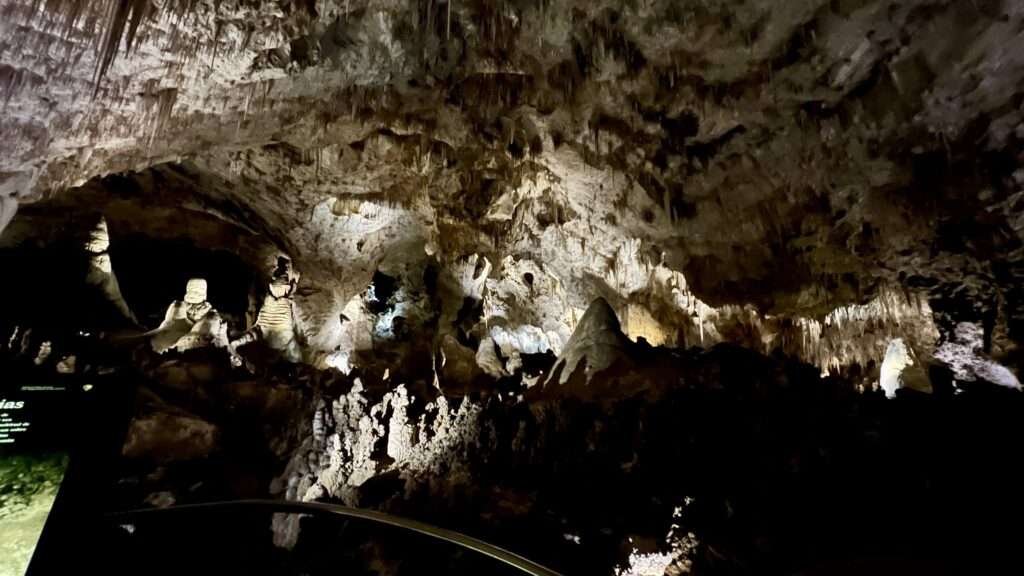
Carlsbad Caverns sits in the far southeast corner of New Mexico, hours from any major city and off the usual Southwest road trip routes. From the surface, it looks like flat Chihuahuan Desert scrub, which gives no hint of what’s underneath.<h3>Why It’s Worth the Visit</h3>
The park protects more than 119 caves, and the main cavern is one of the most impressive underground spaces in North America. The Big Room alone stretches nearly 4,000 feet, lined with stalactites, columns, and draperies on a paved, self-guided trail. You can walk the whole thing at your own pace — no tour required.
We hiked in through the Natural Entrance instead of taking the elevator down, and we’d do it the same way again — you get the full sense of scale as the trail drops from daylight into the cavern. The best part was not being locked into a tour. Most of the big cave parks require a ranger-led group to see anything, but here we explored at our own pace and stopped wherever we wanted. We missed the bat flight on our visit, so if that’s on your list, plan an evening between late May and October.
Top Hikes and Experiences
- Natural Entrance Trail — A steep 1.25-mile descent from the cave mouth into the cavern. Hike down and take the elevator back up.
- Big Room Trail — A mostly flat 1.25-mile loop through the largest chamber.
- Bat Flight Program — From late May through October, a ranger program at the amphitheater as Brazilian free-tailed bats pour out of the cave at dusk.
Know Before You Go
A timed-entry reservation is required to enter the cavern, booked on Recreation.gov for $1. The $15 per-person entrance fee (ages 16 and up) is paid separately at the visitor center. Cavern entry runs from 9:30 a.m. to 2:30 p.m., so you can’t start late. Wear closed-toe shoes with real traction — parts of both trails are wet and steep.
Where to stay: The town of Carlsbad is about 25 minutes from the visitor center and has the most lodging options.
Planning more cave time? See our guide to the best cave national parks in the U.S., including Wind Cave and Mammoth Cave.
Great Basin National Park, Nevada
Why It’s Overlooked
Great Basin is in remote eastern Nevada, roughly four to five hours from both Las Vegas and Salt Lake City, along a stretch of Highway 50 nicknamed “The Loneliest Road in America.” Most travelers have never heard of it, and it consistently ranks among the least visited parks in the system.
Why It’s Worth the Visit

In a single day here, you can drive to 10,000 feet, hike past a glacier and 4,000-year-old bristlecone pines, tour a marble cave, and finish under one of the darkest skies in the Lower 48. Great Basin is an International Dark Sky Park, and it charges no entrance fee.
Our best night of stargazing here happened by accident of planning: we started the Wheeler Peak hike at 2 a.m. to summit early, and spent the first part of the climb under a sky packed with stars. We hiked the bristlecone grove, the alpine lakes, and Wheeler Peak on that trip, but we didn’t get into Lehman Caves — book a tour ahead so you don’t miss it the way we did.
Top Hikes and Experiences
- Wheeler Peak Scenic Drive — A 12-mile climb to about 10,000 feet with access to the park’s best trailheads. The upper section closes seasonally with snow.
- Bristlecone and Glacier Trail — A 4.6-mile round trip through an ancient bristlecone grove to the only glacier in Nevada.
- Wheeler Peak Summit Trail — About 8.6 miles round trip to the 13,063-foot summit, the second-highest peak in Nevada. Start early to stay ahead of afternoon storms.
- Alpine Lakes Loop — An easy 2.7-mile loop past Stella and Teresa Lakes with Wheeler Peak towering above.
- Lehman Caves — Ranger-led tours through a heavily decorated marble cave, entry by tour only.
- Astronomy programs — Ranger-led night sky programs and telescope viewing, mainly in summer.
Know Before You Go
Lehman Caves closed in October 2025 for a lighting system replacement, and tours of the first two rooms resumed in May 2026 while work continues in the rest of the cave. Check the NPS tour page for the current schedule and reserve on Recreation.gov. Annual passes do not cover cave tour fees. There’s limited cell service and no gas in the park, so fill up before you leave Ely or Delta.
Where to stay: Lodging is scarce in tiny Baker. Ely is about an hour away with more options, or camp in the park ($20 per night at developed campgrounds).
Crater Lake National Park, Oregon
Why It’s Overlooked
Crater Lake has one headline feature, so many visitors assume a quick stop at the rim is enough. It’s also remote by Oregon standards, and heavy snow keeps most of the park’s roads and trails closed for much of the year.<h3>Why It’s Worth the Visit</h3>
At 1,943 feet, it’s the deepest lake in the United States, sitting in the caldera of a volcano that collapsed about 7,700 years ago. The water is a blue you won’t see anywhere else, and the 33-mile Rim Drive gives you a different angle on it from more than 30 overlooks.
We’ve visited in both early and late summer, and the difference is huge. In early summer, the park was still buried in snow, with closed roads and snowed-over trails, so we wouldn’t plan a trip around June. Late summer is when Crater Lake is at its best. We hiked Garfield Peak for the view from above and hiked down Cleetwood Cove to the water before the trail closed for reconstruction.
Top Hikes and Experiences

- Rim Drive — The full loop around the caldera, typically fully open from mid-July into October.
- Garfield Peak Trail — A 3.4-mile round trip from Rim Village to one of the best views of the lake.
- Mount Scott Trail — A roughly 4.4-mile round trip to the park’s highest point at 8,929 feet, with a view over the entire caldera.
- Watchman Peak Trail — A short climb to a fire lookout above Wizard Island, and one of the best sunset spots in the park.
Know Before You Go
You can’t reach the water right now. The Cleetwood Cove Trail, the only legal route down to the lake, is closed for a major rebuild through the 2026, 2027, and 2028 seasons, and boat tours to Wizard Island are suspended for the same period. The park expects to reopen the trail in 2029. Everything else, including Rim Drive and the rim trails, stays open. The entrance fee is $30 per vehicle in summer and $20 in winter, and the North Entrance and most of Rim Drive close to vehicles once snow arrives. Check current conditions before you go.
Where to stay: Crater Lake Lodge sits right on the rim but books up early. Klamath Falls is about an hour south.
Only have a day? Our one-day Crater Lake itinerary maps out exactly where to stop.
Death Valley National Park, California
Why It’s Overlooked
The name and the summer heat do a lot of damage. Many people assume Death Valley is a barren wasteland that’s only worth seeing for a record-high photo. In reality, it’s the largest national park in the Lower 48, packed with colorful badlands, sand dunes, salt flats, and narrow canyons.
Why It’s Worth the Visit
Death Valley is the hottest, driest, and lowest place in North America, and the landscapes are as extreme as the stats. Visit between November and March and you’ll have mild hiking weather, dark night skies, and some of the best desert photography in the country.
We’ve been to Death Valley in the heat of summer and the dead of winter, and honestly, it felt hot both times — winter just makes it bearable for hiking. Summer is a different story: plan around sunrise and sunset and stay close to the car midday.<h3>Top Hikes and Experiences</h3>
- Zabriskie Point — A short walk to the park’s most famous sunrise view over golden badlands.
- Badwater Basin — Walk out onto the salt flats at 282 feet below sea level, the lowest point in North America.
- Mosaic Canyon — A moderate 4-mile round trip through polished marble narrows near Stovepipe Wells.
- Dante’s View — An overlook more than 5,000 feet above the valley floor, and noticeably cooler than the basin.
Know Before You Go
Flash floods regularly close roads here, and several closures are long-term. Scotty’s Castle remains closed for flood recovery, Badwater Road is closed south of Badwater Basin, and Titus Canyon Road is closed from October 1, 2026, through September 30, 2027, for repairs. Always check the NPS conditions page the night before. The entrance fee is $30 per vehicle, and the park is cashless. Distances are long, so fill your tank before you enter.
Where to stay: We camped inside the park at one of its budget campgrounds — essentially a big open lot rather than defined, private sites, but legal, cheap, and right in the middle of everything. If you want a bed, Furnace Creek is the most central base, and Beatty, Nevada is a cheaper option about 45 minutes from the main sights.
Planning a short visit? Here’s how we’d spend one day in Death Valley.
Badlands National Park, South Dakota
Why It’s Overlooked
Badlands gets overshadowed by Mount Rushmore and the Black Hills, and plenty of travelers treat it as a quick detour off I-90. The name doesn’t help either — it sounds more like a warning than a destination.
Why It’s Worth the Visit
The eroded buttes and striped rock layers change color all day, from pale cream at noon to deep orange and pink at sunset. It’s also one of the easiest parks in the system for wildlife: bison, bighorn sheep, and prairie dogs are common right from the road. The park’s fossil beds are among the richest in the world for mammal fossils.
Wildlife was the highlight of our visit. We saw more bison and prairie dogs than we could count, many of them right along the road. We didn’t get to the Notch Trail, so that’s on our list for next time.
Top Hikes and Experiences
- Badlands Loop Road — Highway 240 through the heart of the park, lined with overlooks.
- Notch Trail — A 1.5-mile round trip with a log ladder climb and a view over the White River Valley.
- Fossil Exhibit Trail — A short accessible boardwalk with fossil replicas and interpretive signs.
- Door and Window Trails — Two easy walks from the same parking lot into the formations.
Know Before You Go
The entrance fee is $30 per vehicle for seven days, and no entry reservation is needed. Summer afternoons get hot with almost no shade, so hike early. Cedar Pass Lodge is the only place to buy food inside the park.
Where to stay: Wall, South Dakota is right at the northeast entrance. Rapid City is about an hour away and puts you closer to Mount Rushmore.
For a full plan, see how to spend one day in Badlands National Park.
New River Gorge National Park and Preserve, West Virginia
Why It’s Overlooked
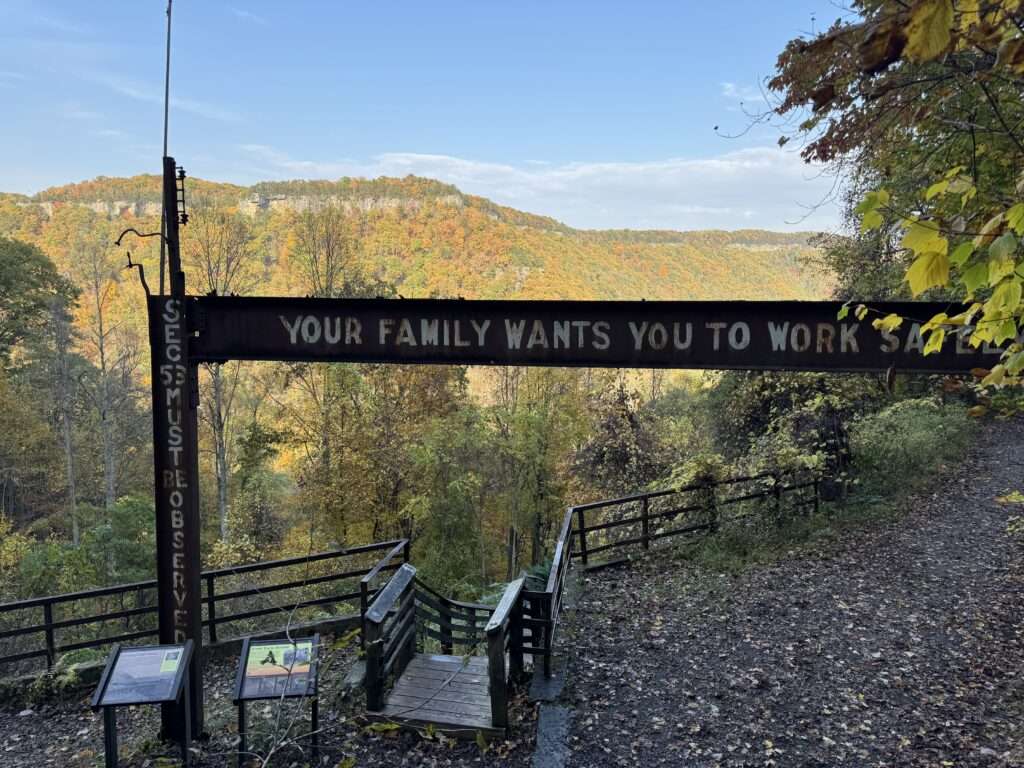
Why It’s Worth the Visit
This is the most adventure-focused park on the list. The gorge has world-class sandstone climbing, some of the best whitewater rafting in the eastern U.S., and the New River Gorge Bridge, one of the longest single-arch bridges in the world. Fall color in October makes it a top foliage trip, and there’s no entrance fee.
We visited in the fall and hiked the park’s most popular trails, including Endless Wall and Long Point. Fall is an amazing time to come — the forested ridges along the gorge turn every shade of red, orange, and gold. If you can only pick one season here, make it October.
Top Hikes and Experiences
- Endless Wall Trail — A 2.4-mile trail along the cliff edge with overlooks straight down into the gorge.
- Long Point Trail — A 3.2-mile round trip to the classic view of the bridge.
- Bridge Walk — A guided, harnessed walk on the catwalk beneath the bridge deck, roughly 850 feet above the river.
- Fayetteville — The park’s gateway town, with outfitters, gear shops, and good food.
Know Before You Go
Summer weekends and October color weekends are the busiest times, especially around Bridge Day (the third Saturday in October), when the bridge closes to traffic for BASE jumping and a festival. Go midweek or early in the morning for quieter trails.
Where to stay: Fayetteville puts you minutes from the bridge and the best trailheads.
Chasing fall color? New River Gorge is one of our picks for the best national parks for fall foliage.
Best Time to Visit These Underrated National Parks
| National Park | Best Season | What to Avoid |
|---|---|---|
| Carlsbad Caverns | Spring and fall (bats late May–October) | Summer heat above ground |
| Great Basin | July–September | Late spring, when the upper scenic drive is still snowed in |
| Crater Lake | Mid-July–September | November–June, when most roads close |
| Death Valley | November–March | June–September (dangerous heat) |
| Badlands | May–September | Midday summer heat; icy winter roads |
| New River Gorge | April–October | Winter, with icy trails |
Entrance Fees and Reservations
| National Park | Entrance Fee | Reservation Needed? |
|---|---|---|
| Carlsbad Caverns | $15 per person (16+) | Yes — $1 timed entry for the cavern |
| Great Basin | Free | Only for Lehman Caves tours |
| Crater Lake | $30 per vehicle (summer), $20 (winter) | No |
| Death Valley | $30 per vehicle | No |
| Badlands | $30 per vehicle | No |
| New River Gorge | Free | No (Bridge Walk is booked separately) |
An America the Beautiful Pass covers entrance fees at every park on this list that charges one. None of these six parks is on the list of 11 parks charging the $100 nonresident surcharge that started in 2026.
Underrated National Parks FAQ
What is the most underrated national park?
Great Basin is our pick. It combines a 13,000-foot peak, ancient bristlecone pines, a marble cave, and some of the darkest skies in the country — and it’s free to enter and rarely crowded.What is the least visited national park in the Lower 48?
Isle Royale in Lake Superior typically sees the fewest visitors of any park in the Lower 48, because it’s only reachable by boat or seaplane. Here’s how to visit Isle Royale.
Can you still swim in Crater Lake?
Not until the Cleetwood Cove Trail reopens. The only legal route to the shoreline is closed for reconstruction through the 2028 season, so the lake is view-only from the rim for now.
Do you need a reservation for Carlsbad Caverns?
Yes. A $1 timed-entry reservation on Recreation.gov is required to enter the cavern, and you pay the $15 per-person entrance fee separately at the visitor center.
Which of these underrated national parks are free?
Great Basin and New River Gorge have no entrance fee. You’ll still pay for Lehman Caves tours, camping, and guided activities like the Bridge Walk.
Final Thoughts: Why These Underrated National Parks Are Worth the Trip
None of these parks will give you the bragging rights of Yellowstone or Zion, and that’s the point. You get cave systems, alpine peaks, desert badlands, and river gorges with shorter lines, easier parking, and room on the trail. Pick the one that matches your season, check the current closures above, and build a trip around it.
If you’re piecing together a longer route, our 5-day national park trip guide walks through how to plan it.