Last Updated on June 10, 2026 by Melissa

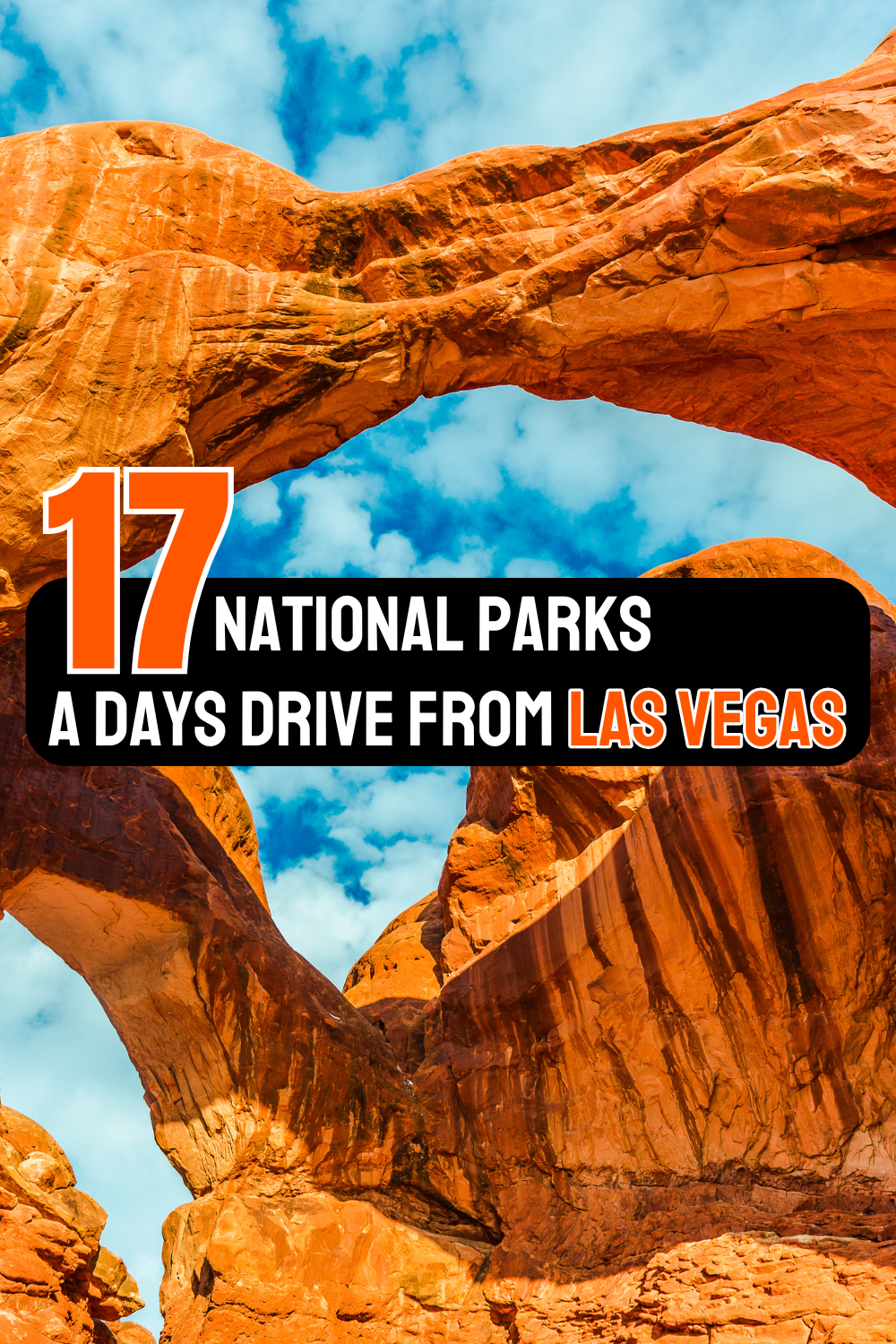
Las Vegas is one of the best basecamp cities in the country for national park access. There are 17 national parks near Las Vegas specifically within an 8 hours drive — from world-famous canyon country to remote desert gems most people have never heard of. Whether you’re squeezing in a day trip or building out a full road trip, here’s everything you need to know.
Table of Contents
- Before You Go: Get the America the Beautiful Pass
- Parks Under 3 Hours from Las Vegas
- Parks 4–5 Hours from Las Vegas
- Parks 6–8 Hours from Las Vegas
- Best Multi-Park Road Trips from Las Vegas
- Standalone Trip Parks
Before You Go: Get the America the Beautiful Pass
If you’re visiting more than two or three parks, the America the Beautiful Pass is worth it. At $80, it covers entrance fees at all 17 parks on this list and over 2,000 other federal recreation sites. It pays for itself fast.
Parks Under 3 Hours from Las Vegas
Zion National Park — 2.5 hours (160 miles)
Zion is the most popular park on this list, and for good reason. The canyon walls reach up to 2,000 feet and the hiking is genuinely world-class. The Narrows and Angels Landing are the marquee hikes — both require advance permits but are worth the extra planning. Spring and fall are the sweet spots; summer gets brutally hot and crowded.
Don’t miss: Emerald Pools Trail if you want a shorter, easier option with big payoff.
Death Valley National Park — 2.5 hours (150 miles)

The lowest, hottest, and driest national park in the country. Death Valley is one of those places that sounds extreme on paper and even more extreme in person. Badwater Basin at 282 feet below sea level is surreal, and Mesquite Flat Sand Dunes make for incredible early morning photos. Visit October through April — summer temperatures regularly exceed 120°F.
Check out our full one day in Death Valley guide for a complete itinerary, and if you’re visiting in spring, read up on the Death Valley superbloom — it’s one of the most spectacular natural events in the Southwest.
Joshua Tree National Park — 3 hours (190 miles)
Joshua Tree sits at the intersection of the Mojave and Sonoran deserts, and the landscape is unlike anything else. The twisted Joshua trees, massive boulder formations, and dark skies make it a favorite for hikers, climbers, and stargazers. Skull Rock is a classic stop, and Cholla Cactus Garden is worth the short walk at golden hour.
Best for: A quick overnight from Vegas — the park is compact enough to cover the highlights in a day.
Parks 4–5 Hours from Las Vegas
Grand Canyon National Park (South Rim) — 4 hours (275 miles)
There’s a reason the Grand Canyon is one of the most visited places on Earth. The South Rim offers the most accessible viewpoints and the most iconic overlooks — Mather Point is the classic first stop. If you want to get below the rim, the Bright Angel Trail is the most well-maintained option — just don’t attempt to hike to the river and back in a single day.
Tip: If you’re planning this alongside southern Utah parks, it’s an easy add-on to a Zion and Bryce road trip.
Bryce Canyon National Park — 3.75 hours (250 miles)
Bryce Canyon is smaller than it sounds, but the hoodoos — thousands of orange and red spire formations — make it one of the most visually distinctive parks in the country. Sunrise Point at dawn is genuinely stunning, and the Navajo Loop Trail drops you right into the canyon for a few hours of hiking without requiring a full day.
Best for: Combining with Zion — it’s only 1.5 hours apart and the two parks make a perfect 3–4 day pairing.
Capitol Reef National Park — 5 hours (290 miles)
Capitol Reef is consistently underrated. The Waterpocket Fold — a nearly 100-mile wrinkle in the earth’s crust — is the park’s defining feature, and the historic Fruita orchards in the middle of the park are a genuinely strange and wonderful surprise. Fewer crowds than Zion or Bryce, and dramatically different scenery.
Best for: The Utah Adventure Route road trip — it bridges the gap perfectly between Bryce and Arches.
Great Basin National Park — 4.75 hours (286 miles)
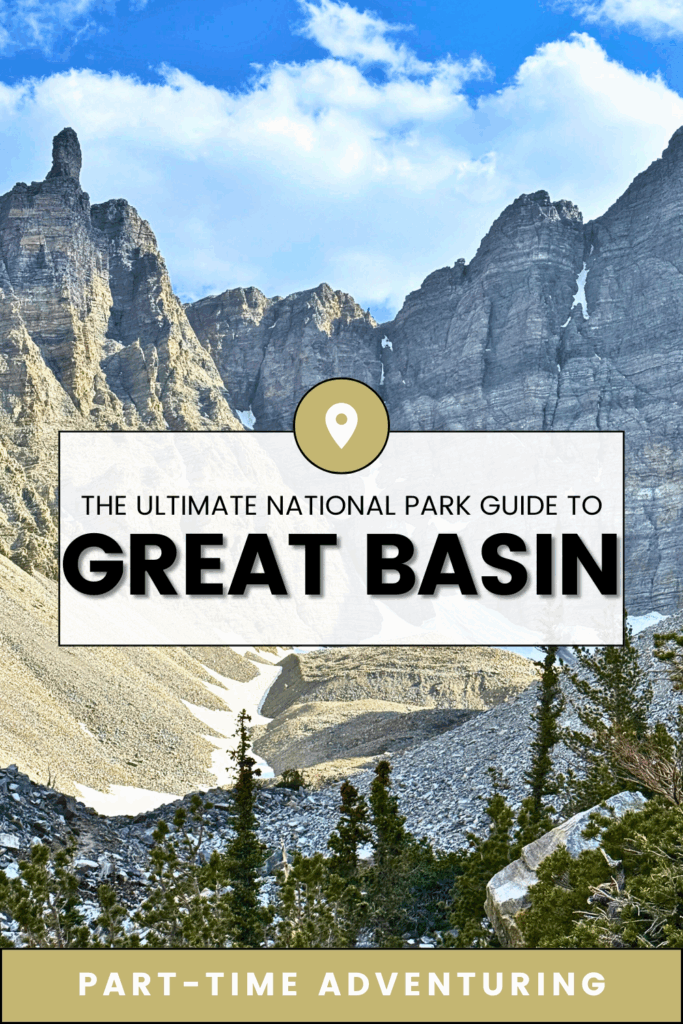
Nevada’s only national park is one of the most overlooked parks in the entire country. The Lehman Caves are genuinely impressive — you need a ranger-guided tour, which are offered daily. Wheeler Peak rises to 13,000 feet and offers alpine hiking you’d never expect to find in Nevada. The dark skies here are some of the best in the Lower 48.
Read our full Great Basin National Park guide for camping options, cave tour tips, and what to know before you go.
Kings Canyon National Park — 4.5 hours (260 miles)
Kings Canyon is almost always paired with Sequoia — they share a border and are jointly managed. The General Grant Tree is the nation’s third-largest tree and the drive into Kings Canyon itself — one of the deepest canyons in North America — is spectacular. Budget at least a full day for both parks combined.
Petrified Forest National Park — 5 hours (270 miles)
Ancient logs turned to crystal over 225 million years make Petrified Forest one of the more unique parks on this list. The Painted Desert section shifts colors throughout the day depending on the light. The park is compact enough to drive through in half a day, making it a good add-on during the Southwest Desert route.
Channel Islands National Park — ~5 hours to Ventura + boat
Channel Islands is the most unique park on this list and one of the most underrated in California. Drive to Ventura, catch a ferry with Island Packers, and you’re on an undeveloped island with wildlife, kayaking, snorkeling, and hiking — and almost no one else around. Santa Cruz Island is the most accessible and a great first stop. Plan for at least 2 days and book the ferry in advance.
Best for: A standalone long weekend trip out of Las Vegas — the drive and ferry make it a real adventure before you even arrive.
Parks 6–8 Hours from Las Vegas
Arches National Park — 6 hours (375 miles)
Over 2,000 natural sandstone arches, including the iconic Delicate Arch. The hike to Delicate Arch is 3 miles round trip and the payoff is worth every step. It’s a compact park but you could easily spend a full day here between hiking and exploring the different arch formations.
Best paired with: Canyonlands. They’re 30 minutes apart and the combination is unbeatable
Canyonlands National Park — 6.5 hours (390 miles)
Canyonlands is bigger and wilder than Arches — carved canyons, mesas, and buttes spread across four separate districts. The Island in the Sky district is the most accessible and offers some of the most sweeping desert views anywhere in the Southwest. Mesa Arch at sunrise is one of those views that genuinely lives up to the hype.
We have a full Canyonlands itinerary and best hikes guide if you want to plan this one properly.
Sequoia National Park — 6 hours (350 miles)
Home to General Sherman, the largest living tree on Earth by volume. Standing next to a mature giant sequoia is a genuinely humbling experience — photos don’t do the scale justice. The Congress Trail loops through the densest concentration of massive trees. Pair with Kings Canyon for a full two-park day.
We have an ultimate Sequoia guide and a dedicated winter visit guide if you’re going in the off-season.
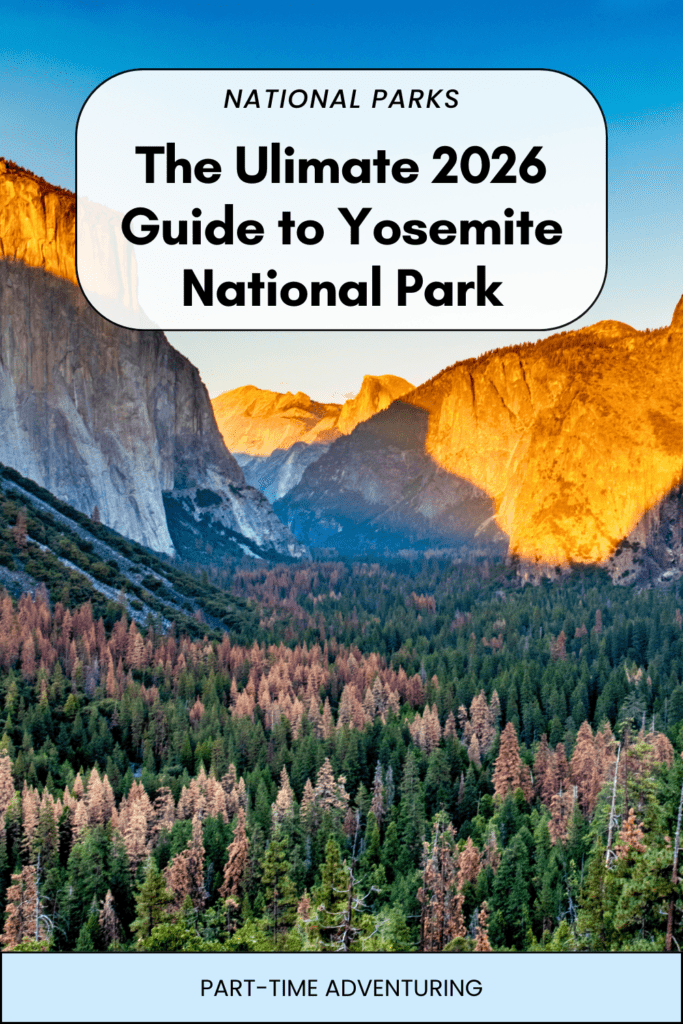
Yosemite National Park — 7 hours (400 miles)
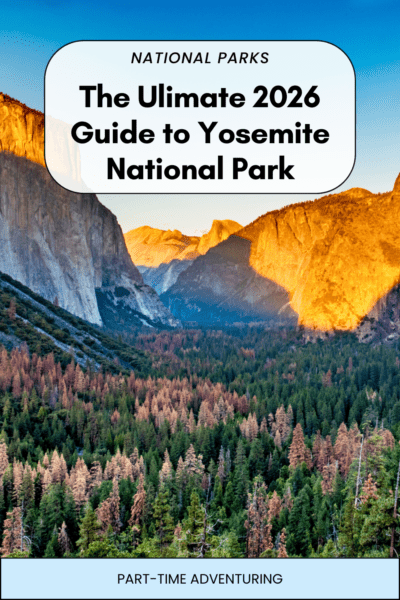
Yosemite is one of the most visited parks in the country, and the valley is stunning — granite cliffs, waterfalls, and meadows. Yosemite Falls, Half Dome, and El Capitan are the icons. Half Dome cables require a permit lottery if that’s on your list — apply well in advance.
See our full Yosemite 2026 guide for everything you need to know before you go.
Saguaro National Park — 6.5 hours (410 miles)
Two separate districts flank Tucson, both full of the iconic saguaro cacti that define the Sonoran Desert skyline. At sunset, the silhouettes are striking. The Valley View Overlook Trail in the west district is a short, rewarding hike. Best visited as part of the Southwest Desert route alongside the Grand Canyon and Petrified Forest.
Pinnacles National Park — 7 hours (410 miles)
California’s least-visited national park and one of the best for avoiding crowds. Volcanic spires, talus caves, and California condors make this one genuinely worth the drive if you’re doing the California loop. Bear Gulch Cave is the highlight — a natural tunnel through boulders with bats inside (seasonally open depending on roosting).
Best Multi-Park Road Trips from Las Vegas
1. Utah Adventure Route — 5–7 Days
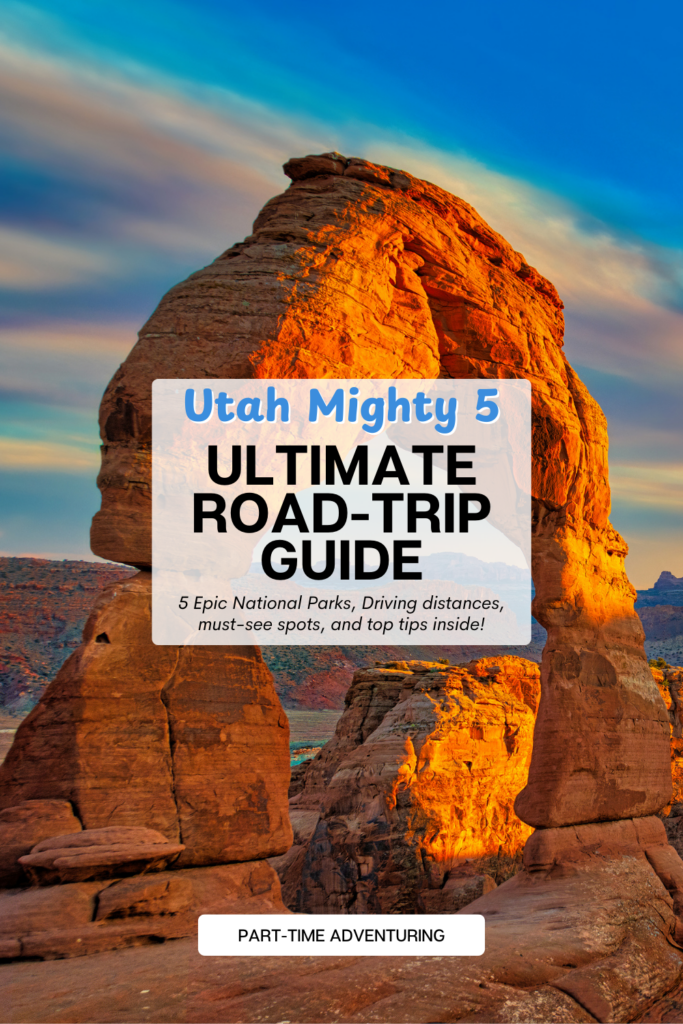
The route:
- Las Vegas → Zion National Park — 2.5 hrs
- Zion → Bryce Canyon National Park — 1.5 hrs
- Bryce Canyon → Capitol Reef National Park — 2.5 hrs
- Capitol Reef → Arches National Park — 2.5 hrs
- Arches → Canyonlands National Park — 30 min
- Return to Las Vegas — 6.5 hrs
Why it works: This is the classic Utah national parks loop and it’s a legitimate bucket list road trip. Five parks, logical driving order, and every single stop delivers. Spend at least 1–2 full days in Zion, 1 day in Bryce, 1 day in Capitol Reef, and 2 days covering Arches and Canyonlands together. Base yourself in Springdale for Zion and Moab for the Arches/Canyonlands portion. Make sure your America the Beautiful Pass is in hand and book any required permits (Angels Landing) well in advance.
See our multi-park road trip guide for more detail on this route.
2. California & Nevada Loop — 6–8 Days
The route:
- Las Vegas → Death Valley National Park — 2.5 hrs
- Death Valley → Joshua Tree National Park — 3.5 hrs
- Joshua Tree → Sequoia National Park — 5.5 hrs
- Sequoia → Kings Canyon National Park — 1 hr
- Kings Canyon → Yosemite National Park — 3.5 hrs
- Yosemite → Pinnacles National Park — 3 hrs
- Return to Las Vegas — 7 hrs
Why it works: The diversity here is the selling point — you go from the lowest point in North America to groves of giant sequoias to Yosemite Valley in one trip. Death Valley and Joshua Tree work well as one-night stops; give Sequoia/Kings Canyon a full day and Yosemite a minimum of two. Book Yosemite reservations before anything else — they sell out months in advance during peak season. Check our Yosemite 2026 guide and Sequoia guide before you go.
3. Southwest Desert & History Route — 5–6 Days
The route:
- Las Vegas → Grand Canyon National Park — 4 hrs
- Grand Canyon → Petrified Forest National Park — 2.5 hrs
- Petrified Forest → Saguaro National Park — 3.5 hrs
- Return to Las Vegas — 6.5 hrs
Why it works: This route leans into the history and geology of the Southwest. The Grand Canyon is the obvious anchor — spend at least a full day here — and Petrified Forest is a compact half-day stop that adds something genuinely different to the trip. Saguaro in Tucson makes a great final night before the long drive back. If you’re interested in Native American history, Mesa Verde is a detour worth considering, though it adds significant drive time.
4. Coastal & Inland California — 5–7 Days
The route:
- Las Vegas → Joshua Tree National Park — 3 hrs
- Joshua Tree → Ventura, CA (for Channel Islands ferry) — 3.5 hrs
- Ventura → Pinnacles National Park — 4 hrs
- Pinnacles → Yosemite National Park — 3 hrs
- Return to Las Vegas — 7 hrs
Why it works: This is the most unique itinerary on the list — desert, islands, volcanic rock formations, and Yosemite Valley all in one loop. Book your Channel Islands ferry with Island Packers well in advance, and plan to spend a full day or overnight on Santa Cruz Island. This route requires the most logistics but also the most variety.
Standalone Trip Parks
Two parks are remote enough that they’re better visited as dedicated trips rather than combined with others:
Great Basin National Park — 4.75 hours Nevada’s hidden gem. Best for stargazing, Lehman Caves, and high-altitude hiking. See our full guide.
Mesa Verde National Park — 7.75 hours The cliff dwellings here are unlike anything else in the national park system. Ranger-guided tours of Cliff Palace fill up early — book before you leave. Because of the distance and isolated location in Colorado, it’s worth making a dedicated 2–3 day trip rather than tacking it onto a larger route.
Las Vegas puts you within a day’s drive of some of the best landscapes in the country — desert canyons, giant sequoias, alpine peaks, and everything in between. If you’re not sure where to start, the Utah Adventure Route is the most popular for a reason, but any of the routes above will deliver. Grab your America the Beautiful Pass before you leave, check out our full road trip planning guide for logistics help, and go.
FAQ: National Parks Near Las Vegas
What is the closest national park to Las Vegas? Zion National Park is the closest, at about 2.5 hours (160 miles) from Las Vegas. Death Valley National Park is also 2.5 hours but in the opposite direction. Both are easy day trips or overnights from the city.
How many national parks are within a day’s drive of Las Vegas? There are 17 national parks within 8 hours of Las Vegas, covering Utah, California, Arizona, Nevada, and Colorado. That makes Las Vegas one of the best basecamp cities in the country for national park access.
Do I need reservations for national parks near Las Vegas? It depends on the park. Zion’s Angels Landing requires a permit lottery. Half Dome in Yosemite also requires an advance permit if that hike is on your list. Most other parks on this list are first-come, first-served for entry — but always check the NPS website for the specific park before you go, as policies can change seasonally.
Is the America the Beautiful Pass worth it for a Las Vegas national parks trip? Yes, almost always. The pass is $80 and covers entrance fees at all 17 parks on this list. Most parks charge $30–$35 per vehicle to enter, so it pays for itself after two or three parks. If you’re doing any of the multi-park road trips above, it’s a no-brainer. You can pick one up here.
What is the best time of year to visit national parks near Las Vegas? Spring (March–May) and fall (September–November) are the best windows for most parks on this list. Summer heat in Death Valley and the lower elevation desert parks is extreme — Death Valley regularly exceeds 120°F. Higher elevation parks like Bryce Canyon, Capitol Reef, and Great Basin are more manageable in summer. Winter visits are possible at many parks and crowds drop significantly, though some roads and facilities may be closed.
What is the best national park road trip from Las Vegas? The Utah Adventure Route — Zion, Bryce Canyon, Capitol Reef, Arches, and Canyonlands — is the most popular and for good reason. Five parks, logical driving order, and some of the most dramatic scenery in the Southwest all in one loop. Budget 5–7 days to do it properly. See our full road trip guidefor a detailed breakdown.