Last Updated on June 21, 2026 by Melissa
Visiting national parks on a budget is not only possible — it’s honestly one of the best ways to travel in the US. You don’t need an expensive guided tour, a lodge inside the park, or a flight to have an incredible trip. With a little planning, you can spend a week surrounded by mountains, canyons, and wildlife without blowing your savings.
These are the exact strategies I use to keep national park trips affordable, and they work whether you’re planning a solo adventure, a trip with a partner, or a full family road trip.
This post contains affiliate links — if you book or buy through them, I may earn a small commission at no extra cost to you. Thanks for supporting Part-Time Adventuring!
1. Drive Instead of Fly
This is the single biggest money-saving decision you can make for a national park trip. Flights to gateway cities are expensive, and once you land, you still need a rental car — which adds another $50–$100+ per day on top of your airfare.
When you drive from home, you eliminate rental car fees, baggage costs, and the stress of airport logistics. You also get to stop wherever you want along the way, which is half the fun of national park travel.
If driving isn’t realistic and you do need to fly, look at flying into a larger regional hub rather than the closest small airport. Flights into Salt Lake City, for example, are almost always cheaper than flying into Jackson Hole — and the drive to Grand Teton or Yellowstone from SLC is part of the experience. Use Google Flights in incognito mode to search, and check GasBuddy for fuel prices along your route if you’re road tripping.
2. Get the America the Beautiful Pass
If you’re visiting more than two or three national parks in a year, the America the Beautiful Pass is a no-brainer. For $80, you get unlimited entry to over 2,000 federal recreation sites for a full year — national parks, monuments, forests, BLM land, and more.
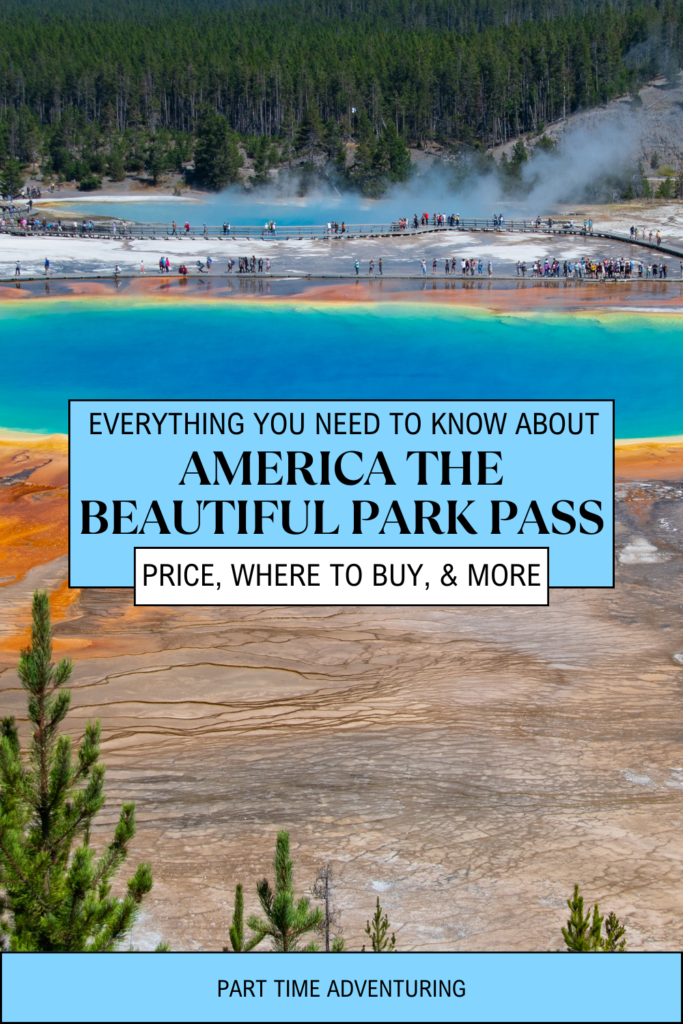
Park entrance fees typically run $20–$35 per vehicle per visit. If you visit just three parks, the pass has already paid for itself. It covers everyone in your vehicle, which makes it especially valuable for families or groups.
There are also free and discounted versions of the pass worth knowing about:
- Military pass — Free for active duty military and their dependents
- Senior pass — $20 for a lifetime pass for US residents 62 and older (one of the best deals in travel, full stop)
- 4th Grade Pass — Free for fourth graders and their families through the Every Kid Outdoors program
- Access Pass — Free for US residents with permanent disabilities
Read more about all the pass options here.
3. Visit National Parks on Free Entrance Days
Every year, the National Park Service designates several fee-free days when all parks waive their entrance fees. 2026 has 10 free entrance days — more than in recent years — so there are plenty of opportunities to plan around them.
2026 Free Entrance Days:
- February 16 — Presidents Day
- May 25 — Memorial Day (already passed)
- June 14 — Flag Day
- July 3, 4, and 5 — Independence Day weekend
- August 25 — 110th Birthday of the National Park Service
- September 17 — Constitution Day
- October 27 — Theodore Roosevelt’s Birthday
- November 11 — Veterans Day
A couple of things worth knowing for 2026 specifically: free entrance days now apply to US citizens and residents only — non-residents still pay the regular entrance fee. Also, only entrance fees are waived. Timed entry reservations, camping fees, parking, and tours still cost money as normal.
One thing to keep in mind: free days are popular, and popular parks will be noticeably more crowded than usual. If you’re visiting a busy park like Zion or Arches on a free day, plan to arrive at or before sunrise to snag a parking spot and beat the crowds.
4. Stay Outside of the National Parks
Lodging inside national parks — whether it’s a lodge, cabin, or glamping tent — is almost always significantly more expensive than staying in a nearby town. We’re talking $200–$400+ per night at in-park lodges versus $80–$120 at a decent motel just outside the entrance.
Gateway towns are your best friend. They’re close enough to the park that you won’t lose meaningful time, and you’ll often find better food options, gas stations, and grocery stores there too.
Skip the boutique hotels and trendy Airbnbs in these towns — they’ve caught on to the tourist traffic and price accordingly. Look for standard motels, budget chain hotels, or smaller locally-owned options. A clean room with a microwave and a mini fridge is genuinely all you need when you’re spending most of your time in the park.
Here are two real examples of us cutting costs on our lodging:
- Zion National Park — Instead of Springdale (right at the entrance and priced accordingly), we stayed in La Verkin, about 30 minutes away, for a fraction of the cost. We also stayed somewhere that was brand new so we got a deal as they had reduce rates to bring in guests.
- Grand Teton + Yellowstone — We based ourselves in Driggs, Idaho, just over the border from pricey Jackson Hole. Then the 2 weekends we went to Yellowstone and Grand Teton we car camped inside the park or on nearby BLM land.
A little research before you book goes a long way.
5. Eat In as Much as Possible
Eating out near national parks is expensive, and the options near smaller parks are often limited anyway. A sit-down dinner for two in a tourist gateway town can easily run $60–$80 with drinks. Do that twice and you’ve blown your entire food budget for the trip.
The move is to stop at a grocery store before you get to the park and stock up for the whole trip. A cooler, a microwave, or a small camp stove is all you need to eat well without spending much.

One of the best items we take on roadtrips is our BougeRV electric fridge. This easily plugs into the car and we can have lunch meat sandwiches and cold beverages on the go without dealing with ice! We bring a portable power bank to keep the fridge cold while hiking.
If you’re passing through a city on your way, even better — grocery stores in tourist gateway towns near parks are often more expensive and have less selection than a regular supermarket in a normal town.
Our Go-To Travel Meals
These are the meals we actually eat on our trips — easy, cheap, and genuinely good after a long day of hiking:
- Trader Joe’s microwave lasagna — Perfect for two people, takes five minutes, and is surprisingly satisfying. This is a go-to hotel dinner after a full day on the trail.
- Trader Joes sous vide chicken + instant mashed potatoes + canned green beans — A full, hot, protein-heavy meal that comes together fast whether you’re in a hotel room or at a campsite with a stove. The chicken is already fully cooked so there’s almost no prep.
- Frozen breakfast sandwiches — Heat them up in the microwave before you head out for the day. Way cheaper than stopping at a cafe, and you’re not hiking on an empty stomach.
- Backpacking meals — These often get overlooked for car camping or hotel trips, but they’re worth grabbing even if you’re not backpacking. Brands like Good To-Go or Mountain House are genuinely tasty, require nothing but boiling water, and are almost always cheaper per meal than eating out.
- Ramen or soup — A classic for good reason. To make ramen actually filling after a long hike, swap the water for bone broth for an easy protein boost. There are also high-protein ramen noodles available now (Costco and Amazon both carry them) that make it a legitimately solid post-hike meal without much extra effort or cost.
- Grocery store prepared foods — Most larger grocery stores have a deli or prepared foods section with rotisserie chicken, pre-made salads, and hot sides. It’s fresher than shelf-stable camp food and almost always cheaper than a restaurant meal. Grab dinner from the deli counter and eat it back at camp or in the room.
One thing we always throw in the car on road trips: our air fryer. It sounds extra but it genuinely changes the game — frozen breakfast sandwiches, reheating leftovers, cooking chicken, even making fries from whatever you picked up at the grocery store. If you have a hotel room with an outlet and a little counter space, it’s worth bringing. Just be mindful to not blow a fuse in the hotel rooms!
6. Camp — Inside the National Parks or on BLM Land
Camping is the most budget-friendly accommodation option for national park travel, and it puts you right in the middle of the experience.
In-park campgrounds typically run $20–$35 per night, which is a fraction of what you’d pay for a lodge room. Book through Recreation.gov — reservations open up months in advance for popular parks, so plan ahead if you’re targeting somewhere like Yosemite or Glacier.
If the park campgrounds are full or out of your budget, check for campgrounds in nearby national forests or state parks. They’re often just as scenic and significantly cheaper.
The real hidden gem is BLM (Bureau of Land Management) land. Much of the land surrounding national parks is BLM-managed, which means dispersed camping — completely free. You can camp by tent, car, or RV with no reservation required, usually within a short drive of the park entrance. Apps like The Dyrt and iOverlander are great for finding specific spots.
7. Use Credit Card Points for Lodging, Rental Cars, and Flights
If you’re not already using travel credit card points toward your trips, this is worth looking into. Points from cards like Chase Sapphire, Capital One Venture, or hotel-brand cards can dramatically reduce — or completely eliminate — the cost of a hotel night or rental car.
Even if you’re not a points maximizer, most travel cards offer straightforward redemptions. Booking a few nights with points instead of cash can free up a significant chunk of your trip budget for food, gear, or another park entirely.
This pairs especially well with gateway town stays — if you’re booking a chain hotel (Marriott, Hilton, IHG) near a park, those stays earn and redeem points easily.
8. Skip the Paid Activities
This one’s simple: the best things to do in national parks are free.
Hiking, wildlife watching, scenic drives, ranger-led programs, and visitor center exhibits cost nothing beyond your entrance fee. These aren’t consolation prizes — they’re the actual point of being there. A sunrise hike to an overlook, spotting a moose at dawn, or sitting on a canyon rim watching the light change will be the moments you remember, not whatever rafting excursion cost you $150 per person.
The paid activities — guided tours, helicopter rides, equipment rentals, river rafting — can add hundreds of dollars to a trip fast. Unless there’s something truly bucket-list about a specific paid experience for you personally, skip it.
National Park rangers also offer free guided hikes, campfire talks, and junior ranger programs throughout the season. Check the park’s website or the visitor center board when you arrive — these are genuinely excellent and wildly underutilized.
9. Visit National Parks in the Shoulder Season
Peak season (summer, especially July and August) is when national parks are most expensive across the board — lodging prices spike, campgrounds book out months in advance, and some parks require timed entry reservations that sell out instantly.
Visiting in shoulder season (late April through early June, or September through October for most parks) can cut your lodging costs significantly, sometimes by half. The parks are less crowded, the light for photography is often better, and you’ll have a more relaxed experience overall.
The best shoulder season timing varies by region:
- Southwest (Zion, Bryce Canyon, Arches, Capitol Reef) — Spring (March–May) and fall (September–October) are ideal. Summer is brutally hot in canyon country and peak crowds make parking a nightmare. September is arguably the best month in the whole region.
- Pacific Northwest (Olympic, Crater Lake, North Cascades) — These parks peak in July and August when the weather is reliably clear. Late September is a sweet spot — crowds drop, lodging prices fall, and the parks are still fully accessible.
- Rocky Mountain West (Rocky Mountain NP, Grand Teton, Yellowstone) — Late May through early June gets you open roads and wildflowers without full summer pricing. Early October brings elk rut season and fall color with noticeably thinner crowds.
- Southeast (Great Smoky Mountains, Shenandoah) — Smoky Mountains is actually busiest in October for fall foliage, which drives prices way up. For the best budget timing, visit in April–May for spring wildflowers or in early November once the leaf peepers have gone home.
Some parks are genuinely better in shoulder season — not just cheaper. Do a quick search for the specific park you’re considering before defaulting to a summer trip.
10. Pack Smart to Avoid In-Park Spending
Once you’re inside a national park, everything costs more — bottled water, snacks, souvenirs, gear you forgot at home. A little prep before you leave saves a lot of money once you’re there.
Here’s what to bring:
- Reusable water bottle — Water bottle refill stations are available at most visitor centers and trailheads. A $5 bottled water habit across a 4-day trip adds up surprisingly fast.
- A cooler — Keeps groceries fresh for the whole trip, makes it easy to pack lunches for the trail, and means you’re never forced into an overpriced park restaurant because you’re hungry and have nothing else.
- Camp stove or electric kettle — A small camp stove is ideal if you’re camping. If you’re in a hotel, a travel electric kettle handles oatmeal, instant noodles, pour-over coffee, and cup soups without needing a kitchen.
- Trail snacks — Pack your own trail mix, granola bars, and fruit from a grocery store before you enter the park. The same bag of trail mix that costs $2 at a supermarket runs $7 at a park gift shop.
National Parks That Are Easy on the Budget (Thanks to Location)
Once you have the America the Beautiful Pass, entry fees are essentially the same everywhere. What actually separates an affordable park trip from an expensive one is how far you have to travel to get there and what lodging costs in the surrounding area. Parks that are close to major cities — or that have affordable gateway towns nearby — are naturally easier on the wallet.
A few that consistently deliver:
- Acadia (ME) — Bar Harbor is charming but can get pricey in peak summer. Stay in Ellsworth or Trenton just outside the park and you’ll find significantly cheaper motels and easy access to the park. Acadia is also very driveable from Boston, Portland, and most of New England, which cuts out flights entirely.
- New River Gorge (WV) — One of the newer national parks and still under the radar enough that the surrounding area hasn’t been priced up like more famous parks. The town of Fayetteville is small, affordable, and has camping and budget lodging right nearby. It’s an easy drive from DC, Charlotte, Columbus, and Pittsburgh.
- Rocky Mountain (CO) — About 90 minutes from Denver, with camping inside the park and affordable motel options in Estes Park. Flights into Denver are cheap from most US cities, and the drive itself is part of the experience.
- Shenandoah (VA) — Easy driving distance from DC, Baltimore, and Richmond. The Shenandoah Valley towns on the western side of the park have genuinely affordable lodging, and national forest land nearby offers plentiful dispersed camping.
- Great Smoky Mountains (TN/NC) — Within a day’s drive of a huge chunk of the eastern US population. Gatlinburg and Pigeon Forge are touristy but packed with budget motel options, and the park has multiple campgrounds across both sides of the park.
Parks to budget more carefully for: Grand Teton, Glacier, and Yellowstone are worth every penny, but their remote locations mean fewer lodging options and higher prices. If you’re visiting these, book camping at Recreation.gov as early as possible — or plan to use nearby BLM land to keep lodging costs down.
Keep Trips Short and Go More Often
One of the most underrated national park budget strategies is simply planning a shorter trip. Instead of waiting until you can take a full week off, plan for 3–5 days. You’ll spend less on lodging, food, and gas — and you might be surprised how much you can actually see.
Most parks don’t need seven days. Bryce Canyon, Joshua Tree, Shenandoah, New River Gorge — you can genuinely experience the best of these in 3–4 focused days without feeling like you missed anything. The key is maximizing your time while you’re there: get to the park at sunrise, take full advantage of the daylight, and hit your must-do hikes and viewpoints early before crowds and heat build up. Starting at sunrise also means you can often squeeze in two solid hikes in a single day without feeling rushed.
The math is simple — fewer nights means lower lodging costs, less food spending, and less gas. And going on four 3-day trips throughout the year will almost always be cheaper and more satisfying than one 12-day trip. You see more parks, spend less overall, and you’re not putting all your eggs in one vacation basket.
Sample Budget: National Park Road Trip on a Budget (4 Days, 2 People)
To make this concrete, here’s a rough budget breakdown for a 4-day trip for two people driving from home:
| Category | Budget Option | Mid-Range Option |
|---|---|---|
| Park entrance (with pass) | $0 (America the Beautiful) | $0 |
| Lodging (4 nights camping) | $80–$140 | $200–$300 (motel) |
| Gas | $60–$120 | $60–$120 |
| Food (cooking most meals) | $80–$120 | $150–$250 |
| Activities | $0 | $0–$100 |
| Total (per person) | ~$110–$190 | ~$205–$385 |
Your biggest variable is always lodging. Camping vs. a motel is often the difference between a $150 trip and a $300 trip per person.
The Bottom Line
Visiting national parks on a budget comes down to a handful of decisions: drive instead of fly, buy the America the Beautiful Pass, stay outside the park or camp, cook your own food, and skip the paid extras. None of these things mean sacrificing the experience — the parks themselves are the experience, and they’re largely free once you’re through the gate.
The most memorable trips aren’t the most expensive ones. Some of the best national park days I’ve had cost almost nothing: a long hike, a camp dinner, and a sky full of stars.
Frequently Asked Questions
Is the America the Beautiful Pass worth it? Yes, in almost every case. The pass costs $80 and covers unlimited entry to over 2,000 federal recreation sites for a full year. Since most national parks charge $20–$35 per vehicle per visit, you break even after just two or three parks. If you’re visiting more than that — or if you’re traveling with a car full of people — it’s one of the best deals in travel. The only time it doesn’t make sense is if you’re visiting a single park once, in which case you’re better off just paying the entrance fee.
What is the cheapest way to visit national parks? The cheapest approach combines a few strategies: drive instead of fly, get the America the Beautiful Pass (or visit on a free entrance day), camp inside the park or on nearby BLM land for free, and cook your own meals. Doing all of these together, a 4-day national park trip can realistically cost under $200 per person including food and gas.
Can you visit national parks for free? Yes, a few ways. Great Smoky Mountains National Park has no entrance fee at all. The National Park Service also designates several fee-free days each year when all parks waive entrance fees. Additionally, active military, fourth graders, seniors (62+), and people with permanent disabilities all qualify for free or heavily discounted annual passes. And once you have the America the Beautiful Pass, every subsequent park visit that year is free.
How much does a national park trip cost? It varies a lot depending on how you travel, but a reasonable range for a 4-day trip for two people driving from home is $220–$770 total, or roughly $110–$385 per person. The biggest variables are lodging (camping vs. motel) and whether you’re cooking your own food. With a pass, camping most nights, and cooking most meals, you can get that number down significantly. Flying, staying in park lodges, and eating out every meal can push it well over $1,000 per person.
Keep exploring: