Last Updated on August 17, 2026 by Melissa
Some national parks make wildlife sightings a near-guarantee if you know where and when to look. Others take patience. We’ve watched a black bear cross the trail to Delta Lake in Grand Teton, elk grazing above 10,000 feet in Rocky Mountain, and alligators stacked up along the Anhinga Trail boardwalk in the Everglades.
Here’s where we’ve had the best luck — and the specific spots, times, and species to expect at each.
Some of the links on this website are affiliate links, which means we may earn a small commission if you make a purchase through them — at no additional cost to you. These commissions help support Part Time Adventuring and allow us to continue creating free travel guides, national park itineraries, hiking resources, and adventure content.
Table of Contents
- Yellowstone National Park
- Grand Teton National Park
- Glacier National Park
- Rocky Mountain National Park
- Theodore Roosevelt National Park
- Great Smoky Mountains National Park
- Everglades National Park
- Redwood National Park
- Virgin Islands National Park
- Badlands National Park
- Best Time to Visit for Wildlife: Quick-Glance Table
- Tips for Seeing Wildlife in National Parks
- FAQ
Yellowstone National Park – The Ultimate Wildlife Viewing Destination
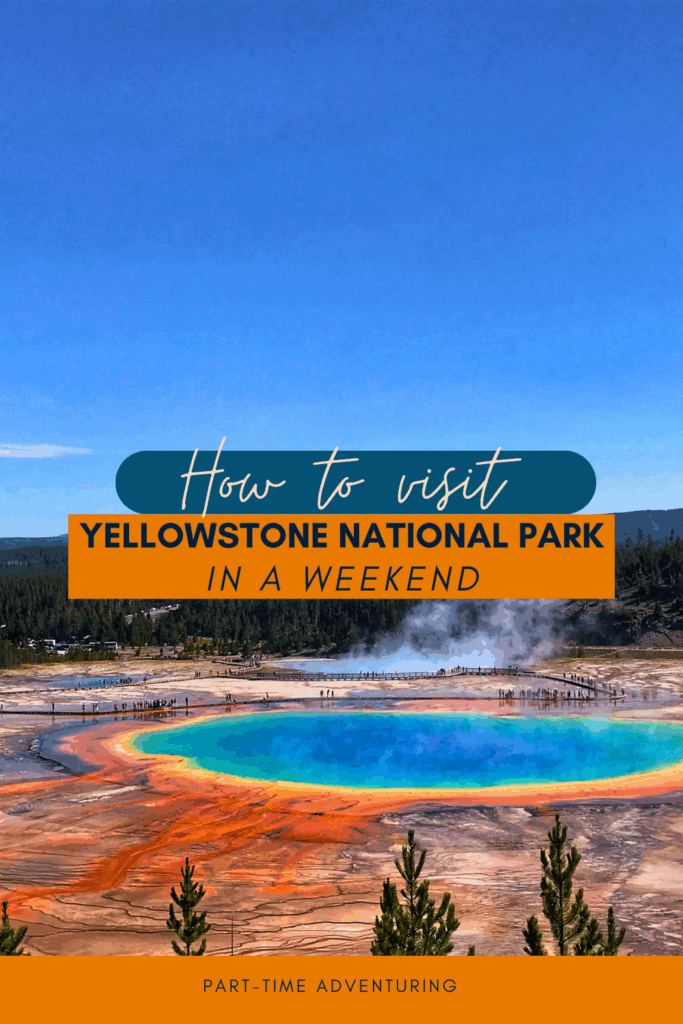
Yellowstone National Park is widely considered the best national park in the country for wildlife viewing. Its size, diversity of ecosystems, and protected status let animals thrive in a way few places can match. We’ve spent enough time here to know it lives up to the reputation — some mornings in the Lamar Valley feel less like a hike and more like a wildlife documentary.
Wildlife you’re most likely to see: bison roaming valleys and roadways, elk and pronghorn in open meadows, wolves and grizzly bears (usually from a distance), and bald eagles, osprey, and trumpeter swans overhead. Yellowstone is one of the only places in the lower 48 where you can realistically see all of these in a single visit. The National Park Service’s wildlife page has more on the park’s full range of species and current safety guidance.
Best areas for wildlife viewing:
- Lamar Valley — often called the Serengeti of North America, especially for wolves and bison
- Hayden Valley — excellent for bison, elk, and bears
- Yellowstone River Corridor — birds, otters, and large mammals
Tips: Go early morning or dusk for the best odds. Bring binoculars or a spotting scope for distant predators. And if you see cars stopped along the road, it’s usually not random — that’s a wildlife jam, and worth pulling over for.
Planning a Yellowstone trip? We’ve got a full breakdown of how to see all of Yellowstone in a weekend, plus 10 things to know before visiting Lamar Valley specifically.
Grand Teton National Park – Moose, Bears, and Mountain Backdrops
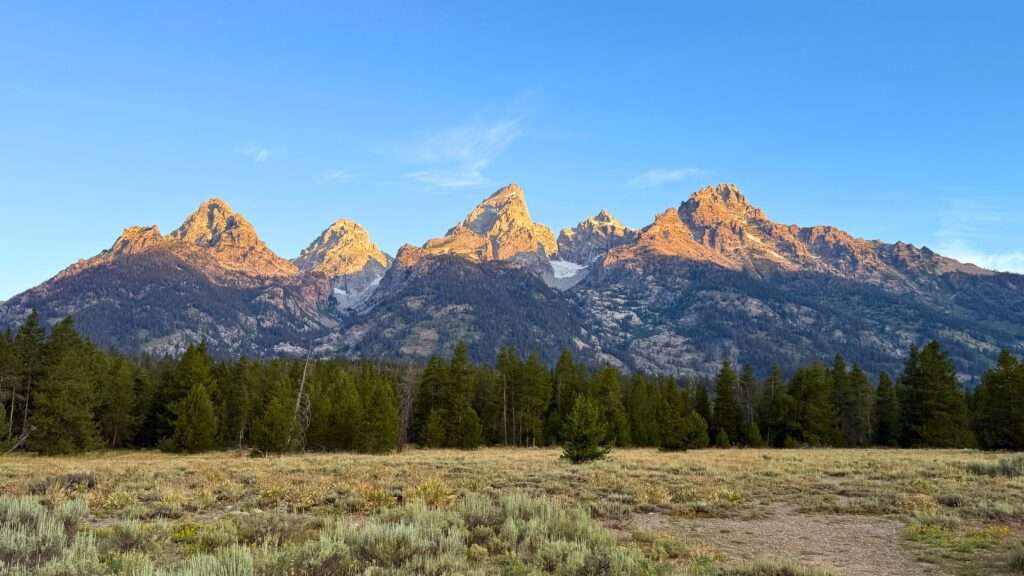
Just south of Yellowstone, Grand Teton National Park trades geysers for jagged, glacier-carved peaks — but the wildlife is every bit as good. We saw a black bear on the trail hiking up to Delta Lake, and we’ve spotted moose more than once — along the park roads and on trails just outside the park boundary.
Wildlife you’re most likely to see: moose (this is one of the best parks in the country for them), elk, bison, pronghorn, black and grizzly bears, and beavers and otters in the river corridors. The park’s official wildlife viewing page covers habitat basics and the required viewing distances.
Best areas for wildlife viewing:
- Oxbow Bend — a slow bend in the Snake River that regularly turns up moose, elk, and waterfowl, especially at dawn
- Delta Lake Trail — a strenuous but rewarding hike where bear sightings aren’t uncommon
- Willow flats and the roads near Moose, WY, where moose regularly browse right along the shoulder
Tips: Moose tend to be most active early morning and evening. Give them significantly more space than you’d think necessary — they’re unpredictable and can move fast despite their size.
Combining Grand Teton with Yellowstone? Our Yellowstone + Grand Teton 7-day itinerary covers exactly how to split your time between both parks.
Glacier National Park – Mountain Goats, Bears, and Alpine Trails
Glacier National Park in Montana rewards anyone willing to get out of the car. We’ve seen bears while simply driving through the park, and mountain goats and deer showed up repeatedly while hiking the Highline Trail.
Wildlife you’re most likely to see: mountain goats and bighorn sheep on high alpine trails, black and grizzly bears, deer, and marmots and pikas near treeline. See the NPS animals overview for Glacier for the park’s full species list.
Best areas for wildlife viewing:
- Highline Trail — one of the most reliable spots in the park for mountain goats and bighorn sheep, with bear sightings from a distance not uncommon
- Going-to-the-Sun Road, where wildlife regularly appears near pullouts, especially early or late in the day
- The Many Glacier area, known among regulars as some of the best bear habitat in the park
Tips: Carry bear spray and know how to use it — this isn’t optional in Glacier’s backcountry. Mountain goats are surprisingly comfortable near trails, but keep your distance regardless.
Hiking Glacier? Our guide to the best hikes in Glacier National Park covers trail difficulty, permits, and timing.
Rocky Mountain National Park – Elk at 10,000+ Feet
Rocky Mountain National Park is one of the more accessible parks for wildlife, especially along Trail Ridge Road, the highest continuous paved road in the country. We’ve watched moose graze along lower elevation roads, but seeing elk grazing above 10,000 feet at the top of Trail Ridge Road was genuinely one of those moments that stops you in your tracks.
Wildlife you’re most likely to see: elk (especially dramatic during the fall rut), moose in the Kawuneeche Valley, bighorn sheep, mule deer, and marmots and pikas in the alpine tundra. The park’s official wildlife viewing guide breaks down where and when to look for each species.
Best areas for wildlife viewing:
- Trail Ridge Road — elk and bighorn sheep show up at elevations that feel almost too high for large mammals
- Moraine Park and Horseshoe Park, especially at dawn or dusk during the fall elk rut
- Kawuneeche Valley on the park’s quieter west side, a reliable spot for moose
Tips: If you’re visiting in September or October, the elk rut is worth planning around — bugling bulls and large herds gather in the meadows near Estes Park. A timed-entry permit is required for parts of the park in peak season, so check current reservation requirements before you go.
Theodore Roosevelt National Park – Bison and Wild Horses Without the Crowds
Often overlooked, Theodore Roosevelt National Park in North Dakota is one of the best parks for wildlife without the Yellowstone-level crowds. Its open badlands terrain and lower visitation make sightings both frequent and relaxed.
Wildlife you’re most likely to see: plains bison, wild horses in small roaming bands, prairie dogs, coyotes, foxes, and hawks and eagles overhead.
The wild horses are one of the park’s signature draws. Descendants of horses that roamed the badlands before the park was fenced off in the 1950s, they’ve run free here ever since — roughly 190-200 horses today, organized into small family bands led by a dominant stallion. They’re found exclusively in the South Unit, so if seeing them is a priority, that’s where to focus your visit; the North Unit doesn’t have a resident herd.
Best areas for wildlife viewing:
- South Unit Scenic Loop Drive — reliable sightings of bison and wild horses
- North Unit — river corridors and overlooks with fewer people
Tips: Drive slowly on the scenic loops — animals cross the road often. Early morning visits mean cooler temperatures and more active herds.
Great Smoky Mountains National Park – Elk and Black Bears in the Southern Appalachians
The most-visited national park in the country, Great Smoky Mountains National Park straddles Tennessee and North Carolina and holds its own for wildlife despite the crowds. We’ve had good luck spotting elk here, one of the park’s signature reintroduced species.
Wildlife you’re most likely to see: elk (concentrated in a couple of specific valleys), black bears, white-tailed deer, wild turkeys, and salamanders (the Smokies are considered the salamander capital of the world).
Best areas for wildlife viewing:
- Cades Cove — an 11-mile loop road where deer, black bears, and wild turkeys are common; drive it slowly and go early
- Cataloochee Valley and the Oconaluftee area near the Mountain Farm Museum, both known for elk, especially at dawn and dusk
Tips: Elk are most active and vocal during the fall rut (September–October). Keep well back from bears in Cades Cove — traffic jams form around sightings, but that doesn’t mean it’s safe to approach.
Everglades National Park – Alligators, Birds, and a Different Kind of Wild
Everglades National Park offers a completely different wildlife experience from the mountain parks — this is about wetlands, reptiles, and birdlife. We walked the Anhinga Trail and lost count of the alligators and crocodiles sunning along the boardwalk, plus more wading birds than we could identify on the spot.
Wildlife you’re most likely to see: American alligators (and, less commonly, American crocodiles), wading birds like herons, egrets, and the trail’s namesake anhingas, turtles, and — with more effort — manatees near Flamingo. The NPS has a species profile on the American alligator if you want the details on what makes this park the only place in the world where alligators and crocodiles coexist.
Best areas for wildlife viewing:
- Anhinga Trail — a short boardwalk near the park entrance that’s arguably the single best wildlife-viewing spot in the park; alligators are often just feet from the walkway
- Shark Valley, where a tram tour and observation tower add more gator and bird sightings
Tips: Dry season (roughly December through April) is best for wildlife viewing, since animals concentrate around shrinking water sources. Keep a respectful distance from alligators at all times — they’re closer to the boardwalk than you’d expect, and that’s normal, not a sign they’re used to people.
Redwood National Park – Roosevelt Elk Among the Giants
Redwood National Park in Northern California is best known for its towering old-growth trees, but the Roosevelt elk here are a highlight in their own right. We came across a massive herd bedded down together in one of the park’s meadows — easily one of the most striking wildlife moments we’ve had in any park.
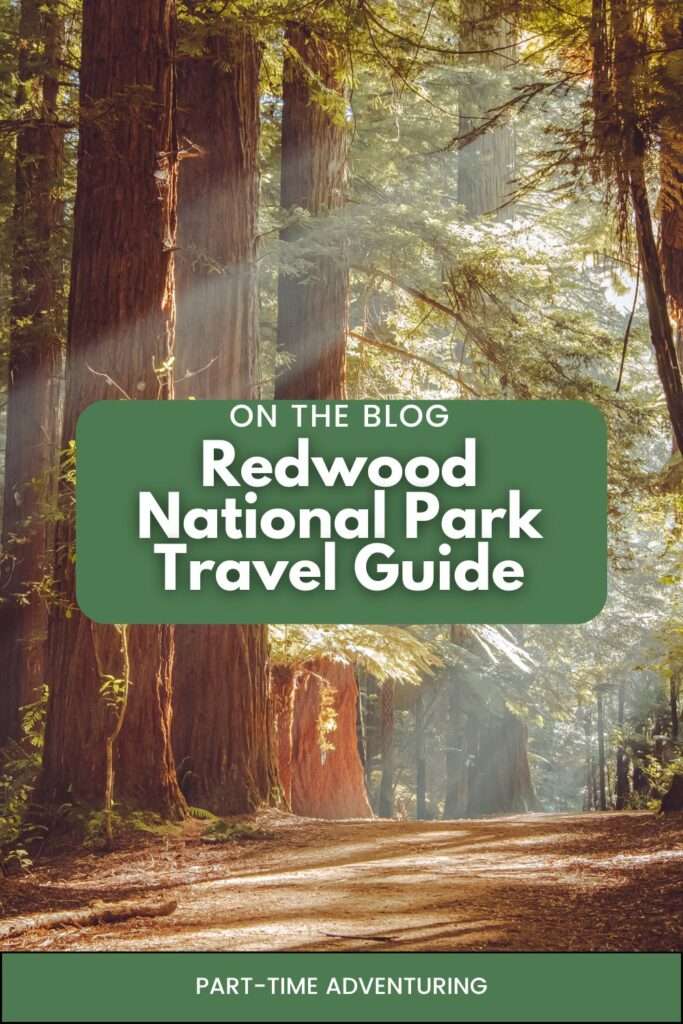
Wildlife you’re most likely to see: Roosevelt elk (often in large herds), black bears, banana slugs, and along the coast, sea lions, seals, and migrating whales.
Best areas for wildlife viewing:
- Elk Meadow — a large open meadow off Davison Road where elk herds regularly graze, especially at dawn and dusk
- Prairie Creek Redwoods State Park — elk are frequently seen in the meadow near the visitor center
- Highway 101 near Orick, where roadside elk sightings are common enough to slow traffic
Tips: Elk here are used to people but are still wild animals, especially during the fall rut — don’t approach for photos. Overcast, foggy mornings (common on this stretch of coast) are often when elk are most active in the open meadows.
Virgin Islands National Park – Tropical Wildlife and Coral Reefs
Virgin Islands National Park offers a completely different wildlife experience than any park on this list. Instead of large land mammals, the star attractions live beneath the water’s surface. Our full guide to Virgin Islands National Parkcovers the park in depth.
Marine wildlife: huge numbers of tropical fish in vibrant coral reefs, green and hawksbill sea turtles, and rays and reef invertebrates.
Best areas for wildlife viewing:
- Trunk Bay — shallow reef snorkeling with dense tropical fish populations
- Maho Bay — known for sea turtle sightings close to shore
- Reef Bay Trail — birds, deer, and land-based wildlife
Tips: Morning snorkeling means clearer water and fewer people. Look near coral formations for concentrated fish activity, and never touch or stand on coral.
Badlands National Park – Wildlife Thriving in a Harsh Landscape
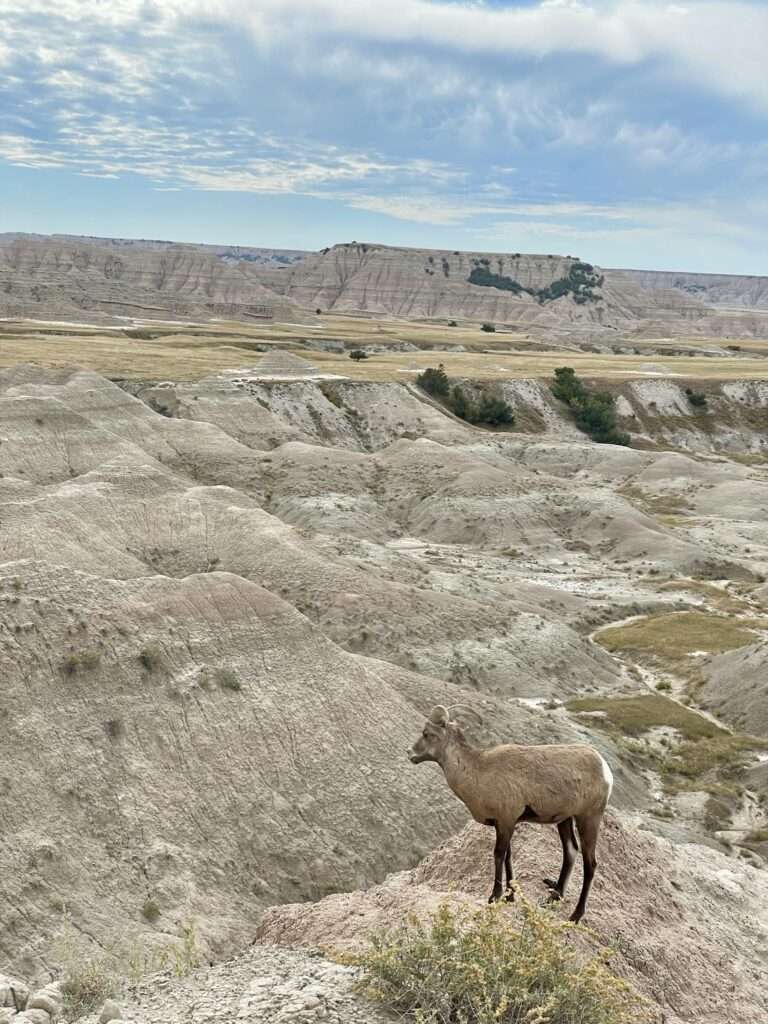
At first glance, Badlands National Park looks barren, but it supports a surprising amount of wildlife — the lack of dense vegetation actually makes animals easier to spot. Our full Badlands guide has more on planning a visit.
Wildlife you’re most likely to see: bison, bighorn sheep, prairie dogs (across active “towns”), grassland birds and raptors, and — rarely — endangered black-footed ferrets.
Best areas for wildlife viewing:
- Sage Creek Rim Road — one of the best places in the park to see bison
- Prairie dog towns — scattered throughout the park
Tips: Early morning or sunset gives you the best lighting and the most animal activity. Drive slowly along rim roads and use the overlooks — bighorn sheep are often visible on distant cliff faces with binoculars.
Best Time to Visit for Wildlife – Quick-Glance Table
| Park | Best Months | Wildlife Highlights |
|---|---|---|
| Yellowstone | April–May, September–October | Baby animals, elk rut, bears emerging |
| Grand Teton | May–June, September–October | Moose, bear activity, fall colors |
| Glacier | July–September | Mountain goats, bighorn sheep, bears |
| Rocky Mountain | September–October | Elk rut, bighorn sheep |
| Theodore Roosevelt | May–June, September | Active bison and wild horse herds |
| Great Smoky Mountains | September–October | Elk rut, black bear activity |
| Everglades | December–April | Alligators concentrated near water, birds |
| Redwood | Year-round, best at dawn/dusk | Roosevelt elk herds |
| Virgin Islands | April–August | Sea turtles, tropical fish, calm seas |
| Badlands | May–June, September | Bison movement, cooler temperatures |
This table helps you plan visits around wildlife peaks without guessing, improving your chances of a memorable encounter.
Tips for Seeing Wildlife in National Parks
Go at the right time. Dawn and dusk are prime wildlife viewing hours across nearly every park on this list. Shoulder seasons often balance wildlife activity with smaller crowds.
Bring the right gear. Binoculars or a zoom lens dramatically improve the experience while keeping animals at a safe distance. Dress in layers for early mornings and cooler hours at elevation.
Follow wildlife safety rules. Maintain proper distance at all times — 100 yards from bears and wolves, 25 yards from other large animals. Never feed or approach wildlife. Stay on designated trails and use pullouts to observe from the road.
FAQ
What is the best national park in the US to see wildlife? Yellowstone is generally considered the best overall, thanks to its size and the sheer diversity of large mammals — bison, elk, wolves, and bears all show up reliably in areas like Lamar Valley.
What time of day is best for wildlife viewing in national parks? Early morning and dusk are consistently the best windows. Most large mammals are more active during these cooler, quieter hours and tend to retreat to cover during the heat of midday.
How close is too close when viewing wildlife in a national park? The standard rule is at least 100 yards from bears and wolves, and 25 yards from other large animals like bison, elk, and moose. If an animal changes its behavior because of you, you’re too close.
Which national park has the most reliable bear sightings? Glacier and Grand Teton both have strong reputations for bear activity, though sightings are never guaranteed anywhere. Yellowstone and Great Smoky Mountains also see regular bear activity.
Can you see wildlife in national parks without hiking? Yes. Scenic drives like Yellowstone’s Lamar Valley Road, Grand Teton’s road past Oxbow Bend, Cades Cove Loop in the Smokies, and Theodore Roosevelt’s Scenic Loop Drive all offer strong wildlife viewing directly from the car.
What is the best month to see wildlife in national parks? It depends on the park and species, but September and October are strong across most of the mountain parks thanks to the fall elk rut, cooler temperatures, and animals becoming more active ahead of winter.
Final Thoughts: Choosing the Best National Park for Wildlife Viewing
The best park for you depends on what you want to see. Yellowstone offers the widest range of large mammals in one place, Grand Teton and Glacier deliver dramatic mountain backdrops alongside moose and bears, Rocky Mountain puts elk at eye level above 10,000 feet, and the Everglades and Virgin Islands trade fur for feathers, fish, and reptiles entirely.
Take your time, stay quiet, and let the wildlife set the pace — these encounters are some of the most memorable parts of any national park trip.