Last Updated on August 20, 2026 by Melissa
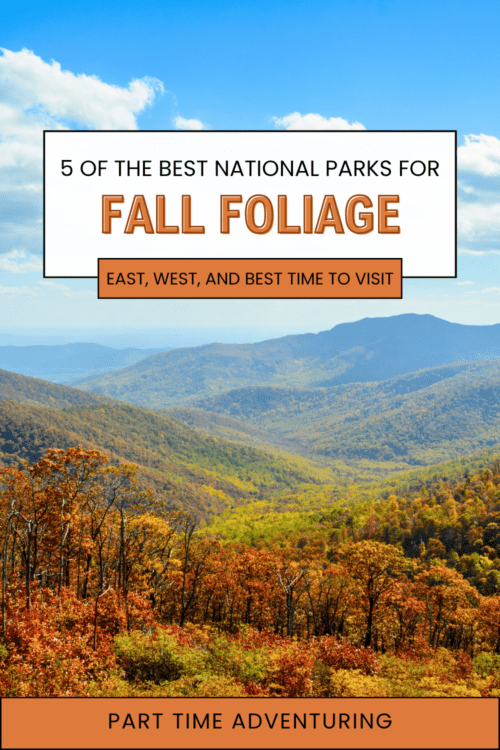
Fall foliage isn’t limited to a six-week window in New England. Grand Teton’s aspens can turn as early as mid-September; Shenandoah’s Skyline Drive stays colorful through most of October. If you’re deciding where to chase color this year, these are the five national parks for fall foliage that deliver most reliably — including two we go back to every fall ourselves.
Some of the links on this website are affiliate links, which means we may earn a small commission if you make a purchase through them — at no additional cost to you. These commissions help support Part Time Adventuring and allow us to continue creating free travel guides, national park itineraries, hiking resources, and adventure content.
Table of Contents
- Great Smoky Mountains National Park
- Grand Teton National Park
- Rocky Mountain National Park
- Shenandoah National Park
- New River Gorge National Park
- FAQ
Great Smoky Mountains National Park
The Smokies have one of the longest and most reliable fall color seasons in the park system, mostly because of how many tree species and elevation zones are packed into one park. Color starts at higher elevations in late September, then works its way down through October, with the classic postcard peak — deep reds and oranges filling the valleys — usually landing around mid-October. That elevation spread is a big part of why this consistently ranks among the best national parks for fall foliage: there’s rarely a bad week to visit, you’re just choosing which part of the park looks best.
Cades Cove Loop and Newfound Gap Road are the two scenic drives most people build a trip around, and both get genuinely packed on October weekends — Cades Cove traffic can back up for hours at peak color. Midweek visits and early starts make a real difference here.
For a hike, Mount LeConte is one we’d point you toward — it’s one of the most iconic peaks in the park, and the elevation gain along the way puts you through several different color zones on a single trail. Alum Cave Trail is the shortest route up at 10 miles roundtrip; Rainbow Falls Trail is longer but adds a waterfall stop partway. Either way, plan for a full day and an early start, since parking at both trailheads fills up fast during peak color.
One thing that trips people up: Great Smoky Mountains doesn’t charge an entrance fee, but it does require a parking tag for any vehicle left for more than 15 minutes — $5 daily, $15 weekly, or $40 annually.
Where to stay: Gatlinburg, TN is the busier, more built-up gateway; Cherokee, NC on the south side is a quieter alternative with easier access to Newfound Gap. We stayed in Cherokee and enjoyed the quiet.
Entrance fee: None — but budget for a parking tag if you’re stopping anywhere.
Grand Teton National Park
Grand Teton might be the single best aspen show in the country. The peaks themselves don’t need help looking dramatic, but add a valley floor full of golden aspens, cottonwoods, and willows reflecting off the Snake River, and it’s hard to beat. Fall also means more active wildlife — moose, elk, and bears are commonly spotted as they prepare for winter, and elk rut adds a soundtrack to the scenery.
For hikes, Taggart Lake is the one that comes up again and again for fall color — it’s an easy 3-mile roundtrip that climbs through long stretches of aspen groves before reaching the lake, with the Tetons as a backdrop the whole way. If you want more mileage, extend it to Bradley Lake. For something with less walking, Moose-Wilson Road is a slow scenic drive through dense aspen and cottonwood forest between Moose and the Laurance S. Rockefeller Preserve, and it’s one of the better ways to see color without committing to a full hike. Oxbow Bend and Schwabacher’s Landing are the two spots for photos — both put fall color right up against a Snake River reflection of the range.
There’s no vehicle reservation system here, which makes it an easier add-on to a Yellowstone trip than parks like Rocky Mountain. Just budget extra time at overlooks like Schwabacher Landing and Oxbow Bend — they’re popular for a reason, and they get crowded at sunrise and sunset even in October.
Where to stay: Jackson gives you the most lodging and dining options and puts you close to both Grand Teton and Yellowstone.
Entrance fee: $35 per vehicle for a 7-day pass (also covers Yellowstone, since the parks are adjacent). Grand Teton is also on the 2026 non-U.S. resident surcharge list.
Rocky Mountain National Park
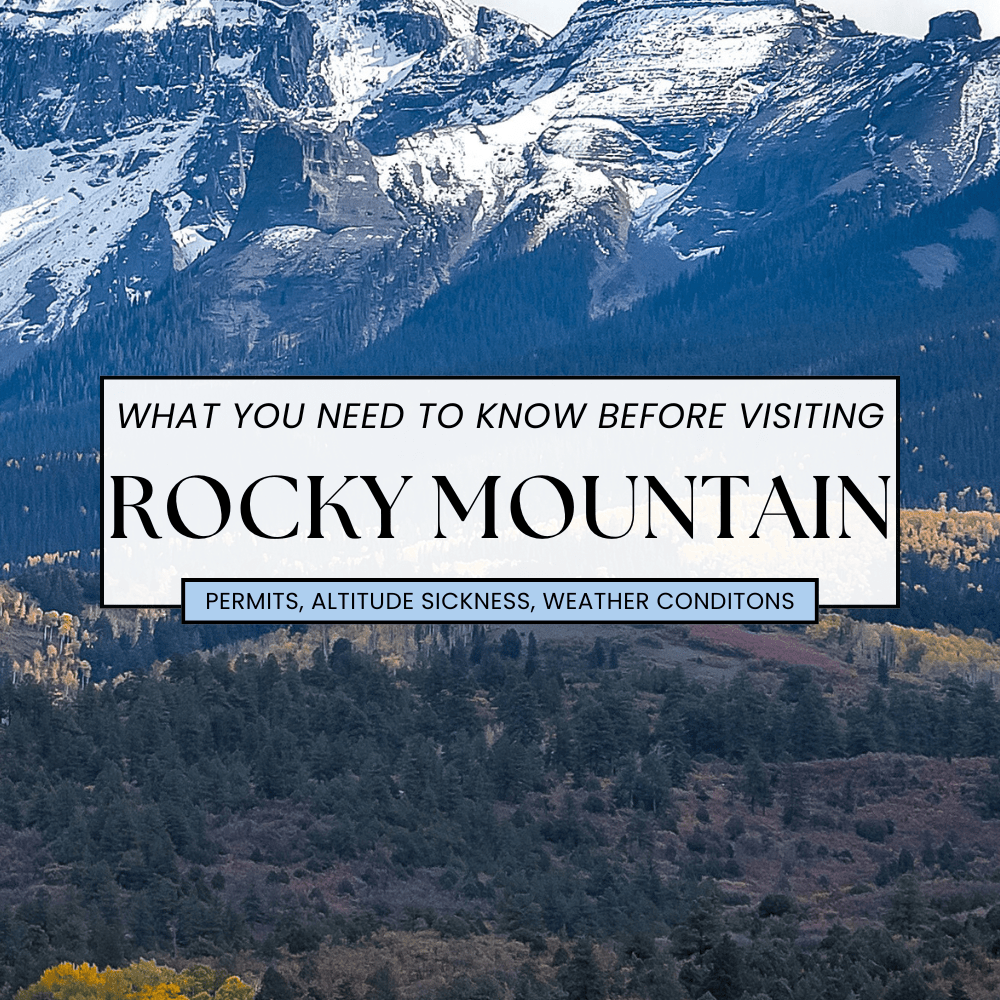
Rocky Mountain’s aspens turn at elevation first — expect gold starting in mid-September in the high country, working down into the valleys through October. Trail Ridge Road is the classic scenic drive for this, since it climbs through multiple elevation bands and lets you see several stages of color change in a single trip. Elk rut is also happening here in fall, and it’s one of the more reliable places in the park system to hear bugling.
For hikes, the Bear Lake corridor is where most people go for foliage — the short, easy walk to Bear Lake itself gets you aspen groves and mountain views with almost no effort, and pushing on to Nymph, Dream, and Emerald Lakes adds distance but keeps the color coming the whole way. Alberta Falls, starting from the Glacier Gorge Trailhead, is another good option — the gorge itself turns gold with aspens in fall, and the 30-foot waterfall is a nice payoff partway up. Both trailheads fill up fast on fall weekends, so plan for an early start or use the park shuttle if it’s running.
One thing to plan around: Rocky Mountain’s timed-entry reservation system runs through mid-October in 2026 (9 a.m.–2 p.m. daily, with a separate reservation needed for Bear Lake Road). That overlaps with peak foliage, so if you’re chasing color in the first half of October, book your reservation on Recreation.gov as soon as the monthly release opens rather than assuming you can walk up. After that window closes for the season, you can enter anytime without a reservation — just still need your standard entrance pass.
Where to stay: Estes Park is the main gateway on the east side and has the most lodging density.
Entrance fee: Around $30 per vehicle for a 7-day pass, plus a $2 Recreation.gov processing fee for the timed-entry reservation. Rocky Mountain is also on the non-U.S. resident surcharge list for 2026.
Heading to Rocky Mountain? Here’s what you need to know before planning your trip, including timed entry permits and how to navigate the shuttle system.
Shenandoah National Park
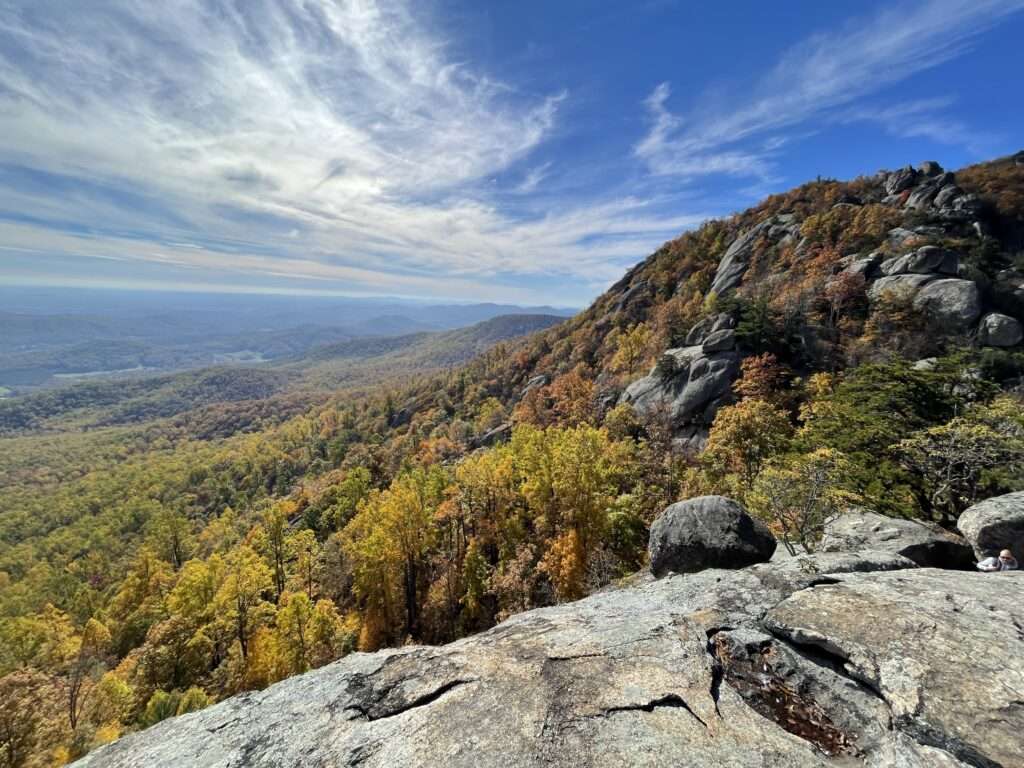
We visited Shenandoah in mid-to-late October and the colors were unreal — genuinely some of the best fall foliage we’ve seen in any national park. Skyline Drive is built for exactly this kind of trip, 105 miles along a ridgeline with over 70 overlooks, and driving it during peak color was as good as it looks in photos. We also hiked Old Rag, and the views from the summit over a valley full of color were incredible enough that we’d plan a whole trip around doing that hike again in the fall.
Color starts at the higher elevations in early October and works down into the valleys, with the third week of October typically the safest bet for a full display along most of the drive. It’s a long peak window compared to some parks, which makes it more forgiving to plan around if you can’t pin down an exact date months in advance.
Fall is also the busiest season here, so plan for weekday visits if you have flexibility, and arrive early — overlook parking fills up fast on October weekends. If you’re hiking Old Rag, know that it requires a day-use ticket purchased in advance in addition to the park entrance fee.Want more on Shenandoah? Check out our full guide for more hikes, lodging options, and seasonal tips.
Where to stay: Front Royal (north end) and Waynesboro (south end) both work as gateway towns depending on which section of Skyline Drive you’re prioritizing.
Entrance fee: $30 per vehicle for a 7-day pass. Shenandoah isn’t on the 2026 non-U.S. resident surcharge list.
New River Gorge National Park
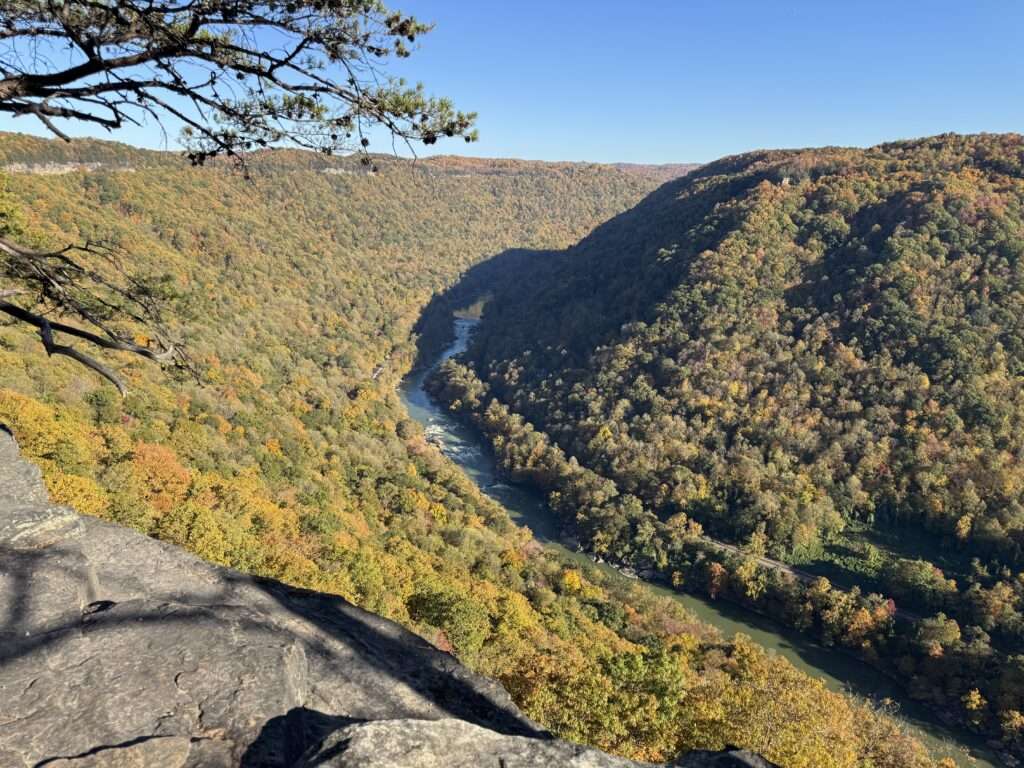
New River Gorge is the newest national park — redesignated from a national river in 2021 — and it’s a genuinely underrated fall foliage destination. We visited during peak color in mid-to-late October and it delivered: dense hardwood forest running down steep canyon walls to the river, with the New River Gorge Bridge as the centerpiece view. We hiked down to the old Kaymoor Mines site, which adds a layer of history to the hike — the ruins of the old mining operation sitting in the middle of all that color were a highlight — and also did the Long Point Trail, the classic hike to the overlook with the postcard view of the bridge. Both are worth building a day around.
Peak color typically lands in mid-to-late October, and Bridge Day (the third Saturday in October, when the bridge closes to traffic for BASE jumping and pedestrian access) tends to line up with some of the best color of the season.
This is also one of the only entries on this list with zero cost to enter — New River Gorge doesn’t charge an entrance fee at all, which makes it an easy add to a fall trip through West Virginia or western Virginia.
Where to stay: Fayetteville is the main basecamp, walkable to restaurants and close to the main overlooks and trailheads.
Entrance fee: None — New River Gorge is free to enter year-round.
Want the full breakdown? Our complete guide to New River Gorge National Park covers more hikes, where to stay, and what to pack.
Best National Parks for Fall Foliage: FAQ
When is peak fall foliage in national parks? It varies widely by elevation and latitude. Higher-elevation western parks like Grand Teton and Rocky Mountain start changing in mid-September, while lower-elevation parks like Shenandoah, Great Smoky Mountains, and New River Gorge typically peak in mid-to-late October.
Do I need a reservation to see fall foliage in these parks? Only Rocky Mountain has a timed-entry system that runs into fall (through mid-October in 2026). Grand Teton, Shenandoah, Great Smoky Mountains, and New River Gorge don’t require entry reservations.
Which national park has the longest fall color season? Great Smoky Mountains and Shenandoah both have forgiving windows, since color moves gradually from high elevations to low over several weeks in October rather than turning all at once. Both are consistently ranked among the best national parks for fall foliage on the East Coast for exactly this reason.
Are these parks crowded in the fall? Yes, especially on weekends. Fall is a known second high season at most of these parks — Cades Cove in the Smokies and Skyline Drive in Shenandoah are two of the worst weekend bottlenecks in the entire park system during peak color. Visiting on weekdays and arriving early makes a real difference.
Do I need an America the Beautiful pass for multiple park visits? If you’re hitting more than three or four fee parks in a year, the $80 annual America the Beautiful pass usually pays for itself. It covers standard entrance fees but does not cover the new non-U.S. resident surcharge at Grand Teton and Rocky Mountain, or the Great Smoky Mountains parking tag, which is a separate program entirely.