Last Updated on August 17, 2026 by Melissa
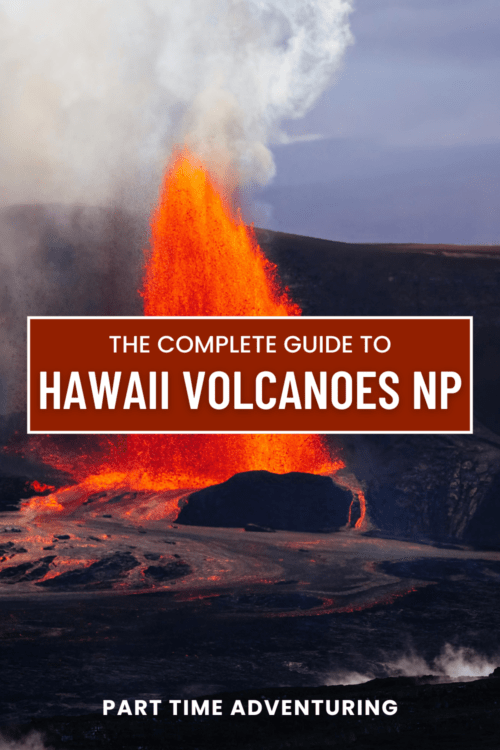
Hawaii Volcanoes National Park is one of the only places on earth where you can watch an active summit eruption from a paved, safe overlook — no permit, no guide, and no hike required. Kīlauea has been erupting episodically since December 2024, with more than 50 separate fountaining events at the summit as of mid-2026. We stayed in Volcano Village just minutes from the park entrance, and even we missed an active episode by a matter of hours. That’s simply how it goes with an episodic volcano: you’re either lucky or you’re not, and the park is worth visiting either way.
Some of the links on this website are affiliate links, which means we may earn a small commission if you make a purchase through them — at no additional cost to you. These commissions help support Part Time Adventuring and allow us to continue creating free travel guides, national park itineraries, hiking resources, and adventure content.
Table of Contents
- Is Kīlauea Erupting Right Now?
- Best Time to Visit
- Entrance Fees & Passes
- Getting There
- Where to Start: Kīlauea Visitor Center Closure
- Best Things to Do
- Where to Stay
- What to Pack
- Suggested Itinerary
- Other Things to Do Nearby
- FAQ
- Private vehicle: $30, valid for 7 consecutive days
- Motorcycle: $25, valid for 7 consecutive days
- Pedestrian or cyclist (age 16+): $15
- Visitors 15 and under: Free
- Hawaii Volcanoes Annual Pass: $55, covers unlimited entries for one year
- America the Beautiful Pass: $80, covers entry to every federal fee area for a year — worth it if you’re combining this with other national parks in the same trip
- Hilo International Airport (ITO): About 45 minutes to the park entrance — the closer, more convenient option if Hawaii Volcanoes is your main priority.
- Kona International Airport (KOA): About 2.5 hours to the park entrance, on the opposite side of the island. Workable if you’re combining volcano country with Kona-side beaches and resorts, but budget real drive time.
- Rain jacket — this is a rainforest-adjacent park; expect showers regardless of season
- A warm layer — the summit sits at roughly 4,000 feet, and it gets genuinely cold after dark
- Sturdy, closed-toe shoes — lava rock is sharp and uneven, and flip-flops have no place on these trails
- A headlamp — essential for night viewing and useful inside Nāhuku
- Plenty of water — the Kīlauea Visitor Center water station is offline during renovation, so bring more than you think you need
- Dust mask and eye protection — useful if tephra (small volcanic debris) is falling near an active episode, but know that a standard dust mask does not block sulfur dioxide gas; if anyone in your group has respiratory or cardiac sensitivities, check Hawaii Department of Health vog advisories before you go
- Start at the Welcome Center at Kīlauea Military Camp for maps and ranger updates (KVC itself is closed for renovation)
- Steam Vents and a stretch of Crater Rim Drive — quick, no hiking required
- Kīlauea Iki Trail — budget 2–3 hours for the full loop
- Nāhuku (Thurston Lava Tube) — easy add-on near the Kīlauea Iki trailhead
- Devastation Trail — short, flat, worth the 20 minutes if you’re already parked nearby
- Evening: check conditions via USGS/NPS, then head to a Crater Rim Drive overlook after dark if Kīlauea is active
- Next morning: Chain of Craters Road down to the coast, stopping at Puʻu Loa Petroglyphs and the Holei Sea Arch — budget a half day
- If time allows: Kīpukapuaulu (Bird Park) Trail on the way out, for a quieter, shaded close to the trip
Is Kīlauea Erupting Right Now?
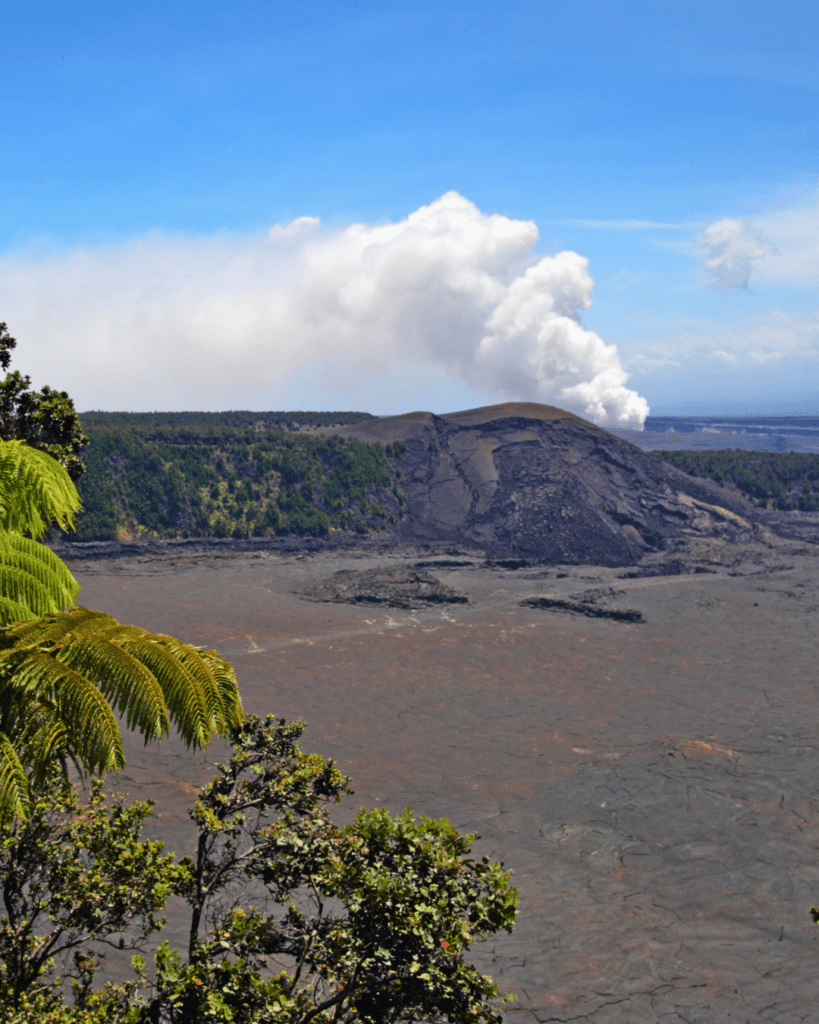
Kīlauea’s current eruption started on December 23, 2024, and it hasn’t stopped — it just pauses. The pattern is episodic: a fountaining event lasts anywhere from a few hours to several days, then the volcano goes quiet for days at a time before the next episode starts. By mid-August 2026, the park had recorded more than 50 of these episodes, all confined to Halemaʻumaʻu crater at the summit.
We planned our trip around the eruption and still missed an active episode by only a few hours. That’s the honest truth about visiting during an episodic eruption: you cannot time it perfectly, no matter how closely you watch the forecasts. What you can do is stack the odds in your favor, and staying close to the park helps more than almost anything else (more on that in Where to Stay).
Because the status changes by the day, don’t rely on any single blog post — including this one — for real-time conditions. Check the USGS Hawaiian Volcano Observatory daily update and the NPS current conditions page within 24 hours of your visit. A headline saying “Kīlauea is erupting” can be technically true during a multi-day pause when there’s nothing visible at the rim, so go to the source.
Best Time to Visit
Hawaii Volcanoes National Park is open 24 hours a day, 365 days a year, so there’s no wrong season to visit in terms of access. The bigger factors are weather and crowds.
Winter (November–March) is Hawaii’s wet season, and the park sits at roughly 4,000 feet elevation, so expect more rain and cooler temperatures than you’ll find on the coast. Fog and vog (volcanic smog) can also reduce visibility at the overlooks during this stretch.
Spring (April–May) brings drier weather while crowds are still relatively manageable, before summer travel ramps up.
Summer (June–August) is peak travel season for the Big Island generally, so expect more visitors and fuller parking lots at Kīlauea Iki and Nāhuku, even though the park itself never feels as crowded as a mainland parks like Zion or Yellowstone.
Fall (September–October) offers a similar drier window to spring, with crowds thinning back out after summer.
If we had to pick, we’d go in the shoulder months — April/May or September/October — for the best mix of weather and lighter crowds. We visited in April and had great weather. Regardless of season, plan for rain gear; this is a rainforest-to-volcanic-desert park, and the weather can shift in the time it takes to walk one trail.
Entrance Fees & Passes

There’s no non-resident surcharge here (some other parks have added one), and no timed-entry reservation is required for general park access as of 2026. Just pay at the gate or show your pass and drive in.
If you’re planning to hit multiple national parks this year, our guide to the America the Beautiful Pass breaks down exactly when it pays for itself.
Getting To Hawaii Volcanoes National Park
The park sits on the Big Island’s east side, and two airports serve as gateways:
Highway 11 connects both airports to the park, and the road itself is well maintained, though watch for ongoing utility and construction work along the corridor near the entrance.
Where to Start: Kīlauea Visitor Center Closure
The Kīlauea Visitor Center is currently closed for renovation, and it’s been closed since February 2025 as part of a multi-year expansion project. Don’t plan your visit around it.
Instead, rangers, the NPS Passport stamp station, Junior Ranger books, and the park store have all relocated to the Welcome Center at Kīlauea Military Camp, about a mile from the park entrance on Crater Rim Drive West. It’s open daily from 9:00 a.m. to 4:45 p.m.
One practical note: the water station at Kīlauea Visitor Center is unavailable during the renovation. Bring your own water into the park. There’s a drinking fountain at Uēkahuna, and water is available for purchase at Volcano House, but don’t count on refilling easily elsewhere.
Best Things to Do
Crater Rim Drive & Steam Vents
This is the easiest stop in the park and requires no hiking at all. Steam Vents sit right along Crater Rim Drive, where groundwater seeps down to hot volcanic rock and rises back up as visible steam. It’s a five-minute stop, but it’s a genuinely dramatic introduction to the geology here.
Kīlauea Iki Trail
This 3.3-to-3.4-mile loop is the park’s signature hike, and it was our favorite trail in Hawaii Volcanoes. The trail descends about 400 feet through lush rainforest before dropping onto the floor of Kīlauea Iki crater, where you walk across a solidified lava lake left behind by a 1959 eruption. It’s a moderate hike — nothing technical, but the descent and the exposed crater floor make it feel bigger than the mileage suggests, especially once the heat sets in.
Parking is available at either the Kīlauea Iki Overlook or the Nāhuku trailhead; the Iki Overlook lot tends to be less crowded.
Nāhuku (Thurston Lava Tube)
Nāhuku is the most accessible lava tube in the park — a walk through tree-fern forest into a lit, cave-like tube roughly 500 years old and wide enough to drive a truck through. Note that a bridge replacement currently has the trail running one-way, entering and exiting from the eastern end, so budget a little extra time versus the standard loop.
Devastation Trail
A short, flat, paved trail that cuts through an area stripped bare by a 1959 lava fountain eruption. It’s an easy add-on if you’re already parked near Kīlauea Iki, and it gives a stark, different look at how the landscape recovers (or doesn’t) after an eruption. More on Devastation Trail here.
Kīpukapuaulu (Bird Park) Trail
An easy loop through a kīpuka — a pocket of older forest that lava flows spared — and one of the better spots in the park for native Hawaiian birds. If you want a quiet, shaded walk after a few hours on exposed volcanic rock, this is it.
Chain of Craters Road
Budget a half day for this one. The road drops about 3,700 feet over roughly 19 miles from the summit down to the coast, passing multiple craters and lava flows along the way, and ending at a dramatic sea arch where lava once met (and still occasionally meets) the ocean. Puʻu Loa Petroglyphs, one of the largest petroglyph fields in Hawaii, is an accessible stop along the way.
Night Viewing
If Kīlauea is actively fountaining during your visit, the glow from Halemaʻumaʻu is visible after dark from several overlooks along Crater Rim Drive. Bring a headlamp, a warm layer (it gets cold at elevation after sunset even in a tropical climate), and patience — the closer overlooks fill up fast on any night with visible glow, so have a backup spot in mind.
One thing to know going in: it’s hot and humid down on the crater floor and along the exposed sections of these trails, even though the rim sits at a cooler elevation. Come prepared to sweat more than you’d expect, and give yourself extra time — hiking here is slower going than a mainland trail of comparable distance.
Where to Stay
Volcano House is the only lodging inside the park itself, perched directly on the rim of Kīlauea caldera. It has 33 guest rooms, 10 cabins, and 16 campsites, and staying here means you’re literally steps from the overlooks. Check rates for Volcano House on Booking.com.
Volcano Village, about 3 miles from the park entrance, is where we stayed, and we’d recommend it without hesitation. Options range from historic lodges like Kīlauea Lodge to boutique stays like Volcano Village Lodge to standalone vacation rentals with full kitchens (useful, since the village itself has limited dining and just one general store). The real advantage of basing here: if conditions look promising for an eruption, or you just want to catch a quiet early-morning caldera with fewer crowds, you’re a five-minute drive away instead of a 45-minute one. Browse places to stay in Volcano Village on Booking.com.
Nāmakanipaio Campground and Cabins, run through Volcano House, sit among eucalyptus trees just outside the park and offer a budget-friendly option if you don’t need a full hotel room.
Hilo, about 45 minutes away, works as a backup or budget base, particularly if you’re also exploring the rest of the east side of the island.
What to Pack

For a broader list that covers gear for a full national park trip, our national park packing list has you covered beyond the volcano-specific items above.
Suggested Itinerary
If you only have one day, here’s how we’d spend it. If you can swing an overnight in Volcano Village, add the second block — it’s the single best way to improve your odds of catching an active episode without changing your whole trip around the volcano’s schedule.
One Day (4–6 hours)
Add an Overnight (Volcano Village or Volcano House)
Staying close by means an early-morning or late-night check on conditions is a five-minute drive, not a 45-minute one — which is exactly the advantage we didn’t fully appreciate until we missed an episode by hours.
Other Things to Do Nearby
The park is the main event, but the Big Island gives you plenty to fill out the rest of a trip. Here’s what we added on, plus a couple of other well-regarded stops worth knowing about.
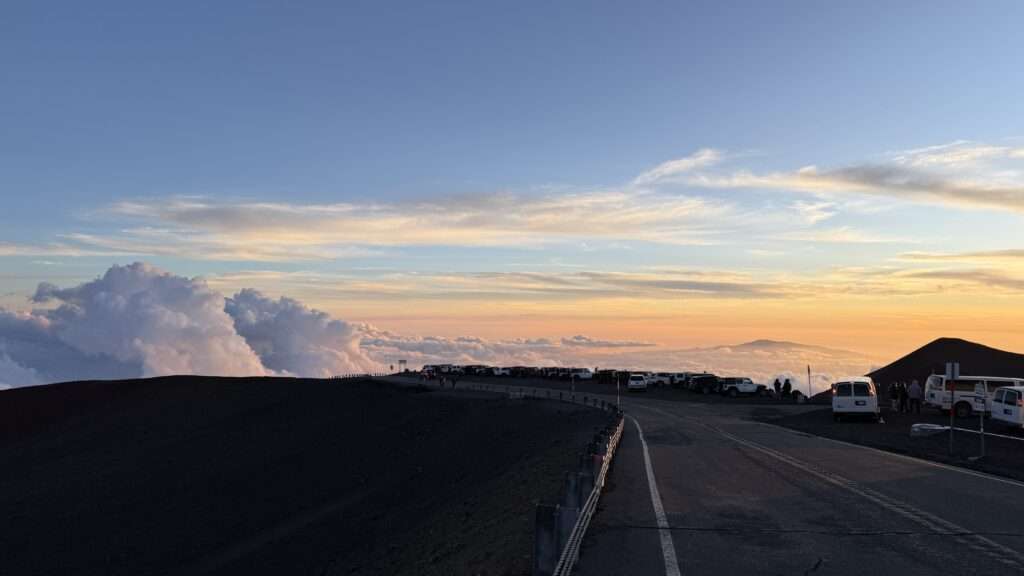
Mauna Kea Visitor Information Station — We drove up for sunset and stargazing, and it was one of the best nights of the whole trip. The VIS sits at about 9,200 feet, roughly a 90-minute drive from Volcano, and it’s free and open to any vehicle daily from 9 a.m. to 9 p.m. Note that the summit road above the VIS requires 4WD with low range and is off-limits under most Hawaii rental car contracts, and the volunteer-led evening stargazing program has been paused, so if you want a guided telescope session, book a tour in advance rather than counting on a walk-up program. The altitude is real even at the VIS — take it slow, and skip the drive entirely if anyone in your group is pregnant, under 16, or has heart or respiratory issues.
Kona Brewing Company — We stopped in Kailua-Kona for a brewery tour, and it’s an easy, casual way to break up a long driving day. Tours run daily by appointment between noon and 5 p.m., last about an hour, and include four 4-ounce samples for anyone 21+ ($25 per person; guests must be at least 15 to join the tour). The pub itself is open 11 a.m. to 9 p.m. daily if you’d rather just grab a meal and a pint without booking a tour slot.
Punaluʻu Black Sand Beach — We stopped here too, and it’s a genuinely convenient detour if you’re driving Highway 11 between Volcano and the south coast — it sits right along the route, between mile markers 56 and 57. The black sand comes from lava cooling rapidly on contact with the ocean, and it’s one of the more reliable spots on the island to see Hawaiian green sea turtles resting on shore. Swimming isn’t recommended due to strong currents, and turtles are protected — keep at least 10 feet back.
FAQ
Is Hawaii Volcanoes National Park erupting right now? It depends on the day — Kīlauea has been erupting episodically since December 2024, with fountaining events lasting hours to days, separated by pauses. Check the USGS Hawaiian Volcano Observatory or NPS conditions page for the current status before you go.
Do I need a reservation to visit? No. As of 2026, Hawaii Volcanoes does not require a timed-entry reservation for general park access — you simply pay the entrance fee or show a valid pass at the gate.
How long should I spend at the park? Plan on 4 to 6 hours for the summit highlights along Crater Rim Drive, or a full 8 to 10 hours if you add Chain of Craters Road down to the coast. Staying overnight nearby gives you the best shot at catching an active episode.
Is the park kid-friendly? Yes. Many of the highlights — Steam Vents, Devastation Trail, Nāhuku — are short, paved, or easy walks. Kīlauea Iki is more demanding but manageable for older kids in good shape.
Can I see lava at night? Only when Kīlauea is actively fountaining. When it is, the glow is visible from several overlooks along Crater Rim Drive after dark.
Is the volcanic gas safe to breathe? Vog and sulfur dioxide can affect air quality, especially near an active episode. Visitors with asthma, other respiratory conditions, or heart conditions should check Hawaii Department of Health advisories and consult a doctor before visiting during active eruptive activity.
Thinking about adding on National Park of American Samoa? We have a full guide here.

Enjoyed this post?
Get new adventures, park guides, and road trip itineraries delivered straight to your inbox.