Last Updated on August 19, 2026 by Melissa
Glacier National Park has some of the most rewarding trails in the entire national park system — glacier-fed lakes, cliffside traverses, and wildlife sightings that feel almost guaranteed if you’re on the right trail at the right time. We’ve hiked a good chunk of this list ourselves, including the full Highline Trail and the trek out to Iceberg Lake, so this isn’t a generic roundup — it’s what we’d actually tell a friend to do with their time in the park.
One planning note before you dive in: 2026 changed how you access several of these trailheads. We cover what you need to know trail-by-trail below, but for the full breakdown of this year’s reservation and shuttle changes, see our complete Glacier National Park 2026 guide.
Some of the links on this website are affiliate links, which means we may earn a small commission if you make a purchase through them — at no additional cost to you. These commissions help support Part Time Adventuring and allow us to continue creating free travel guides, national park itineraries, hiking resources, and adventure content.
Table of Contents
What Changed for Hikers in 2026
The short version: vehicle reservations for Going-to-the-Sun Road are gone for the first time in five years, but Logan Pass now has a 3-hour parking limit (starting July 1) and a reservation-only shuttle replacing the old free hop-on/hop-off system.
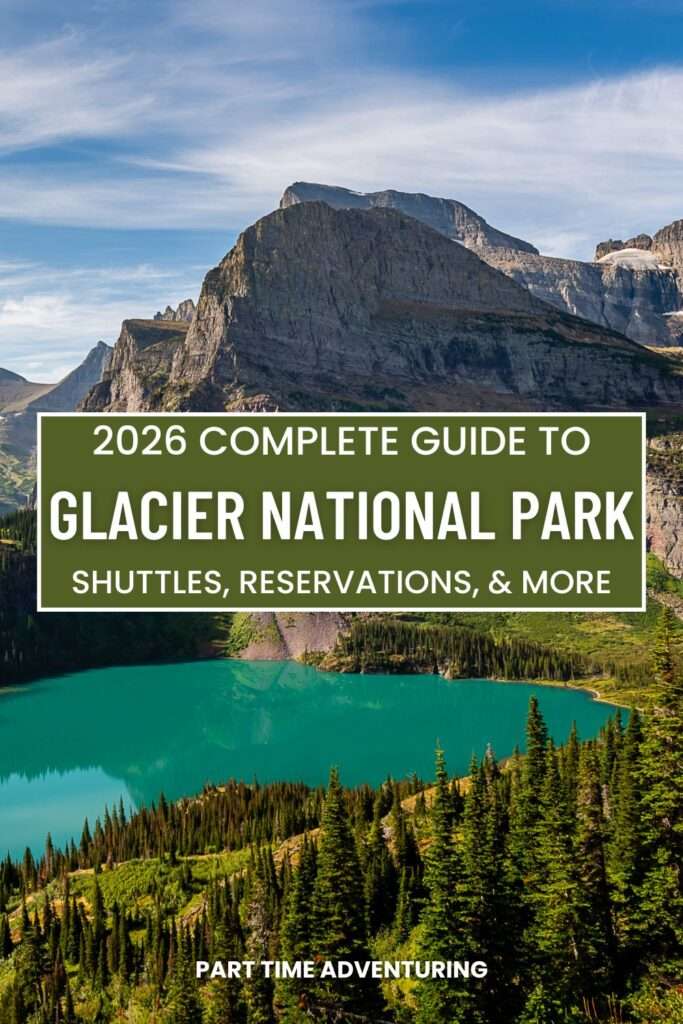
That matters for this list specifically because most of Glacier’s best trails start at Logan Pass:
- Highline Trail, Hidden Lake Overlook, and Grinnell Glacier Overlook all start from Logan Pass. If you’re not driving up and grabbing a parking spot within the 3-hour window, you’ll want a shuttle ticket.
- Trail of the Cedars and Avalanche Lake are not on the 2026 shuttle route — you’ll need to drive and park at the Avalanche Creek area directly.
- Iceberg Lake and Grinnell Glacier Trail start from Many Glacier, which has no shuttle or reservation system at all — just drive in.
Shuttle tickets run $1 per person on Recreation.gov, with a batch released 60 days out and another released the night before at 7pm MDT. Full details, seasonal timing, and everything else about planning this year’s trip are in our 2026 Glacier guide — this post is just about the trails themselves.
Easy Hikes: Perfect for Beginners or Relaxing Adventures
Trail of the Cedars
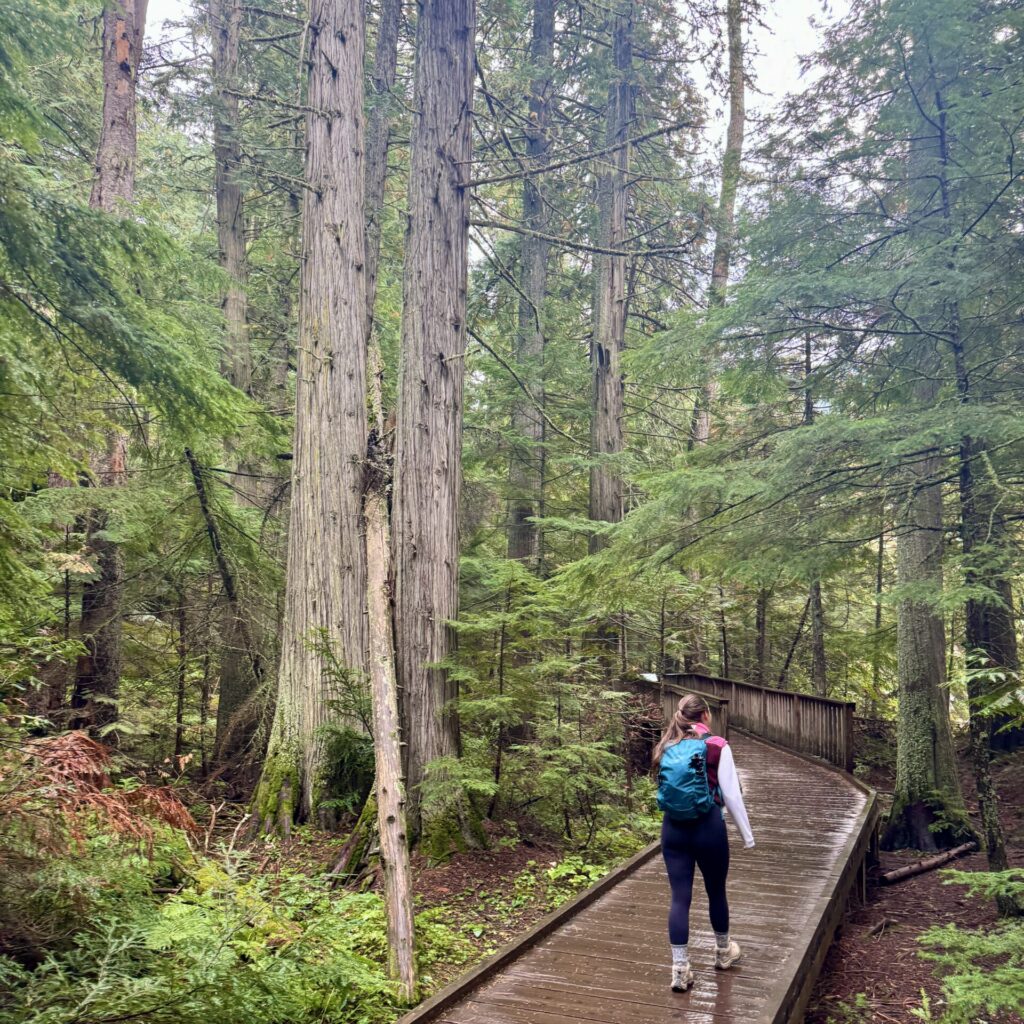
1-mile loop | Minimal elevation gain | 30–60 minutes
A wheelchair- and stroller-accessible boardwalk through ancient cedar and hemlock forest, with views of Avalanche Creek cutting through the rock below. It’s an easy, low-commitment way to get a feel for Glacier’s lower-elevation ecosystem before tackling anything bigger.
Pro tip: Combine it with Avalanche Lake (below) for a longer day — the two trails connect directly.
Hidden Lake Overlook
2.7 miles out-and-back | 550 ft elevation gain | 1.5–2 hours
Starting at Logan Pass, this trail delivers sweeping views of Hidden Lake surrounded by towering peaks, with frequent mountain goat and marmot sightings along the boardwalk. It’s one of the best payoff-to-effort ratios in the park.
2026 note: Arrive early — Logan Pass fills fast, and with the new 3-hour parking limit, timing your arrival matters more than it used to. If you’re not driving up, this is a shuttle-accessible trailhead.
Apikuni Falls
2 miles roundtrip | 580 ft elevation gain | 1–1.5 hours
A short, steady climb to a 150-foot waterfall framed by dramatic cliffs — a solid option for families or anyone short on time who still wants a real payoff. This one’s on the Many Glacier side, so no shuttle or reservation needed.
Pro tip: Bring bug spray. This trail gets buggy in summer.
Moderate Hikes: A Step Up in Challenge
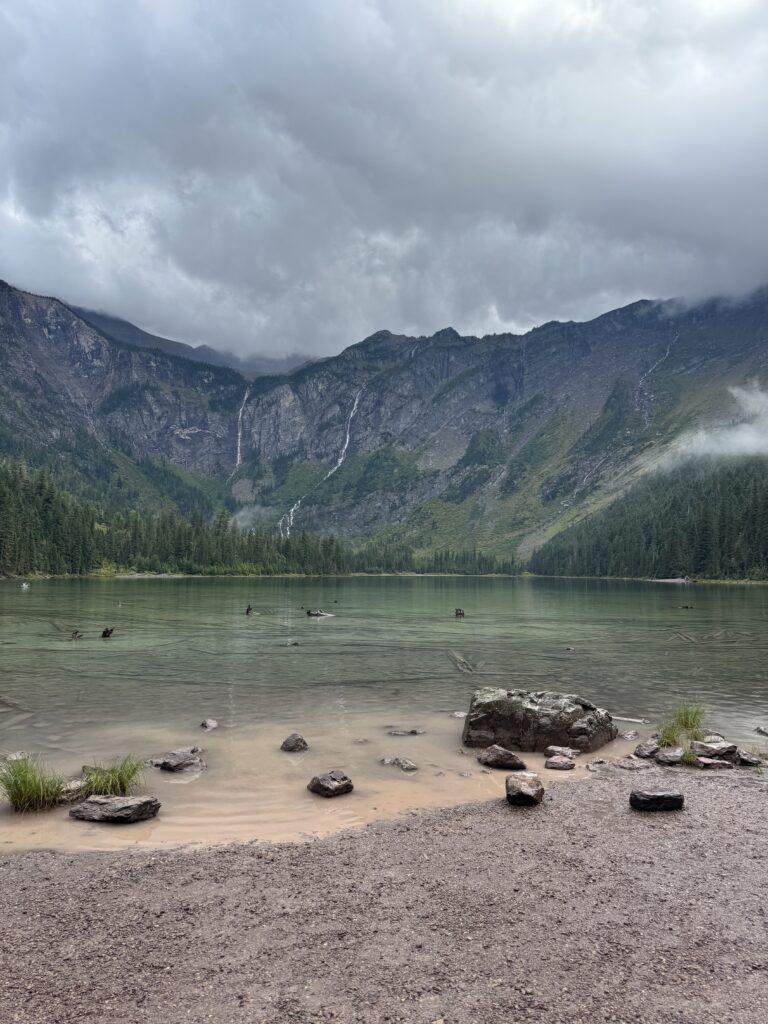
Avalanche Lake via Trail of the Cedars
6 miles roundtrip | 760 ft elevation gain | 2–3 hours
This is our pick if you want a real payoff without the mileage or elevation of Glacier’s bigger hikes. The trail combines the shaded boardwalk of Trail of the Cedars with a genuinely beautiful alpine lake ringed by waterfalls and cliffs — we found it one of the better effort-to-reward trades in the park, and it’s an easy sell for anyone in your group who isn’t up for a full-day hike.
2026 note: This trailhead isn’t on the shuttle route, so you’ll need to drive and park at Avalanche Creek directly. Start early — the small lot fills up.
St. Mary Falls and Virginia Falls
3 miles roundtrip | 450 ft elevation gain | 1.5–2.5 hours
A short trail connecting two of Glacier’s most photographed waterfalls through lush forest. Both falls are most dramatic in late spring and early summer when snowmelt is at its peak — by late August the flow noticeably thins out, so factor that into expectations if you’re visiting later in the season.
Grinnell Lake
7 miles roundtrip | 480 ft elevation gain | 3–4 hours
A turquoise glacial lake surrounded by wildflowers and rugged peaks, with surprisingly little elevation gain for the distance — one of the more accessible ways to see genuinely dramatic scenery. Don’t confuse this with the Grinnell Glacier Trail below; they share a trailhead area but are very different hikes.
Challenging Hikes: For the Experienced and Adventurous
Grinnell Glacier Trail
10.6 miles roundtrip | 2,000 ft elevation gain | 5–7 hours
We hiked this one on a day with some smoke haze drifting down from Canadian wildfires, and even then Upper Grinnell Lake — genuinely dotted with floating icebergs calved off the glacier — was worth every mile. On the way back down we ran into a group of bighorn sheep right on the trail, which is about as good as wildlife encounters get on this hike. If you catch it on a clear day, the views of the glacier itself should be even better than what we saw.
Heads up: Many hikers take the boat shuttle across Swiftcurrent and Josephine Lakes partway up, which skips a stretch of trail (including a suspension bridge crossing) and shaves a few miles off the hike. Worth looking into if you want to save some mileage for the climb.
This one starts at Many Glacier, so there’s no shuttle or reservation system to navigate — just an early start to beat the parking lot filling up.
Bring: Bear spray, layers, and more water than you think you need — afternoon thunderstorms are common and much of the upper trail is exposed.
Highline Trail to Grinnell Glacier Overlook
~15 miles roundtrip for the full trail to the overlook and back | ~800 ft elevation gain to Haystack Pass, more if you continue to the overlook | Plan for 6–8+ hours for the full out-and-back
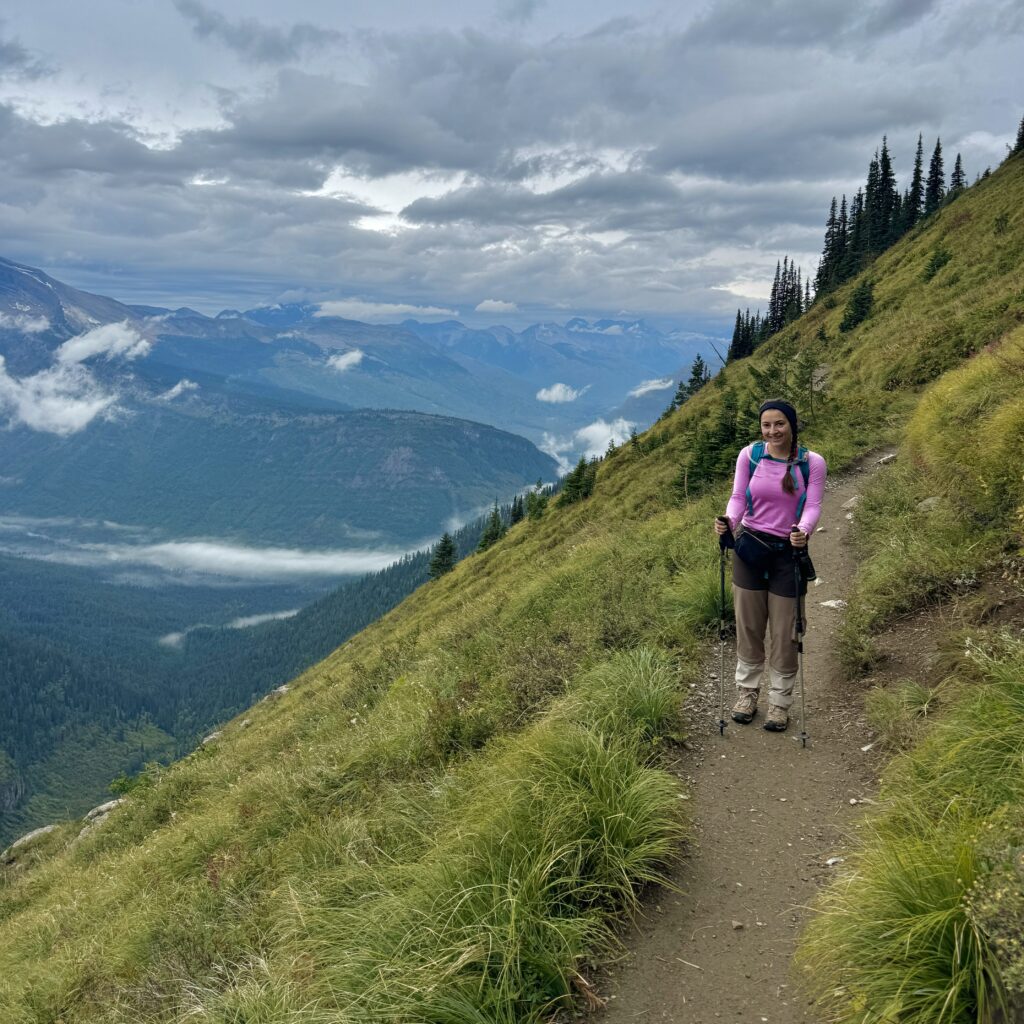
We’ve done this trail twice — once as a partial hike turning back after Haystack Pass, and once end-to-end with the side trip up to the Grinnell Glacier Overlook. The full trail hugs the Garden Wall the entire way, and even the shorter version out to Haystack Pass gives you a real sense of why this is the trail everyone talks about when they talk about Glacier.
Our full-length day was overcast and rainy, so we didn’t get the postcard visibility you see in most photos of this trail — but it was still worth every mile. We saw mountain goats and deer along the way, which felt almost expected on this trail by the time we spotted the third one. If you can only do one thing at Logan Pass, this is it, even in imperfect weather.
2026 note: This is a Logan Pass trailhead, so plan around the 3-hour parking limit or book a shuttle ticket ahead of time. Don’t skip that step — the shuttle won’t board without a reservation.
Pro tip: Even doing just the first few miles out to Haystack Pass is worth it if you’re short on time or energy — you don’t need to commit to the full length to get real payoff from this trail.
Iceberg Lake
9.7 miles roundtrip | 1,450 ft elevation gain | 4–6 hours
A glacial lake surrounded by sheer cliffs, often dotted with floating icebergs even in late summer — hence the name. It’s a rolling trail through meadows and forest with a payoff that rivals hikes with far more elevation gain, and it’s a good option if you want a challenging hike without the climbing intensity of Grinnell Glacier Trail.
This trailhead starts at Many Glacier, so there’s no shuttle system to navigate — just an early start to beat the parking lot filling up.
Pro tip: Wear waterproof shoes. Melting snow and creek crossings show up on this trail well into summer.
Trail Comparison at a Glance
| Trail | Distance | Elevation Gain | Difficulty | Trailhead |
|---|---|---|---|---|
| Trail of the Cedars | 1 mi loop | Minimal | Easy | Avalanche Creek |
| Hidden Lake Overlook | 2.7 mi | 550 ft | Easy | Logan Pass |
| Apikuni Falls | 2 mi | 580 ft | Easy | Many Glacier |
| Avalanche Lake | 6 mi | 760 ft | Moderate | Avalanche Creek |
| St. Mary & Virginia Falls | 3 mi | 450 ft | Moderate | St. Mary |
| Grinnell Lake | 7 mi | 480 ft | Moderate | Many Glacier |
| Grinnell Glacier Trail | 10.6 mi | 2,000 ft | Challenging | Many Glacier |
| Highline Trail (full) | ~15 mi | 800+ ft | Challenging | Logan Pass |
| Iceberg Lake | 9.7 mi | 1,450 ft | Challenging | Many Glacier |
If you’re deciding between the two big challenging hikes and only have time for one: Grinnell Glacier and Iceberg Lake both start at Many Glacier and skip the shuttle question entirely, while the Highline requires planning around Logan Pass access in 2026.
Where to Stay Near the Trailheads
Where you stay depends on which trailheads you’re prioritizing. If most of your hikes are on this list from Logan Pass or Avalanche Creek, base out of the west side. If Many Glacier trails (Grinnell Glacier, Iceberg Lake, Grinnell Lake) are the priority, staying east saves you real driving time.
- In-park lodges like Lake McDonald Lodge put you closest to the west-side trailheads, but they book out months ahead — think January for a July stay.
- Whitefish is the most popular west-side base, with easy highway access and a wide range of vacation rentals.
- East Glacier puts you closer to Many Glacier and St. Mary, and it’s noticeably quieter than the west side.
Essential Tips for Hiking Glacier
- Bring bear spray and keep it accessible, not buried in your pack. Glacier is home to both grizzly and black bears.
- Dress in layers. Weather shifts fast, especially at elevation — a rain jacket earns its space in your pack even on a forecast-clear day. Ask us how we know.
- Start early. Popular trailheads fill by mid-morning in peak season, and in 2026 that matters even more at Logan Pass with the new 3-hour parking limit.
- Carry at least 2 liters of water per person, more for the longer hikes on this list.
- Check current trail conditions before you go — snow and closures can persist into late summer on some trails. The NPS Glacier site has current alerts, or use AllTrails+ for recent trip reports.
- Know your shuttle vs. drive-in trailheads before you plan your day — see the 2026 access notes above so you’re not caught off guard at Logan Pass.
FAQ
Do I need a permit to hike in Glacier National Park? No permit is required for day hiking on any of the trails in this guide. Permits are only needed for overnight backcountry camping.
Which Glacier hike has the best chance of seeing wildlife? Grinnell Glacier Trail and Iceberg Lake, both out of Many Glacier, consistently offer the best odds — we saw bighorn sheep on Iceberg Lake and mountain goats are common on both.
Do I need a shuttle reservation to hike the Highline Trail in 2026? You need either a shuttle ticket booked through Recreation.gov or a way to secure parking at Logan Pass within the new 3-hour limit. See our 2026 Glacier guide for the full booking process.
What’s the easiest hike in Glacier with a real payoff? Hidden Lake Overlook and Avalanche Lake both deliver strong views for relatively little effort. Hidden Lake is shorter; Avalanche Lake has more mileage but gentler terrain overall.
Is Iceberg Lake worth it if the weather isn’t perfect? Yes — we hiked it with some wildfire smoke haze in the air and it was still one of the highlights of our trip. Floating icebergs are visible well into late summer regardless of visibility conditions.
When is the best time to hike in Glacier National Park? Most of these trails are fully accessible July through September. For a season-by-season breakdown of what’s open when, see our 2026 Glacier guide.
Planning more of your Glacier trip? Check out our full Glacier National Park 2026 guide for reservations, best time to visit, and where to stay, our guide to the America the Beautiful Pass to see if it’s worth it for your trip, and how to avoid crowds at national parks for more strategies beyond Glacier.