Last Updated on October 13, 2026 by Melissa
Great Smoky Mountains National Park is the most visited national park in the country by a wide margin. It logged about 11.5 million recreation visits in 2025, far ahead of any other national park. There’s no entrance fee and no timed-entry reservation, but you do need a paid parking tag. Roads close by season, and one of the park’s most popular trails is closed until 2027. This Great Smoky Mountains National Park guide covers what you need to know before you go: fees and parking tags, the best hikes, Cades Cove, seasonal road closures, where to stay, and how to time your trip.
We’ve visited the Smokies as adults in November, and we’d been here on family vacations as kids. This guide covers what we’d tell a friend planning a trip now.
Some of the links on this website are affiliate links, which means we may earn a small commission if you make a purchase through them — at no additional cost to you. These commissions help support Part Time Adventuring and allow us to continue creating free travel guides, national park itineraries, hiking resources, and adventure content.
Table of Contents
- Great Smoky Mountains at a Glance
- Entrance Fees and Parking Tags
- Best Time to Visit
- Getting There: Entrances and Airports
- Seasonal Road Closures
- Best Things to Do in Great Smoky Mountains
- Best Hikes in the Smoky Mountains
- Where to Stay
- Current Trail and Road Closures
- Wildlife, Pets, and Safety Rules
- Tips for Visiting the Smokies
- Great Smoky Mountains FAQ
Great Smoky Mountains at a Glance
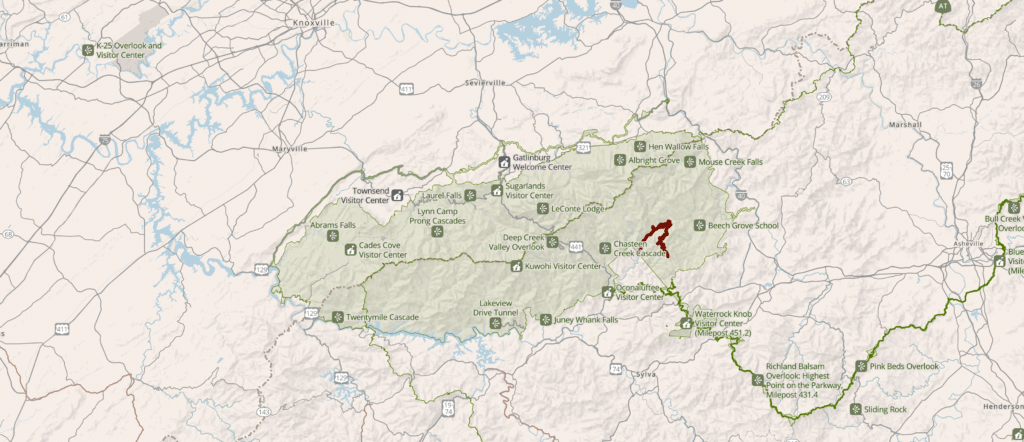
- Location: Straddles the Tennessee–North Carolina border
- Size: About 522,000 acres (roughly 800 square miles)
- Elevation: 875 feet to 6,643 feet at Kuwohi (formerly Clingmans Dome), the highest point in Tennessee
- Entrance fee: None, but a parking tag is required to park for more than 15 minutes
- Reservations: No timed entry. Campgrounds, LeConte Lodge, and the synchronous firefly viewing are reserved separately.
- Main entrances: Gatlinburg, TN (Sugarlands), Townsend, TN, and Cherokee, NC (Oconaluftee)
- Open: Year-round, 24 hours. Some roads close seasonally.
Newfound Gap Road (US-441) is the only road that crosses it, connecting Gatlinburg to Cherokee in about an hour of driving without stops. Most first-time visitors spend their time on the Tennessee side, so the North Carolina side (Cataloochee, Oconaluftee, Deep Creek) is the better choice if you want fewer people.
Entrance Fees and Parking Tags
Great Smoky Mountains charges no entrance fee. Since 2023, though, the park has required a parking tag for any vehicle parked inside the park for more than 15 minutes. The program is called “Park It Forward,” and the tag price is the same for every vehicle size:
| Tag | Price | Valid for |
|---|---|---|
| Daily | $5 | One day |
| Weekly | $15 | Seven consecutive days |
| Annual | $40 | 12 months from purchase |
Where to buy: Automated kiosks and sales points at visitor centers and major areas such as the Townsend Wye and Cades Cove. Most trailheads do not have a machine, so buy your tag before you head out. You can also buy daily and weekly tags on Recreation.gov and print them at home, or order an annual tag online through the Smokies Life store.
Does the America the Beautiful pass cover parking? No. The NPS says the America the Beautiful, Senior, and Access passes do not cover the parking tag. Vehicles with a disability placard or plate are exempt.
Fee-free days: On NPS fee-free days you don’t need a tag. The remaining 2026 dates are October 27 and November 11.
The Smokies is not one of the 11 parks that added the $100 nonresident surcharge in 2026, so international visitors pay the same parking tag price as everyone else.
Related: Planning to visit more than one park this year? Our America the Beautiful Pass guide covers which fees the pass covers and where it saves money. Just remember it doesn’t cover Smokies parking.
Best Time to Visit Great Smoky Mountains
The best time to visit the Smokies depends on what you want to see. Each season looks very different.
Fall (mid-September to early November)
Fall is the park’s signature season. Color starts at the highest elevations in mid-September and peaks there in early to mid-October. Below 4,000 feet, the best color usually comes from mid-October to early November. According to the NPS, the last three weeks of October tend to be the best overall, and they’re also the busiest. Elk rutting season runs at the same time, and the fields around Oconaluftee and Cataloochee close to people during the rut.
Winter (December to February)
Winter brings the thinnest crowds, clear long-distance views through bare trees, and occasional snow at higher elevations. The tradeoff is access. Kuwohi Road, Roaring Fork Motor Nature Trail, and other secondary roads close, and Newfound Gap Road shuts down intermittently for snow and ice. Cades Cove stays open and is the easiest winter day in the park.
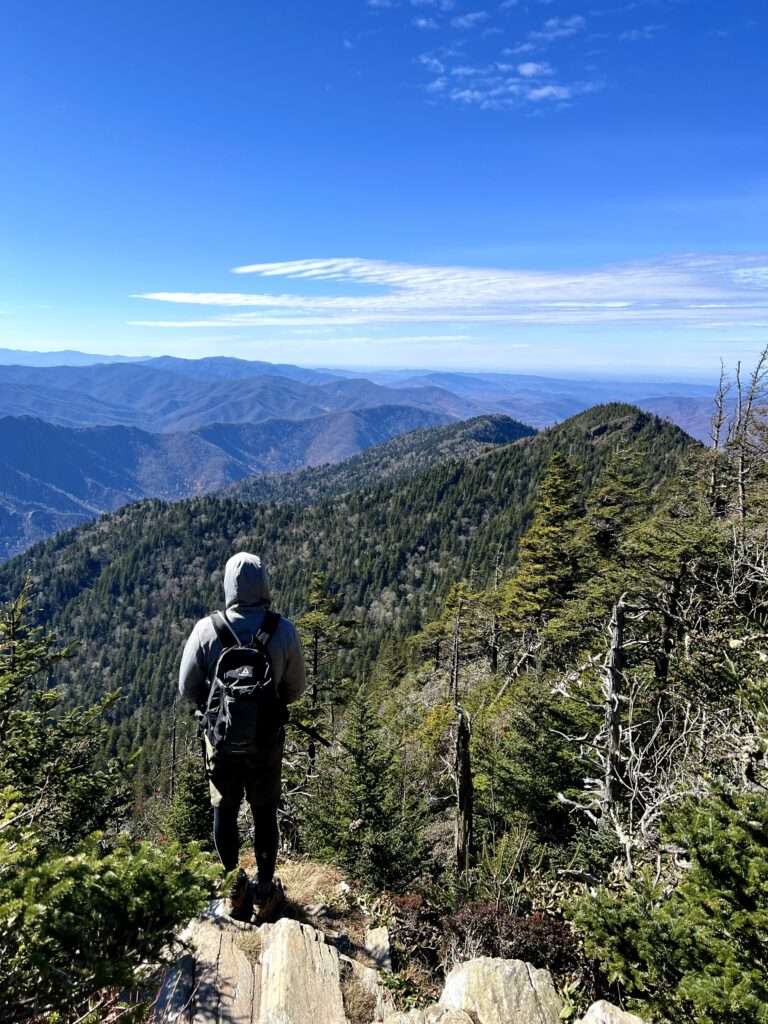
We went in November and found it a good tradeoff. The high-elevation trails were cold and windy, but the trailheads and summits that are packed in October were quiet.
Spring (March to May)
The Smokies is known for wildflowers, with more than 1,500 flowering plant species, and spring is when they bloom. The Spring Wildflower Pilgrimage, usually held the last full week of April, offers guided walks. The synchronous firefly display at Elkmont happens in late May or early June. Viewing works by lottery on Recreation.gov, and applications typically open in late April.
Summer (June to August)
Summer brings heat, humidity, and afternoon thunderstorms at low elevations, but every road and facility is open. Head high to escape the heat: Kuwohi is often 15 to 20 degrees cooler than Gatlinburg. Arrive early, because trailhead lots on Newfound Gap Road fill by mid-morning.
Related: Visiting in fall? See how the Smokies compares with Shenandoah, New River Gorge, and Grand Teton in our guide to the best national parks for fall foliage.
Getting There: Entrances and Airports
Most visitors use one of three main entrances:
- Gatlinburg, TN (Sugarlands): The busiest entrance, reached via US-441 through Sevierville and Pigeon Forge. Sugarlands Visitor Center is just inside.
- Townsend, TN: The “quiet side” entrance via US-321 and TN-73. It’s the closest entrance to Cades Cove.
- Cherokee, NC (Oconaluftee): The southern entrance via US-441, near the Oconaluftee Visitor Center and the elk fields.
Nearest airports: McGhee Tyson Airport (TYS) in Alcoa, TN, is about 45 miles from the Gatlinburg entrance, roughly an hour’s drive. It’s about 35 to 40 minutes to Townsend. Asheville Regional Airport (AVL) is about 60 miles from the Cherokee entrance, or about an hour’s drive.
Traffic through Pigeon Forge and Gatlinburg is heavy on weekends and in October. If you’re staying on the Tennessee side, Townsend avoids most of it.
Seasonal Road Closures
Several of the park’s best scenic drives are seasonal. These are the 2026 open dates from the NPS. Dates shift slightly each year.
| Road | 2026 season |
|---|---|
| Newfound Gap Road (US-441) | Year-round, weather permitting (frequent winter closures) |
| Cades Cove Loop Road | Year-round, sunrise to sunset |
| Little River Road | Year-round, weather permitting |
| Kuwohi Road (to the observation tower) | April 1 to November 29 |
| Roaring Fork Motor Nature Trail | April 17 to November 29 |
| Rich Mountain Road | April 10 to November 9 |
| Parson Branch Road | May 1 to November 9 |
| Heintooga Ridge Road | May 15 to October 31 |
| Cataloochee Road | Year-round |
Newfound Gap Road closes often in winter, sometimes for several days, when snow and ice build up near the crest. Check the @SmokiesRoadsNPS feed on X before you drive over the mountain, or text “follow smokiesroadsnps” to 40404 for alerts on Newfound Gap Road, Little River Road, Laurel Creek Road, and Cades Cove Loop Road.
Best Things to Do in Great Smoky Mountains
Drive the Cades Cove Loop
Cades Cove is an 11-mile, one-way loop through a broad valley with preserved 19th-century churches, cabins, and the Cable Mill. It’s the most reliable place in the park to see black bears, white-tailed deer, and wild turkeys. The road is open sunrise to sunset year-round. Plan on two to four hours, because traffic stops whenever someone spots a bear. On Wednesdays from May through September, the loop is closed to cars and open only to cyclists and walkers.
Visit Kuwohi Observation Tower
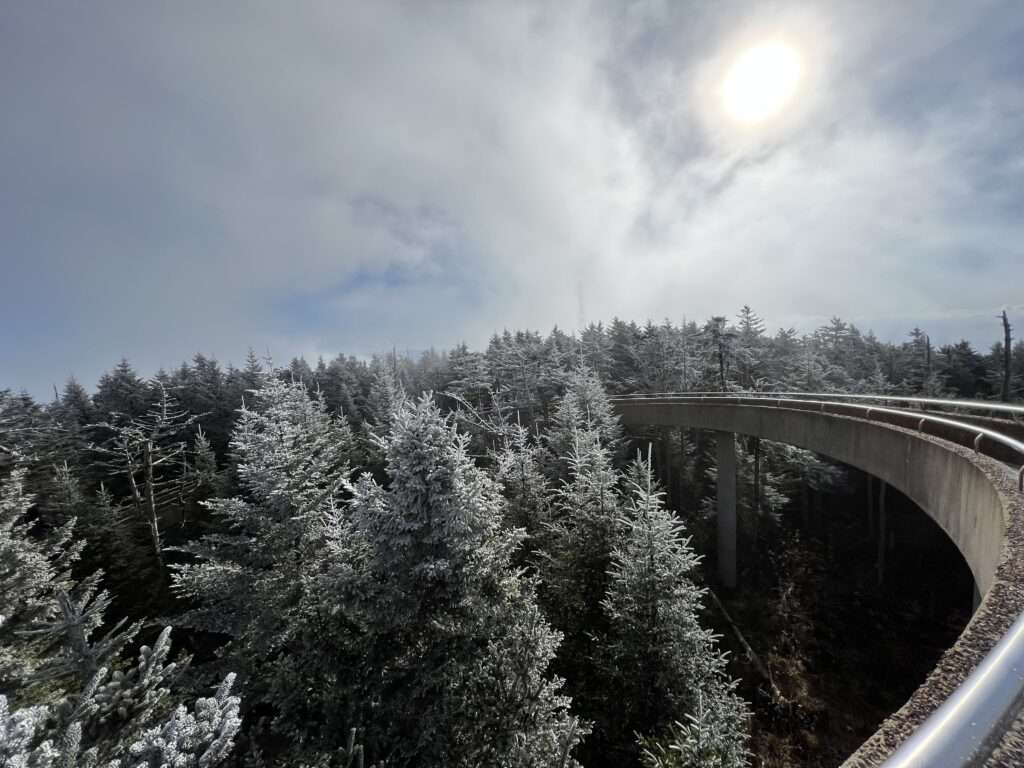
Kuwohi was officially renamed from Clingmans Dome in 2024. At 6,643 feet it’s the highest point in the park and in Tennessee. A paved but steep half-mile trail climbs from the parking lot to a 45-foot observation tower with 360-degree views that can reach more than 100 miles on clear days. Kuwohi Road is open April through late November. In winter you can still walk the closed road, but it’s a 7-mile trip each way.
Drive Newfound Gap Road
Newfound Gap Road is the 34-mile drive between Gatlinburg and Cherokee, climbing more than 3,000 feet through forest zones that change with elevation. Stop at Newfound Gap, where the Appalachian Trail crosses the road and you can stand with one foot in each state. The Rockefeller Memorial is there too.
Drive the Roaring Fork Motor Nature Trail
The Roaring Fork Motor Nature Trail is a narrow, one-way, 5.5-mile loop just outside Gatlinburg. It passes old-growth forest, historic cabins, and the trailheads for Grotto Falls and Rainbow Falls. It’s open from mid-April through late November, and buses, trailers, and RVs aren’t allowed.
See the Elk at Oconaluftee and Cataloochee
Elk were reintroduced to the Smokies in 2001. The fields beside the Oconaluftee Visitor Center and in the Cataloochee Valley are the best places to see them. Go early in the morning or late in the evening. Cataloochee is reached by a narrow, partly gravel road, but it’s open year-round.
Best Hikes in the Smoky Mountains
The park has about 850 miles of trails. These are the most popular, with round-trip distances.
| Hike | Distance (RT) | Difficulty | Notes |
|---|---|---|---|
| Alum Cave Trail to Alum Cave Bluffs | 4.4 mi | Moderate | Arch Rock at 1.3 mi |
| Alum Cave Trail to Mount LeConte | 11 mi | Strenuous | About 2,763 ft gain |
| Chimney Tops | About 3.5 mi | Strenuous | Ends at an observation point; summit pinnacle closed since the 2016 fire |
| Abrams Falls | 5 mi | Moderate | Trailhead on the Cades Cove loop; no swimming |
| Rainbow Falls | 5.6 mi | Moderate–strenuous | About 1,500 ft gain |
| Grotto Falls | 2.6 mi | Moderate | Walk behind the falls; Trillium Gap trailhead on Roaring Fork (seasonal) |
| Andrews Bald | 3.6 mi | Moderate | Starts at the Kuwohi lot (seasonal) |
| Charlies Bunion | 8 mi | Moderate–strenuous | Appalachian Trail from Newfound Gap |
| Ramsey Cascades | 8 mi | Strenuous | 2,100+ ft gain; reopened Dec 2024 |
| Kuwohi Tower | 1 mi | Moderate (steep) | Paved |
Alum Cave Trail
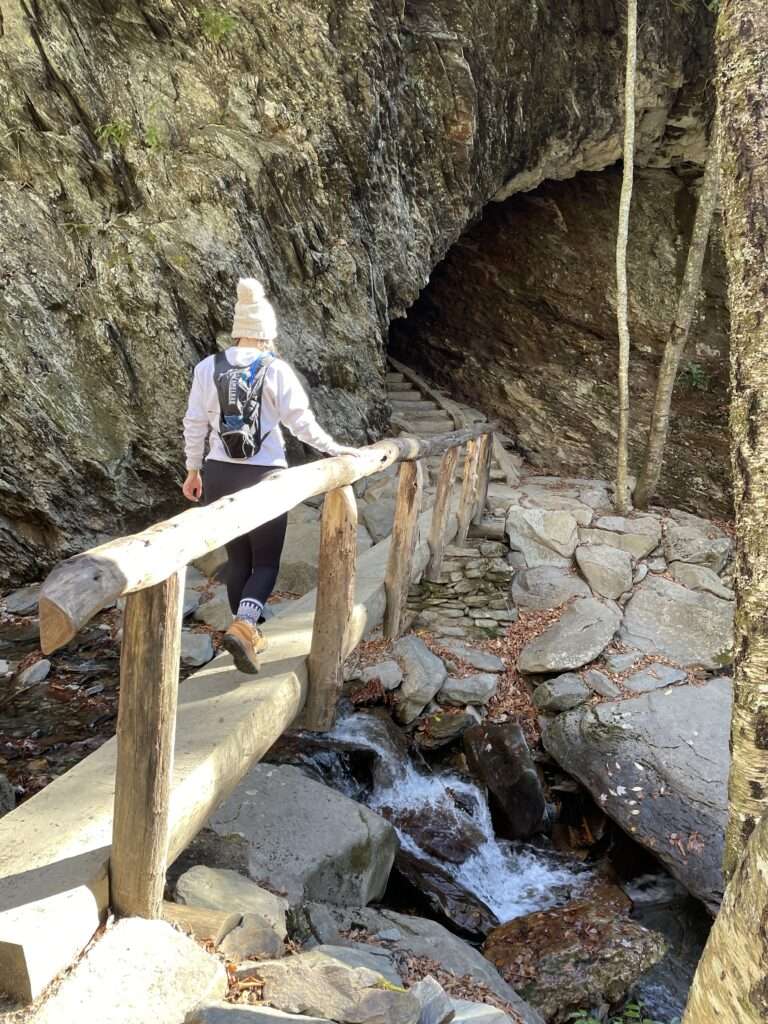
Alum Cave is the most popular route up Mount LeConte and the best single hike in the park if you only do one. The first section follows a creek to Arch Rock, a natural tunnel with stone steps through it, before climbing to the overhanging Alum Cave Bluffs. Most hikers turn around at the bluffs. Strong hikers continue to the summit and LeConte Lodge. The lot on Newfound Gap Road fills early, so arrive before 8 a.m.
We hiked Alum Cave all the way to Mount LeConte in November. The trail was cold and windy, especially higher up, so bring a warm layer and gloves even if it feels mild at the trailhead. The upside of going in late fall was how few people we passed on a trail that’s usually crowded. We also walked up to the Kuwohi observation tower, which was just as cold and windy that time of year and just as uncrowded.
A Note on Laurel Falls
Laurel Falls, long the park’s most-hiked waterfall trail, has been closed for rehabilitation since January 6, 2025, and reopening is expected in 2027. Part of Sugarlands Mountain Trail is also closed. For an easy waterfall hike in the meantime, try Grotto Falls (seasonal) or Abrams Falls (year-round).
Best Hikes in Winter
With Kuwohi Road and Roaring Fork closed, winter hiking centers on trails off year-round roads: Abrams Falls in Cades Cove, Alum Cave, Chimney Tops, and the lower part of Ramsey Cascades. Charlies Bunion from Newfound Gap is a winter favorite when the road is open, but the NPS advises microspikes because the Appalachian Trail ices over at that elevation.
Where to Stay Near Great Smoky Mountains
Gateway Towns
- Gatlinburg, TN: Closest to Sugarlands, Alum Cave, and Roaring Fork. It has the most lodging, plus the most traffic and the most tourist attractions. See hotels in Gatlinburg
- Townsend, TN: Quieter, with cabins and inns 15 minutes from Cades Cove. The best base if you want to avoid Pigeon Forge traffic. See hotels in Townsend
- Cherokee, NC: Right at the Oconaluftee entrance and near the elk fields and Blue Ridge Parkway. See hotels in Cherokee
- Bryson City, NC: A small river town near Deep Creek, 20 minutes from Cherokee, with a more local feel. See hotels in Bryson City
We stayed at a hotel in Cherokee and would choose it again. It was much quieter than Gatlinburg, and it puts you right at the Oconaluftee entrance and the elk fields.
Camping in the Park
The park has 10 frontcountry campgrounds, and reservations are required through Recreation.gov. Cades Cove and Smokemont are open year-round. Elkmont, Cosby, Deep Creek, Look Rock, and the others are seasonal. Some North Carolina-side campgrounds had reduced operations after Hurricane Helene, so check Recreation.gov for current availability.
LeConte Lodge
LeConte Lodge sits near the summit of Mount LeConte and can only be reached on foot. The shortest route is Alum Cave, about 5.5 miles one way. Rates include dinner and breakfast. The 2027 season runs March 19 to November 21. Reservations don’t use a lottery: written requests for 2027 closed in September 2026, and phone booking opened October 1, 2026. Cancellations come up, so call if you’re flexible on dates.
Related: Pair the Smokies with another East Coast park. Our New River Gorge National Park guide covers the best overlooks, hikes, and where to stay, about five hours north.
Current Trail and Road Closures
Hurricane Helene hit the North Carolina side of the park hard in September 2024, and a few areas are still recovering. As of the NPS closures update on October 9, 2026:
- Closed: Laurel Falls Trail (closed since January 6, 2025, with reopening expected in 2027), Caldwell Fork, Gunter Fork, and Swallow Fork trails, and Sugarlands Mountain Trail between Fighting Creek Gap and Huskey Gap
- Partially open: Big Creek Trail is open only for the first 2 miles, to Mouse Creek Falls
- Not advised: Boogerman Trail (washed-out footlog)
- Closed facilities: Mingus Mill (rehab, no reopening date) and Carlos Campbell Overlook
- Straight Fork Road: Opening date to be determined because of Helene damage
Check the NPS temporary closures page the week of your trip. The list changes often.
Wildlife, Pets, and Safety Rules
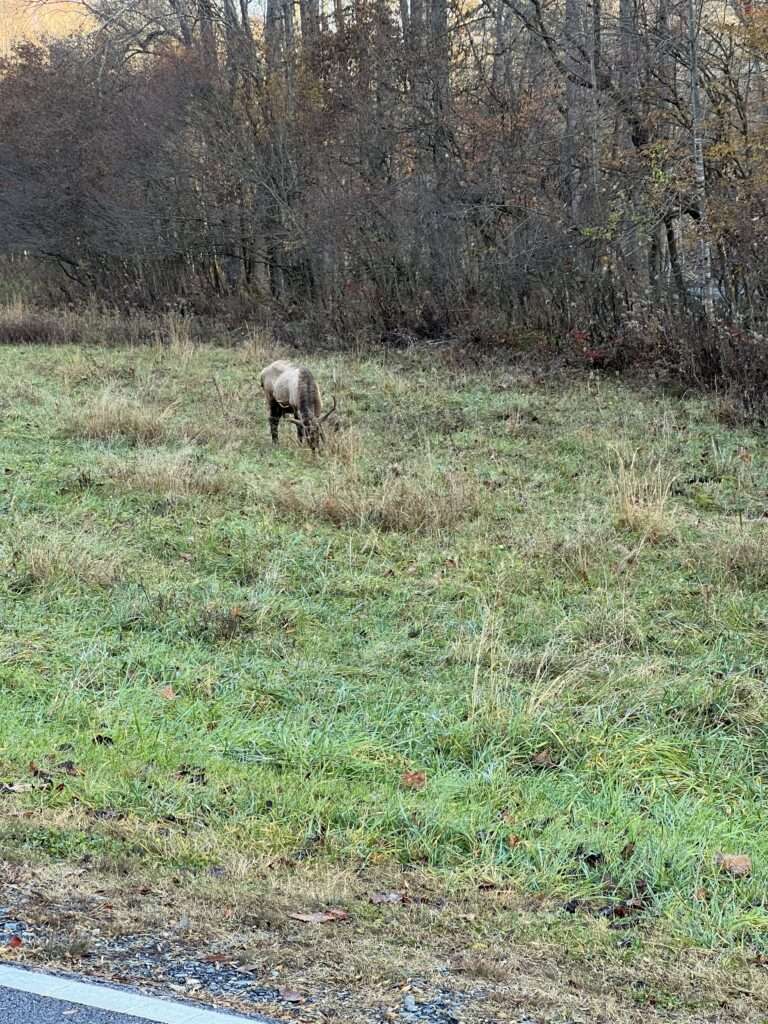
- Bears and elk: It’s illegal to approach within 50 yards (150 feet) of either, or to get close enough to change the animal’s behavior. Violators can be fined or arrested. The park has around 1,900 black bears, so store food properly and never feed wildlife.
- Pets: Dogs are allowed in campgrounds, picnic areas, and along roads, but on only two trails: the Gatlinburg Trailand the Oconaluftee River Trail. Leashes must be 6 feet or shorter.
- Water: Streams look calm but can be deadly. Abrams Falls has a strong undertow, and the NPS warns against swimming there.
- Weather: Temperatures at Kuwohi can be 15 to 20 degrees colder than in Gatlinburg. Pack layers even in summer.
Tips for Visiting the Smokies
- Buy your parking tag before you arrive. Most trailheads don’t sell them.
- Arrive before 8 a.m. or after 3 p.m. The NPS recommends these windows on busy days to avoid entrance and parking backups.
- Visit the North Carolina side. Cataloochee, Oconaluftee, and Deep Creek see a fraction of the Tennessee-side traffic.
- Check road status the morning you drive. Newfound Gap Road can close with little warning in winter.
- Bring cash and a downloaded map. Cell service is spotty across most of the park.
- Plan for traffic in October. Peak fall color weekends back up Gatlinburg and Cades Cove for hours.
Related: Want to visit the Smokies without the crowds? Our guide on how to avoid crowds at national parkscovers timing strategies that work especially well here.
Great Smoky Mountains FAQ
How much does it cost to enter Great Smoky Mountains National Park?
Entry is free, but a parking tag is required to park anywhere in the park for more than 15 minutes. Tags cost $5 per day, $15 per week, or $40 per year, and the America the Beautiful pass does not cover them.Do you need a reservation for Great Smoky Mountains?
No. The park has no timed-entry reservation system. You only need reservations for campsites, LeConte Lodge, and the synchronous firefly viewing lottery.How many days do you need in Great Smoky Mountains?
Two to three days covers the highlights: Cades Cove, Newfound Gap Road, Kuwohi, and one or two major hikes such as Alum Cave. Add a day to explore the North Carolina side, including Cataloochee and Oconaluftee.What is the best month to visit the Smoky Mountains?
October is the most popular month because of fall color, but it’s also the most crowded. Late April through May offers wildflowers and milder crowds, and winter is the quietest season if you’re comfortable with some road closures.Which side of the Smoky Mountains is better, Tennessee or North Carolina?
The Tennessee side has Cades Cove, Alum Cave, and the most famous viewpoints, plus heavy crowds. The North Carolina side is quieter and has the best elk viewing, at Cataloochee and Oconaluftee. If you have three or more days, visit both.Can you bring dogs to Great Smoky Mountains National Park?
Dogs are allowed in campgrounds, picnic areas, and along roads, but only on two trails: the Gatlinburg Trail and the Oconaluftee River Trail. Pets must be on a leash 6 feet or shorter.Final Thoughts
Great Smoky Mountains is easy to reach and free to enter, which is why it draws more visitors than any other national park. The difference between a good trip and a frustrating one is mostly logistics: buy your parking tag ahead, check seasonal road dates and current closures, start early, and spend at least one day on the quieter North Carolina side. If you’re fine with cold, windy trails, November is a good time to go. We had popular hikes nearly to ourselves.