Last Updated on November 12, 2026 by Melissa
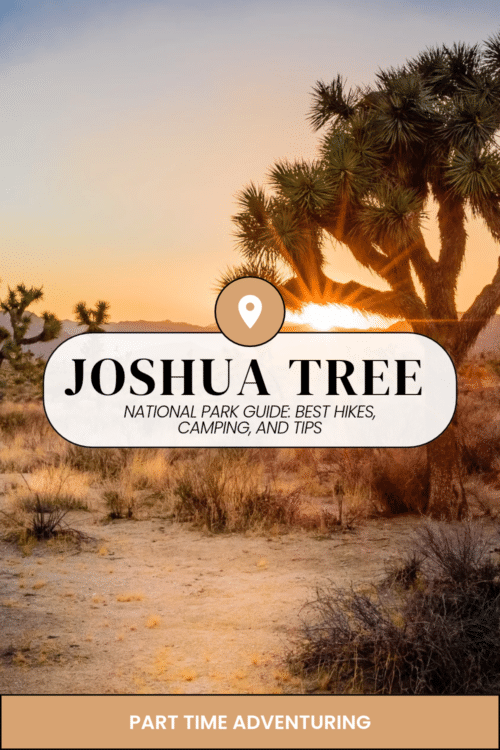
Joshua Tree National Park sits where two deserts meet. The higher, cooler Mojave Desert covers the western half, which is where the Joshua trees and the giant granite boulder piles are. The lower Colorado Desert covers the east, with cholla gardens, ocotillo, and palm oases. Most visitors only see the Mojave side along Park Boulevard. That’s the right starting point, but the park has a lot more than one scenic drive.
The park is open 24 hours a day, every day of the year. Peak season runs October through May. Winter is popular because daytime temperatures are mild, but nights regularly drop near or below freezing at higher elevations. Below you’ll find current fees, how the campgrounds work, the best hikes by difficulty, and how to split your time between the west and south entrances.
Some of the links on this website are affiliate links, which means we may earn a small commission if you make a purchase through them — at no additional cost to you. These commissions help support Part Time Adventuring and allow us to continue creating free travel guides, national park itineraries, hiking resources, and adventure content.
Joshua Tree National Park Quick Facts
- Location: Southern California, about an hour northeast of Palm Springs
- Size: About 795,000 acres, most of it designated wilderness
- Entrances: West Entrance (town of Joshua Tree), North Entrance (Twentynine Palms), and South Entrance (Cottonwood, off I-10)
- Hours: Open 24 hours, 365 days a year
- Entrance fee: $30 per private vehicle, valid seven days
- Reservations: None required to enter. Most campsites must be reserved.
- Cell service: Limited to none inside the park
- Gas and food: None inside the park. Fill up in the gateway towns.
- Dark sky status: Joshua Tree is a certified International Dark Sky Park
We’ll be upfront: we didn’t give Joshua Tree the time it deserves. We visited in the dead of winter, stayed outside the park in a trailer rental we found on Airbnb, drove through to see the Joshua trees, and left. That was enough to know a quick drive-through barely scratches the surface. This guide covers what a fuller visit looks like, built on current NPS information, so you can plan the trip we didn’t.
How to Get to Joshua Tree National Park
Joshua Tree has three entrances, and where you enter shapes your whole day. Most visitors come in through the West Entrance and drive Park Boulevard, which crosses the Mojave side and exits at the North Entrance near Twentynine Palms. Pinto Basin Road branches south from Park Boulevard and drops into the Colorado Desert, ending at the Cottonwood Visitor Center and the South Entrance, about seven miles north of I-10.
Distances from the NPS, with typical drive times:
- Palm Springs: About 40 miles, roughly one hour to the West Entrance
- Los Angeles: About 140 miles, roughly 2.5 to 3 hours to the West Entrance, depending on traffic
- San Diego: About 175 miles, roughly three hours to the West Entrance
- Las Vegas: About 215 miles, roughly 3.5 hours to the North Entrance
- Phoenix: About 222 miles, roughly 3.5 hours to the South Entrance via I-10
The NPS advises against relying on GPS directions to reach the park or to get around inside it. Follow the entrance signs from Highway 62 or I-10 instead.
The closest major airport is Palm Springs International (PSP). Ontario (ONT) and Las Vegas (LAS) are bigger hubs with more flight options. You need a car. There is no shuttle system inside the park.
Planning a desert loop? Joshua Tree pairs well with Death Valley and the parks around southern Nevada. See our guide to the epic national parks near Las Vegas for drive times and route ideas.
Joshua Tree Entrance Fees and Passes
According to the NPS, current Joshua Tree entrance fees are:
| Pass | Price | Valid |
|---|---|---|
| Private vehicle | $30 | Seven days |
| Motorcycle | $25 | Seven days |
| Per person (on foot or bike, age 16+) | $15 | Seven days |
| Joshua Tree Annual Pass | $55 | 12 months |
| America the Beautiful Pass (U.S. residents) | $80 | 12 months |
| America the Beautiful Pass (non-residents) | $250 | 12 months |
The West and North Entrance Stations take cards only. You can also pay at the Joshua Tree Visitor Center in the town of Joshua Tree, the Joshua Tree National Park Visitor Center in Twentynine Palms, and Cottonwood Visitor Center, or buy a digital pass ahead of time on Recreation.gov. Save it to your phone before you arrive, because there’s little signal at the gates.
Joshua Tree is not one of the 11 parks with the $100 per-person surcharge for non-U.S. residents that started in 2026, so international visitors pay the standard entrance fee. NPS fee-free days are now limited to U.S. citizens and residents.
If you’re visiting more than two or three fee-charging parks in a year, the America the Beautiful Pass pays for itself quickly.
Related: Our complete guide to the America the Beautiful Pass covers who qualifies for the free and discounted versions and where it doesn’t work.
Best Time to Visit Joshua Tree
The best time to visit Joshua Tree is October through April, when daytime highs are comfortable for hiking. The NPS considers October to May the busy season.
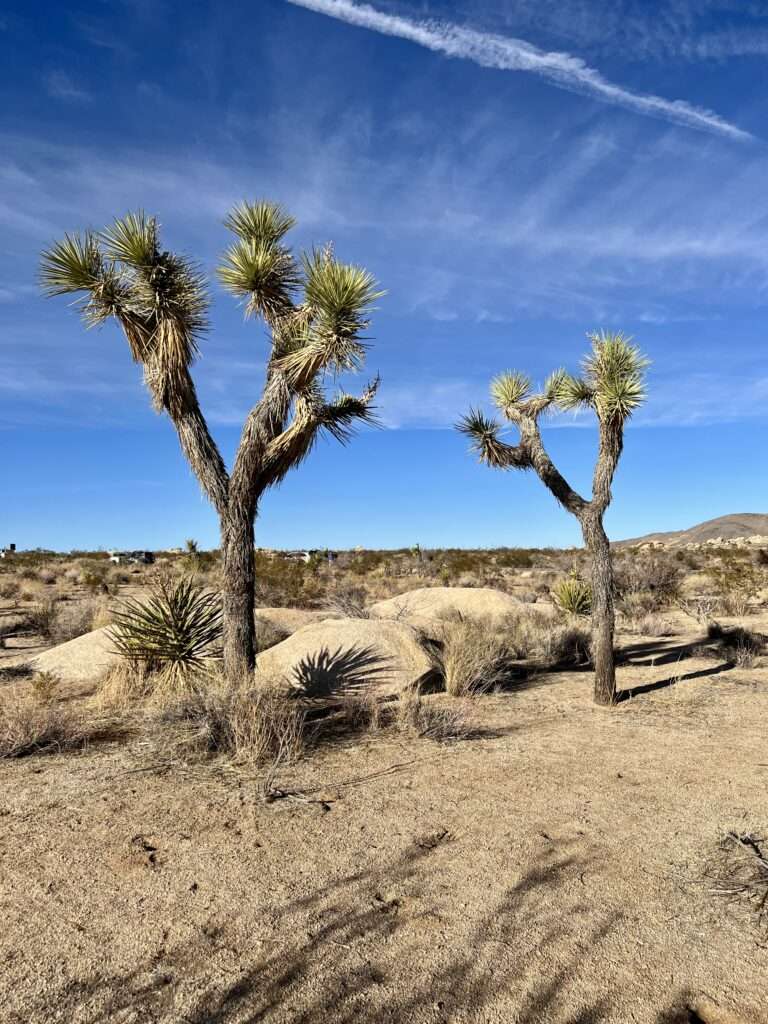
Fall (October–November): Warm days and cool nights. Crowds build on weekends, especially around Thanksgiving. A good window for longer hikes like Lost Palms Oasis.
Winter (December–February): Daytime highs are often in the 50s and 60s, but nights at the Mojave campgrounds can drop below freezing, and snow occasionally dusts the boulders. Winter has the clearest air and the longest nights for stargazing. Pack real layers if you’re camping.
Spring (March–May): The busiest season. Wildflowers and Joshua tree blooms vary a lot by year and depend on winter rain. First-come campsites are typically full by Friday afternoon from September through May, according to the NPS.
Summer (June–September): Highs regularly top 100°F. The NPS warns against strenuous hikes in the heat, and a campfire ban runs June 15 through October 1. If you visit in summer, stick to sunrise walks and night skies.
Weekdays are much quieter than weekends year-round. If you can only come on a weekend, enter before 8 am.
Best Things to Do in Joshua Tree National Park
Drive Park Boulevard
Park Boulevard connects the West and North entrances and passes most of the park’s best-known stops: Hidden Valley, Barker Dam, the Jumbo Rocks area, and Skull Rock. The forests of Joshua trees are densest on this side of the park. Pull-offs are frequent, so plan more time than the mileage suggests.
Watch Sunset at Keys View
Keys View sits at about 5,185 feet on the crest of the Little San Bernardino Mountains. On a clear day you can see the Coachella Valley, the Salton Sea, and Mount San Jacinto. It’s a short paved walk from the parking area and one of the most popular sunset spots in the park. Bring a jacket. It’s often windy.
Walk the Cholla Cactus Garden
The Cholla Cactus Garden is a quarter-mile loop through a dense stand of teddybear cholla on Pinto Basin Road, about 20 miles north of Cottonwood Visitor Center. It’s best at sunrise or sunset when the spines glow. Wear closed-toe shoes and stay on the trail. Cholla segments detach easily and are painful to remove.
Stargaze
Joshua Tree is a certified International Dark Sky Park, and the eastern half of the park is noticeably darker than the west, which picks up glow from the Coachella Valley. Pull-offs along Pinto Basin Road are good options. Check the moon phase before your trip. A new moon makes a huge difference.
Stargazing trip? See our guide to dark sky national parks for the best parks for night skies and how to plan around the moon.
Tour Keys Ranch
Keys Desert Queen Ranch is a preserved homestead that can only be visited on a ranger-led walking tour. According to the NPS, tours typically run October through May, last about two hours, and cover about half a mile. Tickets are sold only on Recreation.gov, up to 60 days ahead and until the day before the tour, and every person needs one, including infants. There are no walk-ups, and tickets aren’t sold at the visitor centers. Tours meet at the locked ranch gate, not a visitor center, and late arrivals can’t join. The park entrance fee applies on top of the ticket.Rock Scrambling and Climbing
Joshua Tree is one of the most famous climbing areas in the country, with thousands of routes on its granite formations. If you’re not a climber, scrambling on boulders around Hidden Valley, Jumbo Rocks, and Arch Rock is part of the experience. Some climbing areas have seasonal closures for nesting raptors, usually late February through July, so check the NPS climbing closures page if you plan to climb.
Visit Pioneertown
Pioneertown is a 1940s Western film set turned small town, about 20 minutes northwest of Yucca Valley. It’s an easy add-on for an evening outside the park.
Best Hikes in Joshua Tree
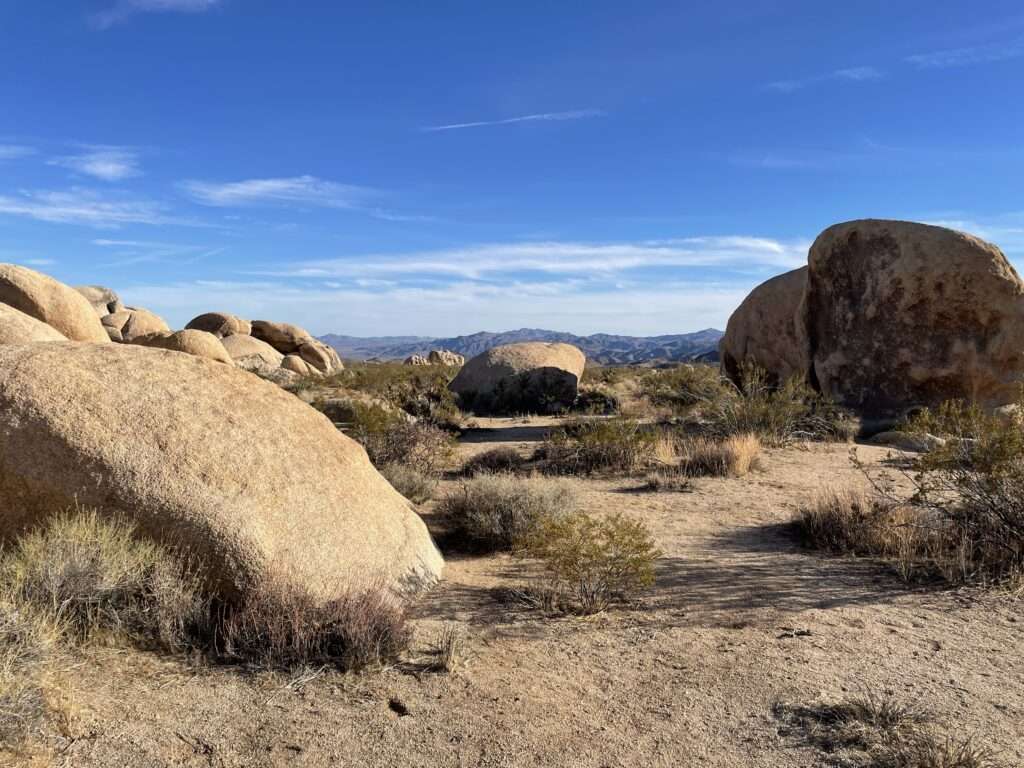
Distances and elevation gain below come from the NPS. Pets aren’t allowed on park trails, except the paved Oasis of Mara trail in Twentynine Palms.
Easy Hikes
- Hidden Valley: 1-mile loop, 100 feet of gain. A rock-ringed valley once used, according to local legend, by cattle rustlers. The best introduction to the park.
- Barker Dam: 1.1-mile loop, 50 feet of gain. Passes a historic dam built for cattle and a petroglyph site. Water behind the dam depends on recent rain and is often low.
- Arch Rock: 1.4-mile loop, 100 feet of gain, from the Twin Tanks parking area. Parking is limited, so go early.
- Skull Rock and Discovery Trail: The Skull Rock loop is 1.7 miles with 160 feet of gain. The shorter Discovery Trail (0.7 miles) starts from the same parking area.
- Cholla Cactus Garden: 0.25-mile loop, nearly flat.
Moderate Hikes
- Mastodon Peak: 3-mile loop, 375 feet of gain, from Cottonwood Spring. A short scramble at the top gives views over the Colorado Desert.
- Lost Horse Mine: 4 miles out-and-back, 550 feet of gain, off Keys View Road. Leads to one of the best-preserved mill sites in the park.
- Split Rock Loop: 2.5 miles, 150 feet of gain, through boulder formations near Live Oak.
- West Side Loop: 4.7 miles, 785 feet of gain, from Black Rock Canyon on the park’s northwest edge.
Strenuous Hikes
- Ryan Mountain: 3 miles out-and-back, 1,050 feet of gain. A steady climb to one of the best 360-degree views in the park. There’s no shade, so start early.
- Lost Palms Oasis: 7.5 miles out-and-back, 500 feet of gain, from Cottonwood Spring. Ends at the park’s largest stand of California fan palms. Plan five to six hours.
- Fortynine Palms Oasis: 3 miles out-and-back, 300 feet of gain, from a separate trailhead off Highway 62 near Twentynine Palms. Short, but rated strenuous for the rocky climb out.
- Warren Peak: 6.3 miles out-and-back, 1,110 feet of gain, from Black Rock.
- Boy Scout Trail: 8 miles one way, 1,190 feet of gain. A car shuttle is recommended.
The NPS recommends at least one gallon of water per person per day, and more for longer hikes. Joshua Tree’s trails cross open terrain with little shade, and the boulder piles all look alike. Download offline maps before you go.
Camping in Joshua Tree National Park
Joshua Tree has about 500 campsites across nine campgrounds. Most are reservable up to six months ahead on Recreation.gov. None have showers, and only Black Rock and Cottonwood have potable water and flush toilets.
Reservable campgrounds:
| Campground | Sites | Nightly fee | Water | Elevation |
|---|---|---|---|---|
| Jumbo Rocks | 124 | $30 | No | 4,400 ft |
| Indian Cove | 101 | $35 | No | 3,200 ft |
| Black Rock | 99 | $35 | Yes | 4,000 ft |
| Cottonwood | 62 | $35 | Yes | 3,000 ft |
| Ryan | 31 | $30 | No | 4,000 ft |
First-come, first-served campgrounds ($25 per night): Hidden Valley (44 sites, open year-round), Belle (18 sites), and White Tank (15 sites). Belle and White Tank close temporarily in summer. You pay at an entrance station within an hour of claiming a site, card only. According to the NPS, these fill nearly every weekend from September through May, usually by Friday afternoon.
Which campground to choose:
- Jumbo Rocks is the most popular for good reason. Sites are tucked among boulders in the heart of the Mojave side, close to Skull Rock and Arch Rock.
- Black Rock is on the northwest edge near Yucca Valley. It has water and flush toilets but is a longer drive to the main park sights.
- Cottonwood is the best base for the southern trails and the darkest skies, and it’s the warmest campground on winter nights.
- Indian Cove is reached from Highway 62, not from inside the park, and is popular with climbers.
Generators are allowed only from 7 to 9 am, noon to 2 pm, and 5 to 7 pm. Dump stations ($5) and water fill stations are at Black Rock and Cottonwood.
Winter camping? Our guide to national parks in winter covers more parks with mild winter weather and what to pack for cold desert nights.
Where to Stay Near Joshua Tree
There’s no lodge inside Joshua Tree National Park. Most visitors stay in the gateway towns along Highway 62, which runs along the park’s northern edge. Vacation rentals are a big part of the lodging mix here, from cabins to vintage trailers. We stayed in a trailer rental on Airbnb on our visit.
Joshua Tree (town): The closest town to the West Entrance and the busiest part of the park. It has the most vacation rentals, cafes, and the Joshua Tree Visitor Center on Park Boulevard. Search Joshua Tree hotels and rentals on Booking.com.
Twentynine Palms: Near the North Entrance and the park visitor center on Freedom Way. It tends to have lower prices and more traditional motels. It’s also a good base if you’re driving in from Las Vegas. Search Twentynine Palms hotels on Booking.com.
Yucca Valley: About 15 minutes west of the town of Joshua Tree, with the most grocery stores, gas stations, and restaurants in the area. Close to Black Rock Canyon and Pioneertown. Search Yucca Valley hotels on Booking.com.
Palm Springs: About an hour from the West Entrance. A good option if you want resort amenities and plan to visit the park as a day trip, but the drive adds up over multiple days.
If you want to visit the southern half of the park, consider splitting your stay: a night or two on Highway 62, then a night at Cottonwood Campground.
How Many Days Do You Need in Joshua Tree?
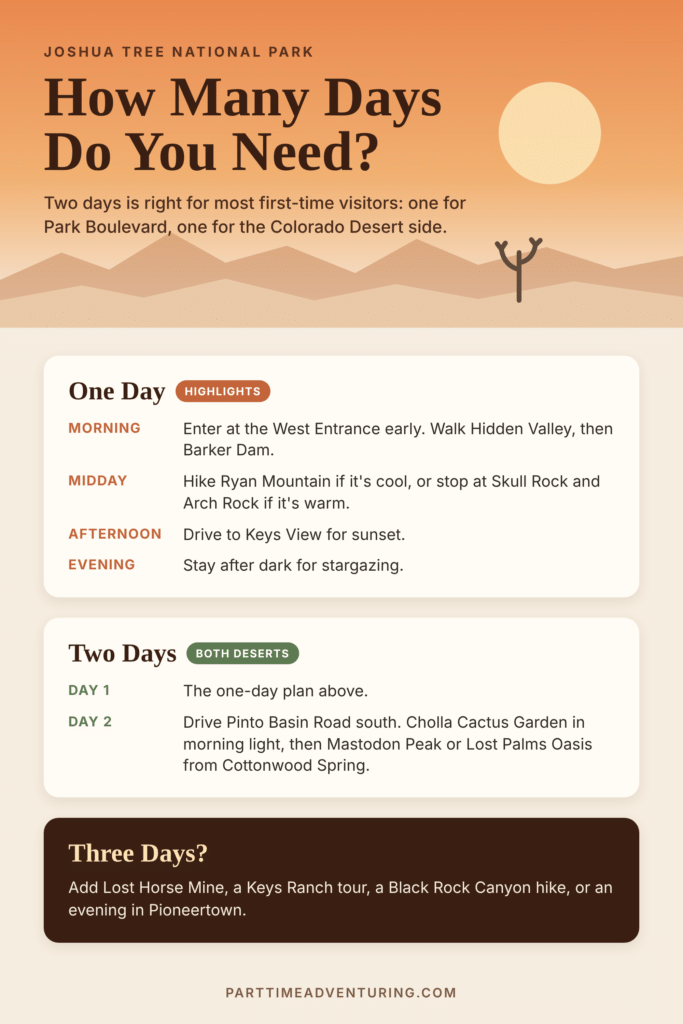
Two days is the right amount for most first-time visitors. One day covers the highlights along Park Boulevard. A second day lets you drive Pinto Basin Road to the Colorado Desert side and do a longer hike.
One Day in Joshua Tree
- Morning: Enter at the West Entrance early. Walk Hidden Valley, then Barker Dam.
- Midday: Hike Ryan Mountain if it’s cool, or stop at Skull Rock and Arch Rock if it’s warm.
- Afternoon: Drive to Keys View for sunset.
- Evening: Stay after dark for stargazing before driving out.
Two Days in Joshua Tree
- Day 1: The one-day plan above.
- Day 2: Drive Pinto Basin Road south. Stop at the Cholla Cactus Garden in the morning light, then continue to Cottonwood Spring for Mastodon Peak or Lost Palms Oasis. Exit at the South Entrance toward I-10, or camp at Cottonwood for the darker skies.
With three days, add Lost Horse Mine, a Keys Ranch tour, a hike from Black Rock Canyon, or an evening in Pioneertown.
Joshua Tree Tips Before You Go
- Fill your gas tank and water jugs before entering. There are no services inside the park, and water is only available at the visitor centers and at Black Rock and Cottonwood campgrounds.
- Download offline maps. Cell service is unreliable to nonexistent in most of the park.
- Arrive early on weekends. Parking at Hidden Valley, Barker Dam, Arch Rock, and Ryan Mountain fills by mid-morning during peak season.
- Don’t touch or climb on Joshua trees. They’re slow-growing and easily damaged. Stay on established trails and pullouts.
- Leave drones at home. Drones are prohibited in the park.
- Pack for cold nights. On our winter visit, afternoons were warm but nights dropped into the 30s and 40s. Temperatures at Jumbo Rocks and Hidden Valley can drop well below freezing, so bring layers you can add after sunset.
- Watch for flash floods. Summer monsoon storms can flood washes quickly, even if it isn’t raining where you are.
Visiting in January? See our list of the best national parks to visit in January for more mild-weather parks to pair with a Joshua Tree trip.
Joshua Tree National Park FAQ
Do you need a reservation to visit Joshua Tree National Park?
No. Joshua Tree doesn’t require a timed-entry reservation. You’ll need to pay the $30 vehicle fee or show a valid pass, and you’ll need a reservation for most campgrounds and for Keys Ranch tours.How many days do you need in Joshua Tree?
Two days is enough for most visitors to see both the Mojave and Colorado Desert sides of the park. One day covers the main stops along Park Boulevard, including Hidden Valley, Barker Dam, Skull Rock, and Keys View.What is the best month to visit Joshua Tree?
March, April, October, and November usually have the most comfortable hiking weather, though spring is also the most crowded. December through February are quieter on weekdays but bring cold nights. Avoid strenuous hikes from June through September, when highs regularly top 100°F.Is Joshua Tree worth visiting in winter?
Yes, if you pack for the cold. Winter days are often mild enough for hiking, the air is clear, and the long nights are ideal for stargazing. Campgrounds on the Mojave side regularly drop below freezing overnight.Which entrance is best for Joshua Tree National Park?
The West Entrance near the town of Joshua Tree puts you closest to Hidden Valley, Barker Dam, and Keys View, so it’s the best choice for a first visit. Use the North Entrance if you’re staying in Twentynine Palms, and the South Entrance if you’re coming from Phoenix or want to start at Cottonwood Spring.Can you drive through Joshua Tree National Park?
Yes. Park Boulevard runs between the West and North entrances, and Pinto Basin Road connects it to the South Entrance near I-10. All main park roads are paved, though some side roads like Geology Tour Road require high clearance.Plan Your Joshua Tree Trip
Joshua Tree rewards visitors who give it more than a drive-through. Book a campsite early if you’re visiting between October and May, plan at least one sunrise or sunset at Keys View or the Cholla Cactus Garden, and make time for the southern half of the park if you have a second day. Pack more water than you think you need, and stay out after dark at least once.