Last Updated on June 18, 2026 by Melissa
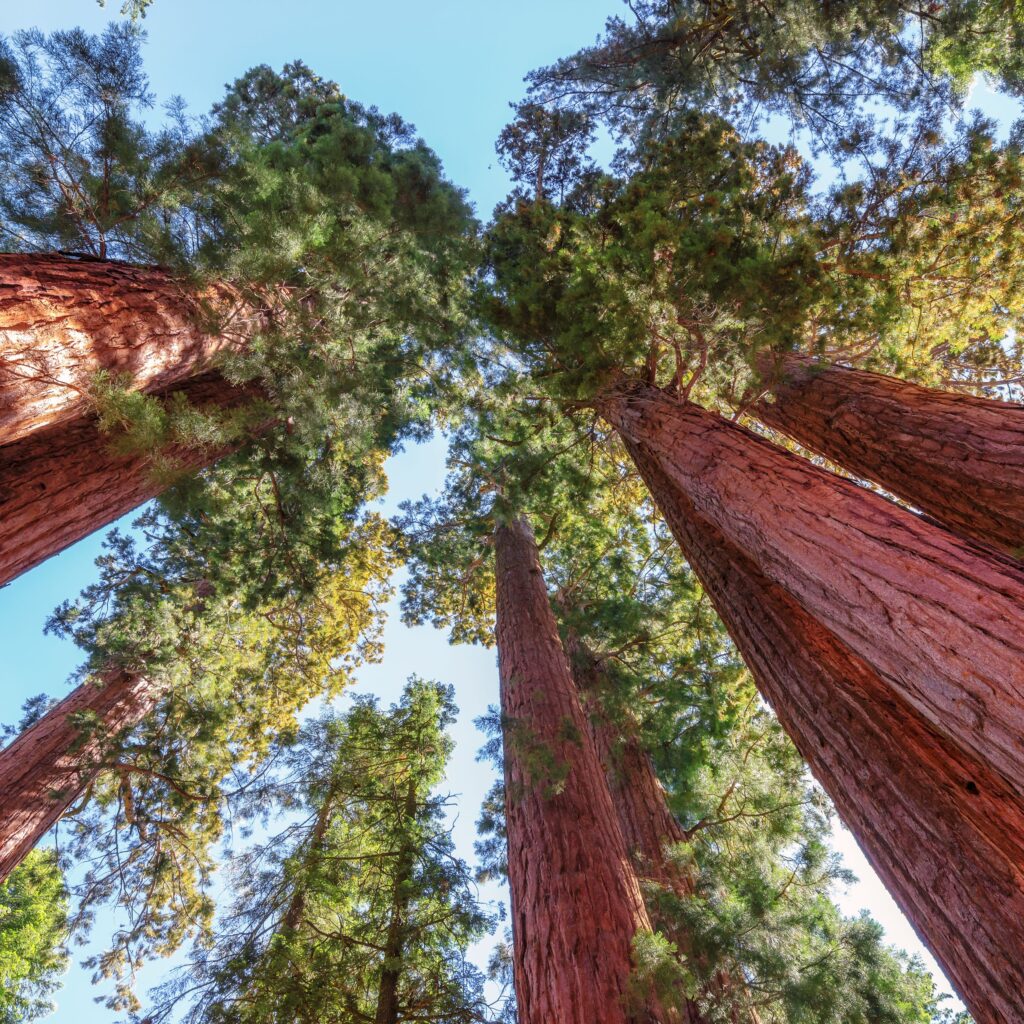
Sequoia National Park is home to the largest trees on Earth by volume, and standing next to one will recalibrate your sense of scale in a way that photographs simply cannot prepare you for. Located in California’s southern Sierra Nevada, the park protects thousands of ancient giant sequoias — some over 3,000 years old — alongside rugged granite peaks, marble caves, and alpine meadows.
Whether you have one day or a long weekend, this guide covers everything you need to plan a smart, efficient trip: entrance fees, the best hikes, where to stay, what changes by season, and a few things most visitors don’t find out until they’re already standing in the parking lot.
Some of the links on this website are affiliate links, which means we may earn a small commission if you make a purchase through them — at no additional cost to you. These commissions help support Part Time Adventuring and allow us to continue creating free travel guides, national park itineraries, hiking resources, and adventure content.
Entrance Fees and Passes
As of 2026, entrance fees for Sequoia National Park are:
- Private vehicle: $35 (valid 7 days, covers all passengers)
- Motorcycle: $30
- Per person (walk-in/bike-in): $20
Your entrance fee also covers access to Kings Canyon National Park, which shares a border and entrance infrastructure.
Important 2026 updates:
- The park is cashless at entrance stations. Credit, debit, Apple Pay, Google Pay, and Samsung Pay are accepted.
- Non-U.S. residents age 16 and older are now required to pay an additional $100 per person surcharge on top of the standard entrance fee — unless they enter with a valid America the Beautiful Pass.
America the Beautiful Pass: The $80 annual resident pass covers entrance fees at all national parks and federal recreation lands for 12 months. If you’re visiting more than two or three parks in a year, it pays for itself fast. The pass is now also available digitally through Recreation.gov. Note that the non-resident version costs $250 but exempts holders from the per-person surcharge.
Planning to hit more than one park on this trip? Our Guide to the America the Beautiful Pass breaks down exactly when it’s worth buying and when it isn’t.
Best Time to Visit Sequoia National Park
Summer (June–August): Full access, peak crowds
This is when everything is open — all roads, campgrounds, Crystal Cave tours, and the free in-park shuttle system. Weather in the Giant Forest area is mild, typically in the 70s°F. The tradeoff is that July and August are the busiest months in the park, and parking at popular spots like the General Sherman Tree trailhead fills up by mid-morning on weekends. If you’re visiting in summer, get to major trailheads by 8 AM.
The low-elevation Foothills area hits temperatures above 90°F in summer and is uncomfortable for hiking. Stick to higher elevations in the Giant Forest for summer visits.
Spring (April–May): Wildflowers and waterfalls, with caveats
Spring brings blooming wildflowers at lower elevations and rushing waterfalls fed by snowmelt. Crowds are lighter than summer. The catch: snow can persist at higher elevations into May, and tire chains may be required on Generals Highway. Crystal Cave tours begin in mid-to-late May. If you’re visiting in April, check road conditions before you go — some areas may still be inaccessible.
Fall (September–October): The sweet spot
Early September offers summer-like weather with noticeably fewer people. By October, the park starts transitioning — deciduous trees in lower areas pick up fall color, and the cooler temperatures are ideal for hiking. This is one of the best windows to visit if crowds and heat are concerns. Many park roads close in November for winter; plan to visit before mid-November to have full access.
Want to know how Sequoia stacks up against other parks by month? We break it all down in Your Guide to the Best National Parks by Month.
Winter (December–February): Quiet and beautiful, with real limitations
This is when the park is nearly empty. Snow-covered sequoias are genuinely stunning, and you’ll have iconic spots like the General Sherman Tree almost to yourself. But winter visits require planning:
- Chains or snow tires are often required on Generals Highway and may be mandatory even with 4WD
- The free in-park shuttle runs only on select holidays (Thanksgiving, Christmas/New Year’s week)
- Several roads — including the road to Moro Rock — are closed to vehicles in winter
- Crystal Cave is closed (tours run May 22–November 1)
If you visit in winter, expect to cover some ground on foot that you’d normally reach by car or shuttle. More on that in the road closures section below.
Going in winter specifically? We have a full dedicated post: Sequoia National Park in Winter: Your Ultimate Guide.
Getting There
Sequoia National Park has two main entrances:
Ash Mountain Entrance (Highway 198) — the most common approach, about 36 miles east of Visalia. This is the primary entrance to Sequoia’s Giant Forest area, where the General Sherman Tree, Moro Rock, and most major attractions are located.
Big Stump Entrance (Highway 180) — approaches from the north through Fresno, primarily used to access the Grant Grove area of Kings Canyon National Park.
Nearest airports:
- Fresno Yosemite International (FAT) — roughly 1.5 hours to the Ash Mountain Entrance
- Visalia Municipal (VIS) — about 45 minutes to the Ash Mountain Entrance
Vehicles over 22 feet are restricted on several park roads, including the road to Crystal Cave. If you’re coming in an RV or towing a trailer, check the NPS road restrictions page before your trip — some roads that look passable on a map are not.
Must-See Attractions
General Sherman Tree
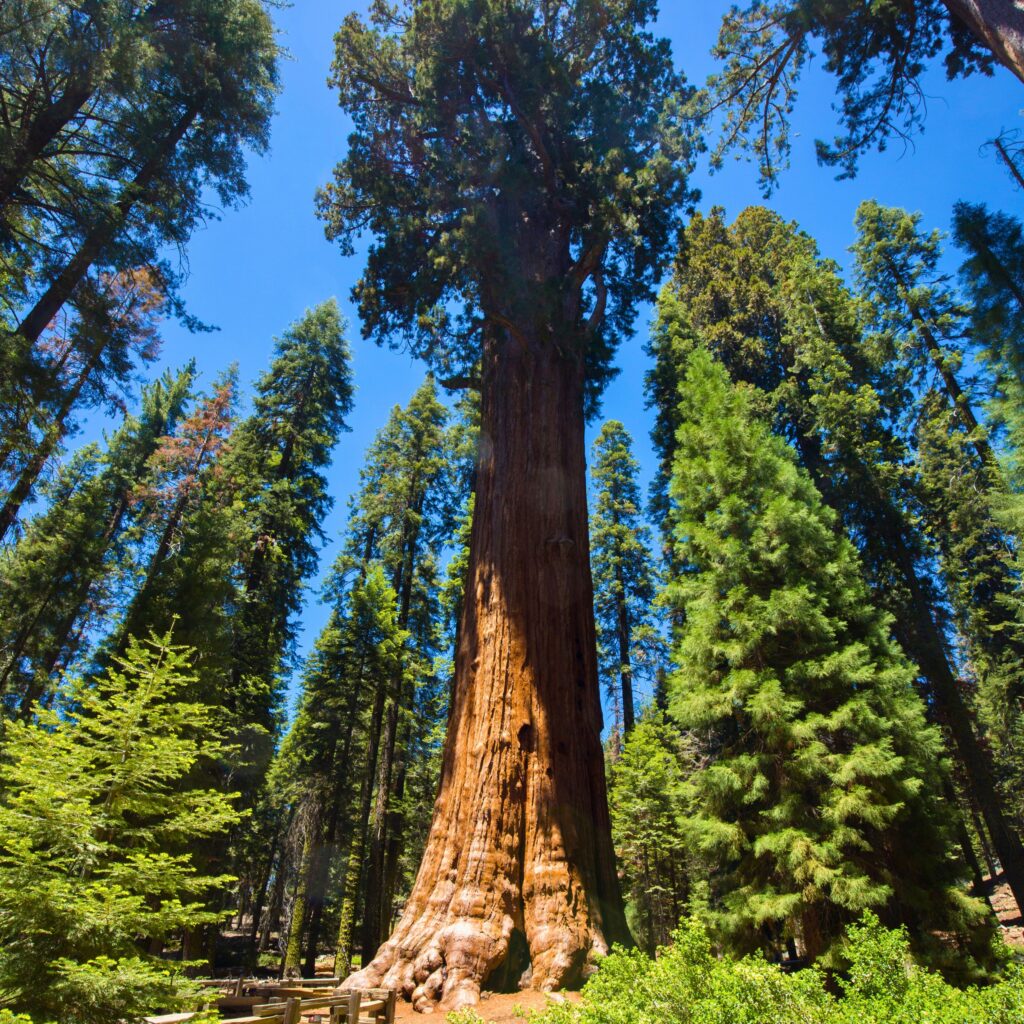
The General Sherman Tree is the largest tree on Earth by volume — 275 feet tall with a base circumference of 102 feet. It’s located in the Giant Forest, a short walk from a paved parking area. The number that puts it in perspective: the first large branch alone is larger than most trees in the eastern United States.
The walk from the parking area is about a quarter mile, paved and relatively easy. It’s accessible year-round, and the parking area is served by the in-park shuttle in summer. In winter you’ll likely have it nearly to yourself.
Moro Rock
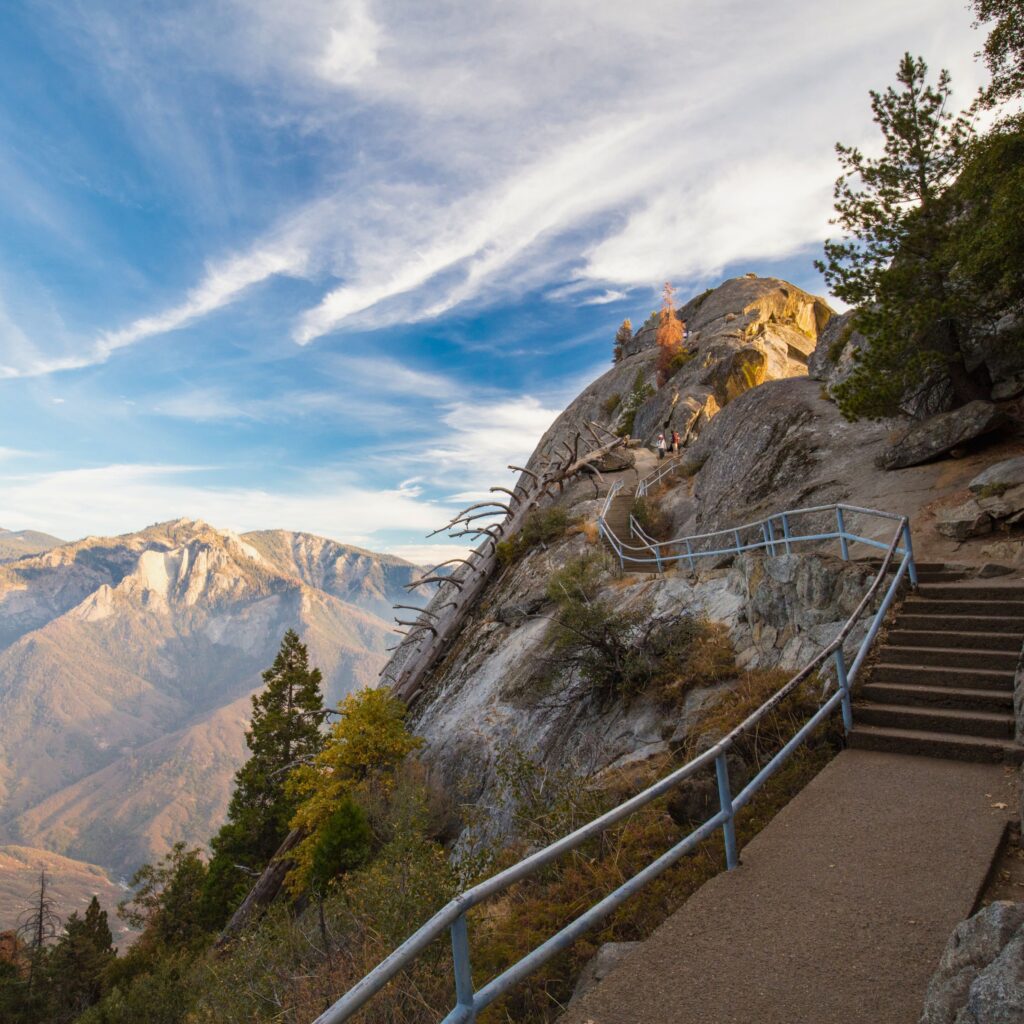
Moro Rock is a granite dome that juts above the surrounding forest at 6,725 feet. A steep quarter-mile staircase climbs to the summit, where you get a 360-degree view of the Great Western Divide and the canyon below. It’s one of the best views in the park and one of the most underrated viewpoints in California.
The catch: the road to Moro Rock closes to vehicles in winter. More on that in the road closures section.
Crystal Cave
Crystal Cave is a marble cavern discovered in 1918, open for guided tours from mid-May through November 1. It’s one of over 275 known caves in the park, and one of the few accessible to the public. Inside, you’ll find stalactites, stalagmites, calcite draperies, and flowstones — all in a cave that stays 50°F year-round regardless of outside temperatures.
A few things to know before you go:
- Tickets are not sold at the cave. Buy online in advance through the Sequoia Parks Conservancy. Tickets sell out, especially in summer.
- The 2026 season runs May 22–November 1.
- The cave road does not allow vehicles over 22 feet, and no trailers.
- Plan at least an hour from the main park road to the cave parking lot. The tour itself is about 50 minutes, plus a steep quarter-mile hike each way to the cave entrance.
- Bring a jacket — it’s 50°F inside no matter what month you visit.
- All visitors must step through a hydrogen peroxide solution at the entrance to protect against white-nose syndrome in the bat population.
Giant Forest
The Giant Forest contains over 8,000 giant sequoias and is the heart of the park. Multiple trails wind through the grove, and the Giant Forest Museum provides excellent context for what you’re looking at. Two easy loops — the Congress Trail and the Big Trees Trail — are the best introductions to the grove for first-time visitors.
Crescent Meadow
Known as the “Gem of the Sierra,” Crescent Meadow is a lush alpine meadow surrounded by sequoias at the end of the Moro Rock road. A 1.8-mile loop circles the meadow and connects to several other trails. It’s quiet, flat, and one of the most peaceful spots in the park — especially in the morning before crowds arrive.
Tunnel Log
The Tunnel Log is exactly what it sounds like — a fallen sequoia with a vehicle-sized tunnel cut through it. It’s a short detour off the Crescent Meadow road and takes about two minutes, but it makes for a genuinely fun photo. Standard-height passenger vehicles fit; larger trucks and RVs will want to use the bypass road.
Beetle Rock
Beetle Rock is a large, flat granite slab near the Giant Forest Museum that most visitors walk right past. It offers open views over the foothills and is one of the best spots in the park to catch a sunset without a significant hike. Easy to reach, rarely crowded.
Looking for the best viewpoints and scenic stops that don’t require a big hike? Check out our roundup of Must-See Scenic No-Hike Destinations in the US.
Best Hikes in Sequoia National Park
Easy
Congress Trail (2 miles, loop) — The best easy introduction to the Giant Forest. Paved, well-marked, and passes the General Sherman Tree along with dozens of other named sequoias. Minimal elevation gain. Accessible year-round.
Big Trees Trail (1.3 miles, loop) — An accessible paved loop around Round Meadow with interpretive signs explaining the sequoia ecosystem. Good for families and visitors with limited mobility.
Beetle Rock Trail (0.4 miles) — A short, flat walk to the granite slab overlook near the Giant Forest Museum. Best at golden hour.
Moderate
Tokopah Falls Trail (3.8 miles round trip) — Starts near Lodgepole Campground and follows the Marble Fork of the Kaweah River to a dramatic 1,200-foot waterfall. One of the best waterfall hikes in the park. Peak flow is in late spring and early summer from snowmelt. Minimal shade in summer, so start early.
Moro Rock Trail (0.5 miles round trip) — Short and steep, with over 300 steps, but the 360-degree summit views of the Great Western Divide are worth every step. Note that this trail and the road leading to it are closed to vehicles in winter — see the road closures section below.
Marble Falls Trail (7.8 miles round trip) — A less-visited option in the Foothills area, dropping to a series of cascades on the Marble Fork of the Kaweah River. Best in spring when water levels are high. Hot in summer given the lower elevation.
Challenging
Alta Peak Trail (20 miles round trip, 5,500 ft elevation gain) — One of the most demanding day hikes in the park, reaching an 11,204-foot summit with views across the Great Western Divide. Best done in July through September when the route is snow-free.
Pear Lake Trail (12.4 miles round trip, 3,000ft elevation gain) — A high-country route through the Tablelands to an alpine lake at 9,500 feet. Stunning late-summer scenery with wildflowers and granite slabs. Wilderness permits are required for overnight trips.
For current trail conditions and closures, check the NPS conditions page before your visit.
One Day in Sequoia National Park: The Perfect Itinerary
One day is enough to hit the best of the park if you start early and move with purpose. The key is getting to the most popular spots before the crowds do — by 10 AM on a summer weekend, parking at the General Sherman trailhead is already a battle.
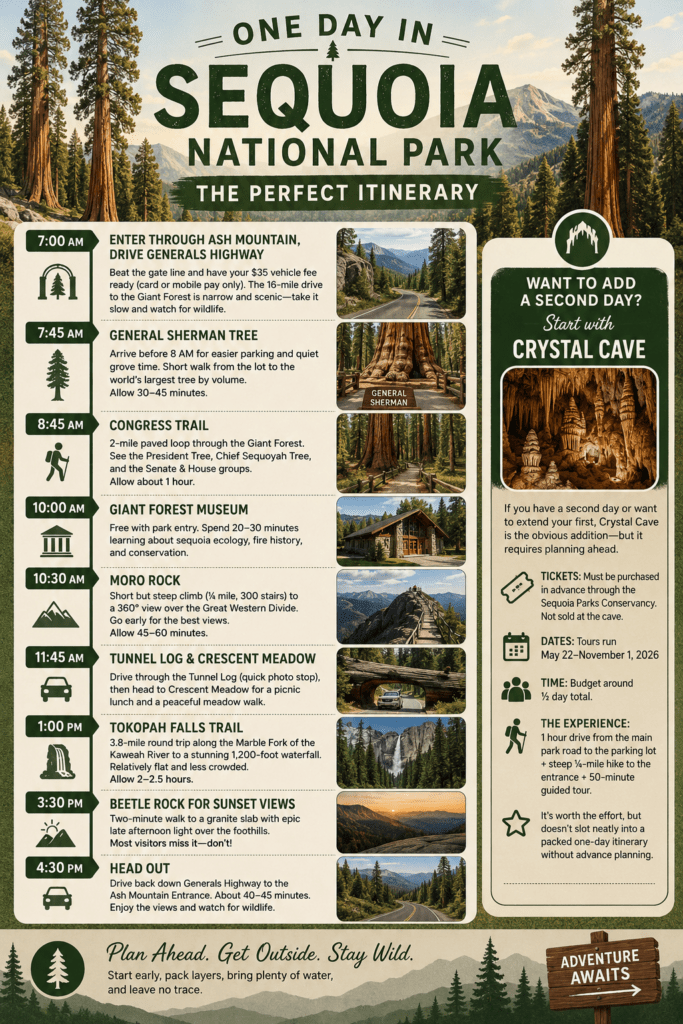
7:00 AM — Enter Through Ash Mountain, Drive Generals Highway
Get to the Ash Mountain Entrance early to beat the gate line. Have your $35 vehicle fee ready (card or mobile pay only — the park is cashless). From the entrance, Generals Highway winds 16 miles up to the Giant Forest — it’s a narrow, twisting mountain road with stunning views. Take it slow, especially on the switchbacks, and watch for cyclists and wildlife.
7:45 AM — General Sherman Tree
Your first stop is the General Sherman Tree. Arriving before 8 AM means the parking lot is still manageable and the grove is quiet. The walk from the upper parking area is about a quarter mile downhill on a paved path. Stand at the base and look up — the scale genuinely doesn’t register until you’re right next to it. Allow 30–45 minutes here to walk the short loop and take it in without rushing.
8:45 AM — Congress Trail
From the General Sherman Tree, connect directly onto the Congress Trail, a 2-mile paved loop through the heart of the Giant Forest. This is the best way to actually be among the sequoias rather than just photographing one famous tree. The trail passes the President Tree, the Chief Sequoyah Tree, and the Senate and House groups — clusters of massive sequoias that put the scale of the forest into perspective. Allow about an hour at a relaxed pace.
10:00 AM — Giant Forest Museum
Stop into the Giant Forest Museum for 20–30 minutes. It’s free with park entry and gives solid context on sequoia ecology, fire history, and the park’s conservation story. Worth the stop, especially if you’re visiting with kids.
10:30 AM — Moro Rock
Drive or take the free in-park shuttle to Moro Rock. The climb is short — about a quarter mile and 300 stairs — but steep. The 360-degree view from the summit over the Great Western Divide is the best in the park and worth every step. Go early in the day before afternoon clouds build. Allow 45–60 minutes including the drive and climb.
11:45 AM — Tunnel Log and Crescent Meadow
From Moro Rock, continue down the road to the Tunnel Log — drive through it, get the photo, move on. It takes five minutes and you’d regret skipping it. Then head to Crescent Meadow for a quick picnic lunch at one of the best-positioned spots in the park. The meadow loop is flat and peaceful — a good reset before the afternoon.
1:00 PM — Tokopah Falls Trail
Head to Lodgepole Campground and pick up the Tokopah Falls Trail. This 3.8-mile round trip along the Marble Fork of the Kaweah River is the best hike you can do in a single day — relatively flat, heavily forested, and ending at a dramatic 1,200-foot waterfall. The crowds thin out on this trail compared to the Giant Forest area. Allow 2–2.5 hours.
3:30 PM — Beetle Rock for Sunset Views
Wrap up the day at Beetle Rock, the large flat granite slab near the Giant Forest Museum. It’s a two-minute walk from the parking area and one of the best places in the park to watch the late afternoon light hit the foothills below. Most visitors have no idea it’s there, which means you’ll likely have it to yourself.
4:30 PM — Head Out
Begin the drive back down Generals Highway toward the Ash Mountain Entrance. The drive takes about 40–45 minutes and is equally scenic on the way out — pull over if you spot wildlife on the road, but don’t stop on blind corners.
Want to Add a Second Day? Start with Crystal Cave.
If you have a second day or want to extend your first, Crystal Cave is the obvious addition — but it requires planning ahead. Tickets must be purchased in advance through the Sequoia Parks Conservancy and are not sold at the cave. Tours run May 22–November 1, 2026, and sell out quickly in summer. Budget around half a day: an hour of driving from the main park road to the cave parking lot, a steep quarter-mile hike to the entrance, and a 50-minute guided tour. It’s worth the effort, but it doesn’t slot neatly into a packed one-day itinerary without advance planning.
Seasonal Road Closures: What to Know Before You Go
This is the part most visitors don’t figure out until they’re standing at a closed gate.
Sequoia has significant road closures in the off-season, particularly in winter. The road that leads to Moro Rock and Crescent Meadow — called the Crescent Meadow Road — closes to vehicles in winter. In winter months, the in-park shuttle also does not run (it operates only on select holidays). That means if you want to reach Moro Rock between December and February, you’re walking.
From the Generals Highway to Moro Rock on foot, you’re looking at roughly 2 miles each way. That’s not a deal-breaker if conditions are good — on a clear winter day with firm snow or bare pavement, it’s a scenic walk and you’ll have the summit nearly to yourself.
The real issue is when conditions are icy. The road has no guardrails in sections and the footing can be treacherous after a snowstorm. If there’s ice on the ground, skip Moro Rock on that visit. The view isn’t worth a slip and fall on a steep mountain road.
Generals Highway itself can also close or require chains during and after storms. Always check road conditions at nps.gov/seki before you leave the house in winter or early spring.
Other winter road closures to be aware of:
- The road to Mineral King closes in late fall and doesn’t reopen until late spring (typically around Memorial Day weekend)
- Generals Highway between Sequoia and Kings Canyon may close due to snow in winter
- Crystal Cave Road is closed when cave tours aren’t running (November through mid-May)
Bottom line: winter visits are absolutely possible and can be spectacular, but check conditions the day before and again the morning of your visit. The NPS updates the conditions page regularly.
Where to Stay
Inside the Park
Wuksachi Lodge is the only full-service lodge inside Sequoia National Park and stays open year-round. It sits at 7,200 feet elevation in the Giant Forest area, putting you steps from the major attractions. Rooms book up fast in summer — reservations should be made months in advance for peak season.
Campgrounds: The most popular options are Lodgepole Campground and Dorst Creek Campground, both reservable through Recreation.gov. Lodgepole is open year-round (weather permitting) and is close to the Tokopah Falls trailhead. Potwisha Campground, near the Ash Mountain entrance at lower elevation, is the best bet for winter camping — it’s typically snow-free.
Gateway Town: Three Rivers
Three Rivers is the closest town to the Ash Mountain Entrance, about 7 miles south of the park gate. It’s a small, quiet community along the Kaweah River with a handful of lodges, vacation rentals, and restaurants. Staying here is a good move if in-park lodging is sold out or if you want a bit more flexibility with dining. Browse hotels in Three Rivers on Booking.com.
Visalia
Visalia, about 45 minutes from the park entrance, has the full range of hotels, restaurants, and services. If you’re on a budget or arriving late the night before, staying in Visalia and driving in early is a practical approach. It’s also where the Sequoia Shuttle departs from. Browse Visalia hotels on Booking.com.
Trying to keep costs down on your trip? Our guide to National Parks on a Budget covers campground strategy, free entrance days, and how to stretch your park dollars further.
Wildlife and Safety
Black bears are present throughout the park and actively search for food around campgrounds and parking lots. The park requires that all food, trash, and scented items be stored in bear-proof food lockers — not in your car, not in your tent. Bears have learned to break into vehicles and will do so with surprising efficiency. Food storage lockers are available at campgrounds and at the Crystal Cave parking lot.
Bear spray is illegal here — and this surprises a lot of people. It is illegal to possess, carry, or use bear spray anywhere within Sequoia and Kings Canyon National Parks. The same ban applies at Yosemite and Lassen Volcanic. The NPS classifies bear spray as a weapon under federal regulations, and the reasoning comes down to the bears themselves: Sequoia has only black bears, not grizzlies. Black bears in this park are generally skittish around humans and tend to retreat when confronted. The NPS position is that keeping bears non-aggressive and avoidant of humans is the best long-term protection for visitors — and that bear spray risks changing that dynamic. If you encounter a black bear on the trail, make yourself look large, speak firmly, and back away slowly. Do not run.
Mountain lions are in the park but rarely seen. If you encounter one: do not run, make yourself look large, make noise, and back away slowly.
Rattlesnakes are present, particularly at lower elevations in the Foothills area and around Crystal Cave. Watch where you step on rocky trails and never reach into areas you can’t see.
Practical Tips
No gas inside the park. Fill your tank in Three Rivers or Visalia before entering. There are no gas stations inside Sequoia National Park.
Cell service is limited to nonexistent in most of the park. Download offline maps before you leave (Google Maps and the NPS app both support offline use), and screenshot your Crystal Cave confirmation code if you have one.
The park is cashless at entrance stations. Have a card or mobile payment ready.
Vehicles over 22 feet are restricted on the road to Crystal Cave and several other park roads. Check restrictions before bringing a larger vehicle or trailer.
Layers are essential year-round. Weather in the Sierra Nevada changes quickly. Even in summer, evening temperatures at the Giant Forest elevation drop significantly. In winter, dress for full winter conditions.
Arrive early at popular trailheads. By 9–10 AM on summer weekends, the General Sherman Tree, Moro Rock, and Crescent Meadow parking areas are often full. The free in-park shuttle is the practical alternative — or just start your day before 8 AM.
Check the NPS conditions page before every visit. This is not optional in winter or spring. Road closures and chain requirements can change overnight.
FAQ
What is the entrance fee for Sequoia National Park in 2026? A private vehicle pass costs $35 and is valid for 7 days, covering all passengers in the vehicle. The fee also covers access to Kings Canyon National Park. The park is cashless at entrance stations. Non-U.S. residents age 16 and older pay an additional $100 per person surcharge unless they hold a valid America the Beautiful Pass.
Can I visit Sequoia National Park in winter? Yes, and it can be spectacular — snow-covered sequoias are genuinely worth seeing. But winter visits require planning. Chains or snow tires may be required, the in-park shuttle operates only on select holidays, and several roads including the one to Moro Rock close to vehicles. Check road conditions at nps.gov/seki the day before your visit. Wuksachi Lodge and Potwisha Campground are the primary in-park lodging options that stay open in winter.
Do I need reservations to visit Sequoia National Park? No timed entry reservation is required to drive into the park — you pay the entrance fee at the gate. However, Crystal Cave tours require advance tickets purchased online through the Sequoia Parks Conservancy (tickets are not sold at the cave). Campground reservations are strongly recommended for summer visits and can be made at Recreation.gov.
How long do I need to see Sequoia National Park? One full day is enough to see the main attractions: General Sherman Tree, Moro Rock, Tunnel Log, and Crescent Meadow. Two days lets you add Crystal Cave, a longer hike like Tokopah Falls, and time to slow down and actually be in the forest rather than just passing through. A full weekend opens up the higher-elevation hikes and gives you flexibility for weather.
What’s the difference between Sequoia and Kings Canyon National Parks? They’re adjacent parks managed together and share the same entrance fee — your pass covers both. Sequoia contains the Giant Forest with the General Sherman Tree and most of the iconic sequoia groves. Kings Canyon to the north contains the Grant Grove area and the dramatic Kings Canyon itself, a deep glacially-carved canyon. Most first-time visitors spend their time in Sequoia’s Giant Forest and add Grant Grove if they have an extra half day.
Is Moro Rock worth it? Yes — it’s one of the best viewpoints in the park. The hike is short but steep (about 300 stairs). In winter, the road to Moro Rock closes to vehicles, and the free shuttle doesn’t run, meaning you’d walk roughly 2 miles each way from Generals Highway. On a clear winter day with solid footing, it’s worth the effort. If there’s ice on the ground, skip it and come back when conditions are better.