Last Updated on August 18, 2026 by Melissa
North Cascades National Park, located about two hours northeast of Seattle, is a remote and rugged wilderness known for its towering, glacier-capped peaks, alpine lakes, and some of the best hiking in Washington State. It’s also one of the least-visited parks in the Lower 48 — which means the trails and views feel earned rather than crowded. Before you go, here’s what we wish we’d known.
Some of the links on this website are affiliate links, which means we may earn a small commission if you make a purchase through them — at no additional cost to you. These commissions help support Part Time Adventuring and allow us to continue creating free travel guides, national park itineraries, hiking resources, and adventure content.
Table of Contents
- General Information About North Cascades
- 1. Snow Lingers Well Into Summer
- 2. The Park Is Genuinely Remote
- 3. Road and Trail Access Can Change Fast
- 4. Wildlife Encounters Are Common
- 5. The Best Viewpoints Require Effort
- 6. Mountain Roads Take Extra Care
- 7. Some Popular Spots Aren’t Technically in the Park
- Essential Packing List
- FAQ
General Information About North Cascades National Park
Location: Northern Washington State, about two hours northeast of Seattle.
Size: The park spans over 500,000 acres, making it one of the largest — and least visited — national parks in the country.
Entrance Fee: North Cascades is one of the few national parks in the U.S. with no entrance fee at all. There’s no fee station and no day-use pass required inside the park boundary. The catch: several adjacent trailheads along Highway 20 (Rainy Lake, Blue Lake, Heather–Maple Pass, and others) sit on U.S. Forest Service land and require a Northwest Forest Pass ($5/day or $30/year) for parking. The America the Beautiful Pass covers those trailheads too, along with Olympic and Mount Rainier if you’re combining all three Washington parks in one trip.
Best Time to Visit: Mid-June through September, once most trails are snow-free and the highway is fully open.
Visitor Centers: There are two main options — one near Newhalem (northern/western entrance) and one near Marblemount (southern), which also houses the Wilderness Information Center for backcountry permits.
Weather and Gear: Mountain weather changes fast, even in summer. Pack layers, waterproof gear, and enough food and water for the day — services inside the park are minimal to nonexistent.
Combining this with Olympic and Mount Rainier? Our Washington National Parks road trip guide covers the full loop, current road status for all three parks, and a sample 9-day itinerary.
1. Snow Lingers Well Into Summer
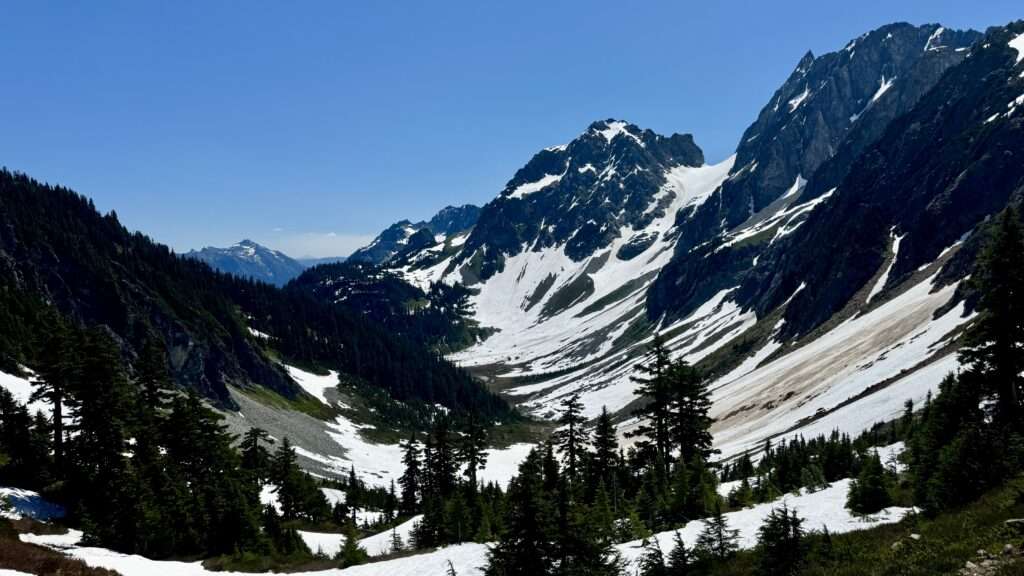
One of the biggest surprises here is how much snow stays on the trails, even in late summer. Trails above 4,000 feet can hold snow into July, making footing slippery and travel slower than the mileage suggests.
- Even in warm, sunny conditions at lower elevations, expect snowy or icy patches higher up.
- Bring microspikes or light traction devices and trekking poles for stability on snow-covered sections.
- It was still snow-covered when we visited in early July in 2024— plan accordingly and don’t assume a “summer” date guarantees clear trails. The same time of year in 2026 it was much less snow covered. The previous winters snowfall really determines how much snow will linger into the later summer.
- Check trail conditions with rangers or on the NPS current conditions page before heading out.
2. The Park Is Genuinely Remote
North Cascades’ isolation is part of the draw, but it also means real self-sufficiency is required.
- Cell service is almost nonexistent through most of the park. Don’t rely on your phone for navigation or emergencies.
- Amenities are minimal. Gas stations, restaurants, and stores are sparse — stock up on food, water, and gas before entering.
- Nearby towns like Marblemount have some services, but they’re still a real drive from most trailheads.
- Carry more supplies than you think you’ll need, and build in extra time for the unexpected.
3. Road and Trail Access Can Change Fast
Even in peak season, road closures and shifting trail conditions can rearrange your plans without much notice.
- The North Cascades Highway (SR-20) closes every winter due to avalanche danger, typically mid-November through late April or May, and the exact reopening date shifts year to year based on snowpack and storm damage. In 2026, a December flood followed by a spring rockslide pushed the reopening all the way to June 14 — the latest in over 50 years. Always check the WSDOT mountain pass status page before locking in a trip, especially outside peak summer.
- Trailhead access can change with no warning. On one visit, the road to the nearest Cascade Pass parking was washed out, turning what should’ve been a moderate hike into a much longer day. Always check current conditions before you go, not just the season.
- Some trails require permits or are only accessible certain months — research ahead through the NPS site or the Wilderness Information Center in Marblemount.
- Keep your itinerary flexible enough to absorb a closure or a weather delay.
4. Wildlife Encounters Are Common
North Cascades has healthy populations of black bears, cougars, and — if you’re lucky — mountain goats working the high ridgelines.
- Bear country: Black bears are common; grizzly sightings, while rare, can occur. Carry bear spray and know how to use it. In
- Cougar safety: Mountain lions live in the park. Attacks are rare, but know how to respond if you encounter one — stand tall, make noise, and don’t run.
- Food storage matters: Use bear-resistant containers or hang food at least 10 feet up and 4 feet from any trunk.
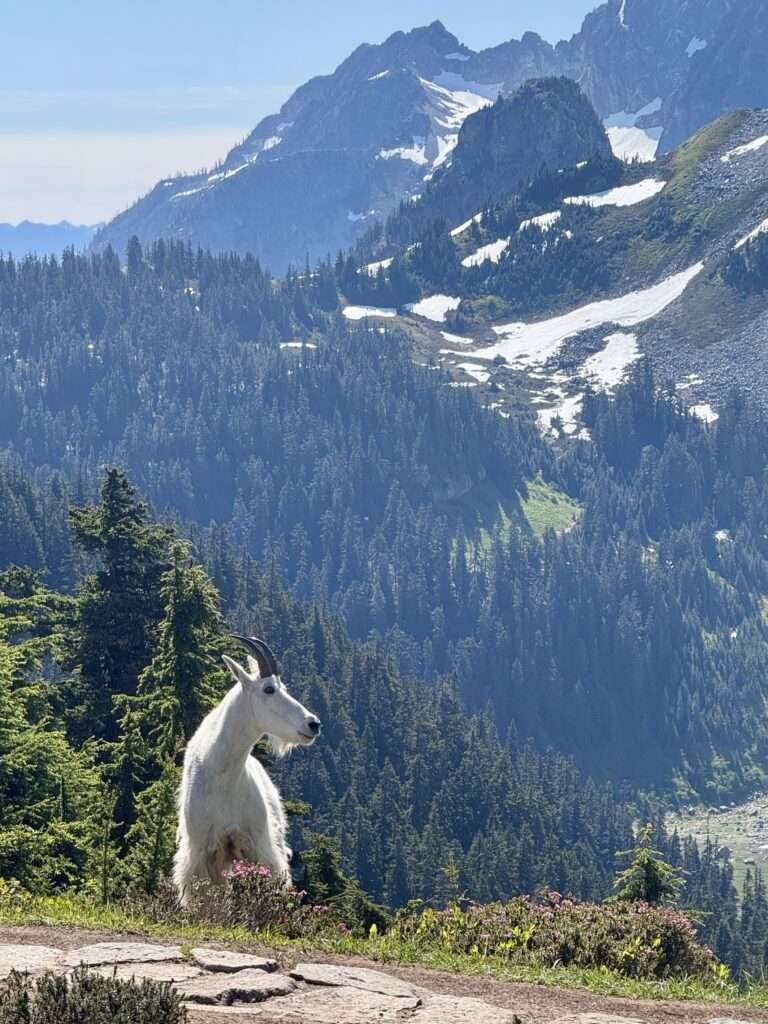
- Mountain goats are one of the best wildlife sightings here. Continuing past Cascade Pass toward Sahale, we saw probably 20 or more mountain goats in 2026 — working their way across the ridges above the pass, close enough to make the extra elevation gain feel completely worth it. Give them (and all wildlife) plenty of space.
5. The Best Viewpoints Require Effort
Some of the most iconic views in the park are only reachable by strenuous hikes — there’s no scenic drive shortcut to most of them.
- Cascade Pass Trail is our pick for the single best hike in the park. If you have the legs for it, push past the pass itself and continue toward Sahale Glacier — the views keep improving with every switchback, and so do your odds of spotting mountain goats. Even if you stop at the pass, it’s worth every step to get there. We’ve done it twice in 2024 and 2026 and honestly will never get tired of the incredible views and wildlife sightings.
- Artist Point is another payoff-heavy destination that requires a genuinely difficult hike to reach.
- Most of the park’s best viewpoints sit on difficult or intermediate trails — budget real time and energy, not just mileage.
6. Mountain Roads Take Extra Care
Scenic driving here comes with real technical challenges.
- Narrow, winding roads can be tough for larger vehicles like RVs or trailers.
- Many trailhead access roads are gravel, not paved — expect rougher terrain, especially in a smaller car.
- Sharp hairpin turns are common; drive slowly if you’re not used to mountain roads.
- Parking at trailheads and pull-offs is limited, especially in peak season.
- Always check road conditions before heading out, particularly after storms.
<h2 id=”secret-7″>7. Some Popular Spots Aren’t Technically in the Park</h2>
A few of the most-photographed destinations near North Cascades sit just outside the park boundary — still worth the visit, just worth knowing.
- Ross Lake is part of the adjacent National Recreation Area, popular for boating, fishing, and camping.
- Diablo Lake, known for its striking turquoise water, is also just outside the park boundary and one of the most-photographed stops on SR-20 — great for kayaking and photography.
- If you’re specifically trying to stay inside park boundaries, map your route carefully; otherwise, these nearby spots are worth building into your day regardless.
Essential Packing List
- Bear spray — recommended for most hikes, especially in remote areas
- Layered clothing, including waterproof and windproof outer layers, even if the forecast looks clear
- Hiking poles — help with traction on snow and stability on steep terrain
- Snacks and plenty of water — many trails have no water sources
- Offline maps — download trails in advance or bring a paper map; cell service is limited to nonexistent
Planning Your Itinerary
- Allow extra travel time. Roads leading to popular areas are winding and slow, and closures or construction can add detours.
- Pick a base town. Marblemount or Winthrop both offer easy access to the park’s main entrances, lodging, and dining.
- Start early. Popular trailheads fill up fast in peak season — an early start helps with both parking and crowds.
FAQ
Does North Cascades National Park charge an entrance fee? No — North Cascades is one of the few national parks in the country with no entrance fee at all. Some adjacent U.S. Forest Service trailheads along Highway 20 do require a Northwest Forest Pass for parking, which the America the Beautiful Pass also covers.
When does the North Cascades Highway (SR-20) open each year? It typically reopens in late April or May and closes again by mid-November, but the exact dates shift year to year based on snowpack and storm damage. Always check WSDOT’s mountain pass status page before planning a spring or late-fall trip.
What is the best hike in North Cascades National Park? Cascade Pass Trail is our top pick — and if you’re up for pushing further, continuing toward Sahale Glacier rewards you with even better views and a good chance of spotting mountain goats along the ridgelines.
Do I need a permit to hike in North Cascades? Most day hikes don’t require a permit, but overnight backcountry trips do. Check with the Wilderness Information Center in Marblemount before a multi-day trip.
Is North Cascades good for a day trip from Seattle? It’s possible but tight — the drive alone is around two hours each way, and the park rewards a slower pace. If you can, plan for at least one overnight to actually get out on the trails without rushing back.
Are Diablo Lake and Ross Lake inside the national park? Not technically — both sit within the adjacent Ross Lake National Recreation Area, which is managed alongside the park but has a different boundary. They’re still very much worth visiting and are usually included in any North Cascades trip.
Embrace the Adventure in North Cascades
North Cascades is a gem for outdoor enthusiasts, but like any remote wilderness, it rewards preparation. With the right gear, a flexible itinerary, and a little respect for how quickly conditions can change, you’ll come away with one of the best, least-crowded national park experiences in the country.