Last Updated on August 4, 2026 by Melissa
Washington State offers something most road trippers only dream about: three incredibly unique national parks, each within a short drive of the other. We’ve done this loop ourselves — rainforest to volcano to alpine wilderness — and the biggest thing that trips people up isn’t the driving, it’s timing the roads and fees right. North Cascades Highway closes every winter and had an unusually late reopening in 2026, Mount Rainier just dropped its timed-entry system, and Hurricane Ridge is still running on limited services after the 2023 visitor center fire. We’ll walk you through all of it below.
Some of the links on this website are affiliate links, which means we may earn a small commission if you make a purchase through them — at no additional cost to you. These commissions help support Part Time Adventuring and allow us to continue creating free travel guides, national park itineraries, hiking resources, and adventure content.
Table of Contents
- Why Take a Washington National Parks Road Trip?
- Entrance Fees & Passes for 2026
- Best Time to Visit Washington’s National Parks
- What to Pack for Your Washington National Parks Road Trip
- The Best Washington National Parks Road Trip Route
- Sample 9-Day Itinerary
- Olympic National Park — Spend 3 to 5 Days
- Mount Rainier National Park — Spend 2 to 3 Days
- North Cascades National Park — Spend 2 to 4 Days
- Bonus Stops Along the Way
- Tips for a Smooth Road Trip
- FAQ
Why Take a Washington National Parks Road Trip?
From dramatic coastlines to volcanoes and remote alpine lakes, Washington’s national parks showcase some of the most diverse landscapes in the country. A Washington National Parks road trip lets you experience this variety without needing to cross state lines.
Here’s what makes this trip special:
- Olympic National Park: Explore tidepools, waterfalls, and mossy rainforests all in one park.
- Mount Rainier National Park: Hike beneath a 14,000-ft volcano surrounded by wildflowers.
- North Cascades National Park: Discover some of the least-visited but most jaw-dropping peaks in the U.S.
Related: Not sure the America the Beautiful Pass is worth it for a three-park trip? We break down 2026 pricing, the new digital pass option, and exactly when it pays for itself in our Ultimate Guide to the America the Beautiful Pass.
Entrance Fees & Passes for 2026
Fees changed at two of these three parks going into 2026, and one park still doesn’t charge anything at all. Here’s the current breakdown:
| Park | Entrance Fee (7-day) | Annual Park Pass | Reservation Required? |
|---|---|---|---|
| Olympic | $30/vehicle, $15/person on foot or bike | $55 | No |
| Mount Rainier | $30/vehicle, $15/person on foot or bike | $55 | No — canceled for 2026 |
| North Cascades | Free | N/A | No |
If you’re hitting all three parks (plus anything else along the way), the America the Beautiful Annual Pass covers entrance to Olympic and Rainier for $80 and pays for itself after your third park visit. None of these three parks charge the nonresident surcharge that now applies at 11 other major parks, so this trip is priced the same for U.S. residents and international visitors.
The bigger 2026 change: Mount Rainier’s timed-entry pilot, which ran at Sunrise and Paradise in 2024 and 2025, has been canceled for the entire 2026 season. Entry to every part of the park is first come, first served — which means arriving early still matters, since parking lots fill fast, but you no longer need to book a reservation window in advance.
Related: Rainier isn’t the only park that walked back its reservation system this year — see which others did in 4 National Parks That Dropped Reservations in 2026 (And How to Actually Visit Them).
Best Time to Visit Washington’s National Parks
Planning a Washington National Parks road trip requires seasonal awareness, as snowpack and road closures can significantly impact access — especially at Mount Rainier and North Cascades.
- Olympic National Park: Open year-round, but Hurricane Ridge Road runs on a Friday–Sunday winter schedule from December through March, weather permitting. Best time to visit is June to September.
- Mount Rainier National Park: Snow can linger into July, and wildflower season peaks late July to mid-August. September brings fewer crowds and golden meadows.
- North Cascades National Park: The North Cascades Highway (SR-20) typically opens in late April or May and closes again by mid-November. Best time is August to early October for full access and prime hiking conditions.
A note on 2026 specifically: SR-20 had one of its latest openings on record this year — a December 2025 flood and a spring rockslide kept the highway closed until June 14, nearly three weeks past the usual target. WSDOT rebuilds the timeline every spring, so always check the official SR-20 status page before you lock in a North Cascades leg of the trip, especially if you’re planning for May or early June.
Best Overall Window: Mid-July through early October offers the most trail access and best conditions across all three parks. For fewer crowds, late September to early October is ideal.
We visited in early July 2024 and the Sunrise corridor at Mount Rainier was still closed, with trails completely snow-covered — micro-spikes and trekking poles got us through. Worth flagging: that’s not tied to the calendar. Trail and road conditions at Rainier are 110% dependent on how much snow fell that winter. We were back at roughly the same point in the season this year, 2026, and Sunrise was already clear and open. Don’t plan around what a blog post says happened in a different year — check current conditions before you go.
What to Pack for Your Washington National Parks Road Trip
Be prepared for variable temps and remote areas. Essentials include:
- Waterproof rain jacket and backpack cover
- Layered hiking clothing for 40°F–80°F temps
- Daypack with water, snacks, first-aid kit, and headlamp
- Sunglasses, hat, and sunscreen
- Hiking boots with strong traction
- Micro-spikes if you’re visiting earlier in the summer
- America the Beautiful Annual Park Pass
- Offline navigation tools (AllTrails+ or Gaia GPS)
- Bug spray (especially early summer)
- Bear spray (important in North Cascades) — note that you cannot fly with bear spray; rent or buy it locally instead
The Best Washington National Parks Road Trip Route
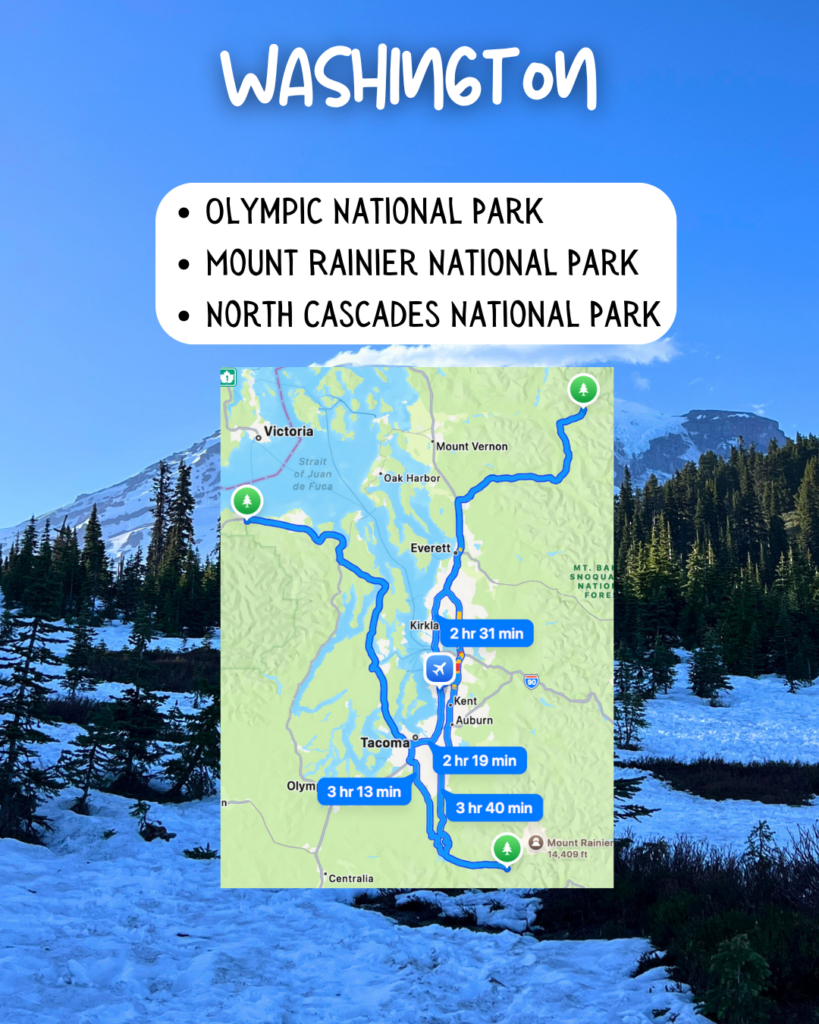
The most efficient route is a clockwise loop that begins in Seattle and follows this order:
Seattle → Olympic National Park → Mount Rainier National Park → North Cascades National Park → Seattle
- Seattle to Olympic: ~2.5–3 hours driving around via I-5 and US-101 through Tacoma and Olympia. We’ve done this drive clockwise ourselves, and we’d skip the Seattle–Bainbridge Island Ferry — it looks like the scenic shortcut on a map, but between driving to the terminal, waiting for a sailing (no reservations on this route, so it’s first come, first served), and the crossing itself, it ends up taking more total time than just driving around. It’s a nice option if you want the experience of the ferry itself, but don’t take it expecting to save time.
- Olympic to Mount Rainier: ~3.5 hours
- Mount Rainier to North Cascades: ~4 hours
- North Cascades to Seattle: ~2.5 hours
This route minimizes backtracking and lets you take advantage of the North Cascades Highway when it’s open — just confirm the current status before you commit to the full loop. A car with decent clearance is worth it if you’re visiting early season or exploring less-traveled roads. Need wheels? Book your rental car here to find the best rates.
Olympic National Park — Spend 3 to 5 Days
Olympic is incredibly diverse, with each area offering a unique experience. You can explore glacier-capped peaks, lush temperate rainforests, alpine ridgelines, and wild beaches — all within a single park. Spreading your time across different regions ensures you see the best of what Olympic has to offer, from the inland mountains to the rugged Pacific coastline.
Top Hikes:
- Hurricane Hill Trail: Paved, 3.2 miles round-trip with sweeping mountain views
- Hall of Mosses: Short 0.8-mile loop through dense, otherworldly rainforest
- Pro tip: continue along the Hoh River Trail to explore more of the rainforest, and turn around once you’re about halfway through the time you have.
- Mount Storm King: Challenging 4.1-mile hike with ropes and epic lake views. We hiked this one ourselves — the roped section near the top isn’t optional if you want the full view, so skip it if you’re not comfortable with exposure.
Must-See Sights:
- Hurricane Ridge: Easily accessible viewpoint with sweeping views of the Olympic Mountains. Heads up: the visitor center burned down in 2023, and services at the top are still limited as of 2026 — bring your own food and water, since there’s no replacement facility yet. Before you drive up, check the park’s live Hurricane Ridge webcam— the ridge is fogged in more often than you’d expect, and the camera saves you the drive up if there’s nothing to see.
- Ruby Beach: One of our favorite stops on the whole coast — sea stacks, tide pools, and piles of driftwood right off Highway 101. Time it for low tide if you want to explore the tide pools.
- Rialto Beach & Hole-in-the-Wall: Iconic tidepools and coastal rock formations. Check tide levels before visiting, or you won’t be able to reach the formation at all.
- Lake Crescent: Deep blue glacial lake perfect for paddling or relaxing
Other Activities:
- Tidepooling at Salt Creek Recreation Area
- Kayaking or paddleboarding on Lake Crescent
Hidden Gems:
- Spruce Railroad Trail: Flat lakeside trail with tunnels and great views
- Madison Falls: An easy walk to a scenic waterfall near Elwha
- Beach 4: Less crowded alternative to the popular beaches, with tidepools and dramatic driftwood
Where to Stay: Port Angeles, Forks, or Sequim
Planning Tips:
- Stay in Port Angeles to explore the eastern part of the park, then head to Forks for easy access to the coastline and rainforest.
- Arrive at the Hoh Rainforest early — the lot runs one-car-in, one-car-out once it fills, and it fills before 9 a.m. in summer.
- Check tide levels before heading to any of the coastal beaches.
- Save your worst weather day for the coast and rainforest. The Hoh looks its best when it’s damp — that’s the whole point of a rainforest — and the beaches are prone to overcast skies regardless of the forecast. Put your best weather toward Hurricane Ridge instead, since that view actually depends on a clear sky.
- If you’re staying in Port Angeles, eat at Fish and Crab Shack. We had genuinely great fish and crab there, and their fish breading happens to be gluten-free without tasting like a substitution.
Related: We go much deeper on Olympic in our Ultimate Guide to Visiting Olympic National Park 2026 — worth a read if you’re spending more than a couple of days in the park, or check out our full Hoh Rainforest guide before you go.
Mount Rainier National Park — Spend 2 to 3 Days
Mount Rainier offers some of the most stunning alpine scenery in the U.S., from wildflower meadows to dramatic glaciers. It’s essential to focus your time in the Paradise and Sunrise areas for the best views, iconic hikes, and alpine lakes. These areas provide an accessible yet rugged experience, but there are also some hidden gems tucked away from the crowds.
Timed Entry Update for 2026: Mount Rainier ran a timed-entry pilot at Sunrise and Paradise in 2024 and 2025. That system has been canceled for 2026 — the park is managing crowding through parking strategies instead, and entry is first come, first served. Arrive at Paradise before 9 a.m. and Sunrise before 10 a.m. on summer weekends to actually find parking.
Top Hikes:
- Skyline Trail: 5.5-mile loop with nonstop Rainier views, meadows, and potential marmots
- Naches Peak Loop: 3.3-mile trail near Chinook Pass with postcard-worthy vistas
- Fremont Lookout (Sunrise): 5.8-mile trail starting at the Sunrise parking lot. Best for sunrise or sunset views.
- Burroughs Mountain Trail (from Sunrise): Moderate to strenuous trail with close-up Rainier views
Must-See Sights:
- Reflection Lakes: Best at sunrise or golden hour
- Box Canyon: Short walk with views into a deep, narrow slot canyon
- Paradise Visitor Center & meadows
Other Activities:
- Photography at Tipsoo Lake
- Picnicking at Sunrise Point
Hidden Gems:
- Grove of the Patriarchs: Short trail to giant old-growth trees (check for bridge repairs before you go)
- Bench and Snow Lakes Trail: Moderate hike to two stunning alpine lakes with fewer crowds
- Silver Falls Loop: Easy waterfall hike near Ohanapecosh
Where to Stay: Ashford (for Paradise), Enumclaw, or Packwood (for Sunrise)
Camping Note: Ohanapecosh Campground — normally the park’s largest, near the Grove of the Patriarchs — is closed for the entire 2026 season for rehabilitation and is expected to reopen in 2027. If you were planning to camp in that area, Cougar Rock is the closest reservable alternative.
Have a backup plan for clouds. Rainier makes its own weather, and low clouds can sit over the mountain for days even when the rest of the state is clear. This year, 2026, we had all four days of our Rainier visit completely socked in — never saw the mountain once from inside the park. We ended up driving back from Seattle before sunrise on a clear-forecast morning to catch it, and it was worth the lost sleep. If your visit is cloud-locked, check the forecast for a clear morning and be willing to make an early return trip rather than write the mountain off. Having your trip planned in July/August lessens this phenomenon.
North Cascades National Park — Spend 2 to 4 Days
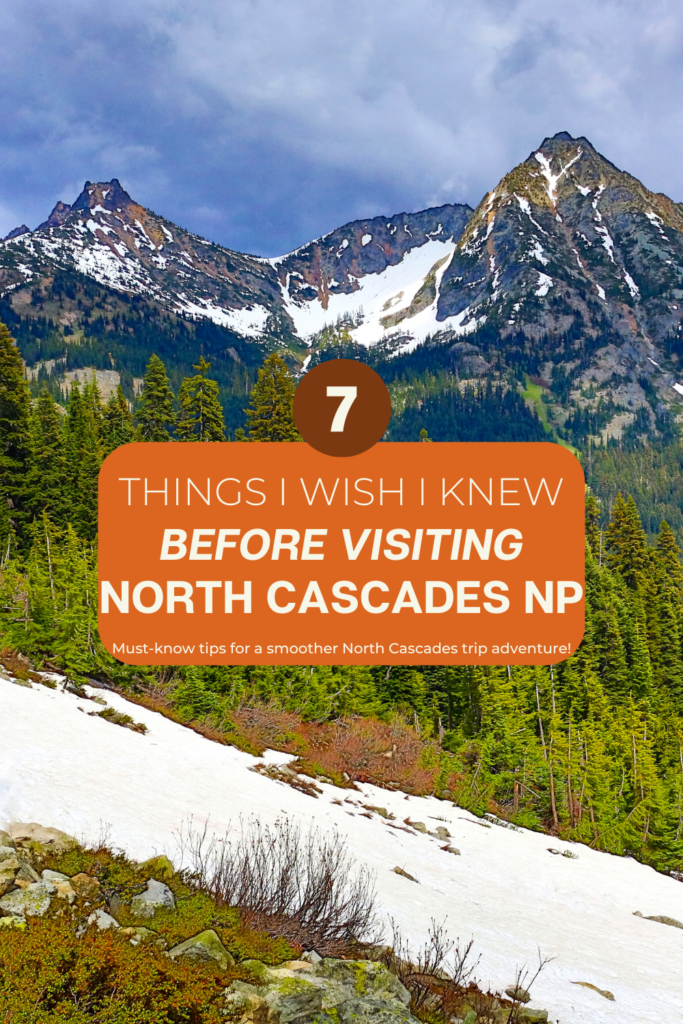
North Cascades is a true wilderness experience, with rugged, glacier-carved landscapes, alpine lakes, and towering peaks. This park is perfect for visitors who want to get away from the crowds and dive into remote, pristine nature. It’s also the one park on this loop with zero entrance fee — no fee station, no day-use pass required inside the park boundary.
We spent time on both the Cascade Pass Trail and Blue Lake Trail here, and North Cascades is where we’ve had our best wildlife luck of the whole trip — we watched mountain goats working their way across a ridge above Cascade Pass, close enough to make the extra elevation gain feel completely worth it.
Now that we have done these parks twice – North Cascades is the one park we want to spend A LOT more time at. It is hard to pack in multiple full day hikes into just a few days. A backpacking trip here would be the dream!
Top Hikes:
- Maple Pass Loop: 7.2-mile loop with incredible views throughout
- Blue Lake Trail: 4.6 miles round-trip to a clear alpine lake surrounded by peaks
- Cascade Pass Trail: This is our pick for the single best hike in North Cascades — a 10/10. Push past Cascade Pass itself and continue toward Sahale Glacier if you have the legs for it; the views keep improving with every switchback, and so do your odds of spotting mountain goats. Even if you don’t make it all the way to the glacier, hiking past the pass is worth every extra step.
- Thunder Knob Trail: Short, beginner-friendly trail with views of Diablo Lake
Must-See Sights:
- Diablo Lake Overlook: Famous turquoise water and mountain backdrop
- Ladder Creek Falls: Short lit-up trail near the Gorge Powerhouse
- Washington Pass Overlook: Easily accessible vista point on Hwy 20
Other Activities:
- Kayaking or SUP on Diablo Lake
- Driving the North Cascades Highway (when open — see the seasonal note above)
Hidden Gems:
- Rainy Lake Trail: Short, paved trail to a beautiful alpine lake
- Ross Dam Trail: Steep trail to views of Ross Lake and a suspension bridge
Where to Stay: Marblemount, Winthrop, or Mazama
A Note on the Highway: SR-20 is the only paved road through the park, and it closes every winter due to avalanche danger — typically mid-November through late April or May. In 2026, repairs from a December 2025 flood pushed the reopening all the way to June 14, the latest in over 50 years. Always check current conditions on the WSDOT SR-20 pagebefore finalizing this leg of your trip, especially outside of peak summer.
Bonus Stops Along the Way
These stops aren’t part of the parks, but they’re worth adding to your itinerary:
- Leavenworth: A charming Bavarian-themed mountain town with great restaurants and river access
- Salt Creek Recreation Area: Near Port Angeles, with excellent tidepooling and coastal views
- Tipsoo Lake: Just outside Rainier’s Sunrise entrance, perfect at sunrise or golden hour
Sample 9-Day Itinerary
The sections below give you the full menu of hikes and sights for each park — here’s how we’d actually string them together into days. This splits evenly at 3 days per park, with the travel day into each park folded into that park’s block rather than treated as a separate day off. Stretch any of the three blocks by a day or two if you have the time.
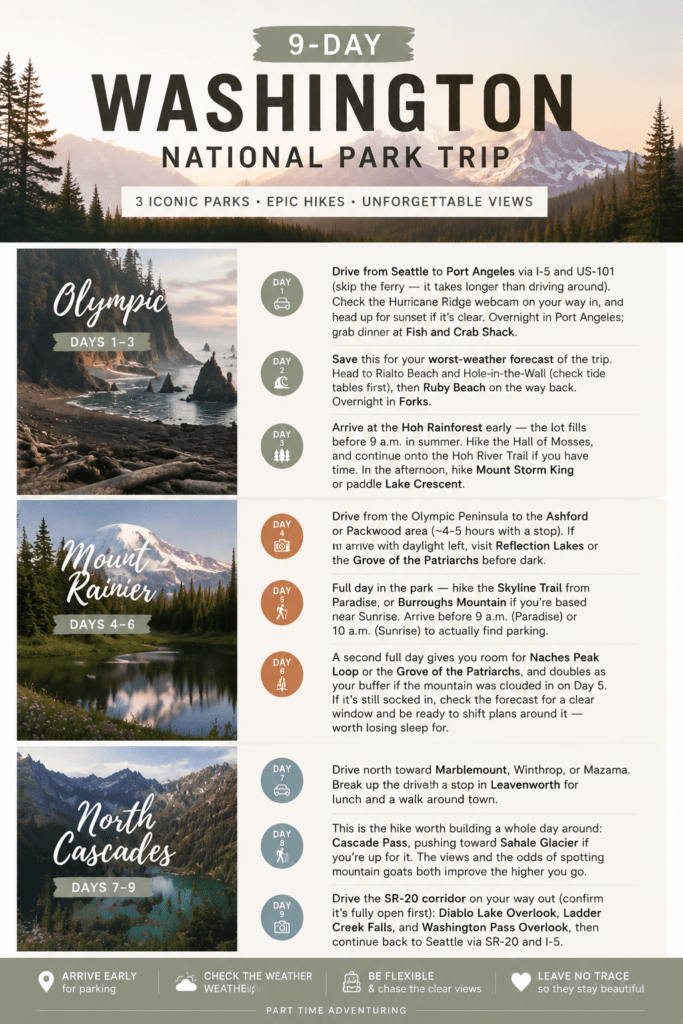
Olympic (Days 1–3)
- Day 1: Drive from Seattle to Port Angeles via I-5 and US-101 (skip the ferry — it takes longer than driving around). Check the Hurricane Ridge webcam on your way in, and head up for sunset if it’s clear. Overnight in Port Angeles; grab dinner at Fish and Crab Shack.
- Day 2: Save this for your worst-weather forecast of the trip. Head to Rialto Beach and Hole-in-the-Wall (check tide tables first), then Ruby Beach on the way back. Overnight in Forks.
- Day 3: Arrive at the Hoh Rainforest early — the lot fills before 9 a.m. in summer. Hike the Hall of Mosses, and continue onto the Hoh River Trail if you have time. In the afternoon, hike Mount Storm King or paddle Lake Crescent.
Mount Rainier (Days 4–6)
- Day 4: Drive from the Olympic Peninsula to the Ashford or Packwood area (~4–5 hours with a stop). If you arrive with daylight left, visit Reflection Lakes or the Grove of the Patriarchs before dark.
- Day 5: Full day in the park — hike the Skyline Trail from Paradise, or Burroughs Mountain if you’re based near Sunrise. Arrive before 9 a.m. (Paradise) or 10 a.m. (Sunrise) to actually find parking.
- Day 6: A second full day gives you room for Naches Peak Loop or the Grove of the Patriarchs, and doubles as your buffer if the mountain was clouded in on Day 5. If it’s still socked in, check the forecast for a clear window and be ready to shift plans around it — worth losing sleep for.
North Cascades (Days 7–9)
- Day 7: Drive north toward Marblemount, Winthrop, or Mazama. Break up the drive with a stop in Leavenworth for lunch and a walk around town.
- Day 8: This is the hike worth building a whole day around: Cascade Pass, pushing toward Sahale Glacier if you’re up for it. The views and the odds of spotting mountain goats both improve the higher you go.
- Day 9: Drive the SR-20 corridor on your way out (confirm it’s fully open first): Diablo Lake Overlook, Ladder Creek Falls, and Washington Pass Overlook, then continue back to Seattle via SR-20 and I-5.
Tips for a Smooth Road Trip
- Get an America the Beautiful Pass if you’re planning multiple park visits this year — it covers Olympic and Rainier and pays for itself fast.
- Book lodging early, especially in peak season.
- Have a backup plan for rainy days or smoky skies (common in August/September).
- Fuel up before entering parks — especially North Cascades, where gas stations are limited.
- Check road and trail conditions on official NPS and WSDOT sites before heading out — this matters more in 2026 than usual given the SR-20 repair timeline.
Related: If you’re trying to keep the whole trip affordable, our National Parks on a Budget guide has tips that apply directly to a multi-park loop like this one.
FAQ
Do I need a timed-entry reservation for Mount Rainier in 2026? No. Mount Rainier canceled its timed-entry pilot for the 2026 season. Entry to Paradise, Sunrise, and the rest of the park is first come, first served — you just need the standard entrance fee or a valid park pass.
Is North Cascades National Park free to enter? Yes. North Cascades is one of the few national parks with no entrance fee at all. You’ll only pay if you park at an adjacent U.S. Forest Service trailhead that requires a Northwest Forest Pass, though an America the Beautiful pass covers those too.
How many days do I need for this Washington national parks road trip? Plan for 7 to 10 days total to comfortably cover all three parks: 3–5 days for Olympic, 2–3 for Mount Rainier, and 2–4 for North Cascades, plus travel time between them.
When does the North Cascades Highway open each year? It typically reopens in late April or May and closes again by mid-November, but the exact dates shift year to year based on snowpack and road damage. In 2026, flood repairs delayed the opening until June 14. Check WSDOT’s mountain pass page before you plan a spring trip.
Can I do this trip without a car? Not realistically. All three parks are spread across the state with no public transit connecting them, and several key areas (Hurricane Ridge, Sunrise, the North Cascades Highway) require your own vehicle to access.
What’s the best time of year to see all three parks fully open? Mid-July through early October is the safest window — by then, snow has cleared from high-elevation roads and trails at Rainier and North Cascades, and Olympic is past its wettest stretch.
Final Thoughts on the Ultimate Washington National Parks Road Trip
This Washington National Parks road trip is your chance to experience three drastically different ecosystems — rainforest, alpine wilderness, and volcanic landscape — without ever leaving the state. The routes and hikes stay pretty consistent year to year, but the logistics don’t: fees, reservations, and road openings all shift, so give the entrance fees and road status sections above one more check a few weeks before you go.
Check out our other blog posts to help plan more national park trips!