Last Updated on August 17, 2026 by Melissa
Hot Springs National Park doesn’t look like any other park in the system. There’s no wilderness entrance, no scenic drive through backcountry — the park is woven directly into downtown Hot Springs, Arkansas, and its main feature, Bathhouse Row, sits along a city street. The land was federally protected back in 1832, making it the oldest area the National Park Service manages, 40 years before Yellowstone became the first official national park. What draws people here is the water: natural thermal springs that surface at 143°F and have been drawing visitors to soak, drink, and bathe since the 1800s.
We’ve spent a weekend in Hot Springs ourselves — soaked in the public thermal pools, tried a beer brewed with spring water, and drank more actual hot spring water than we expected to. This guide covers current 2026 fees, everything there is to do, and where to base yourself.
Some of the links on this website are affiliate links, which means we may earn a small commission if you make a purchase through them — at no additional cost to you. These commissions help support Part Time Adventuring and allow us to continue creating free travel guides, national park itineraries, hiking resources, and adventure content.
Table of Contents
- Hot Springs National Park: A Different Kind of National Park
- Best Time to Visit
- Entrance Fees & Costs (2026)
- Getting There & Getting Around
- Bathhouse Row: Soaking in the Springs
- Fordyce Bathhouse Museum
- The Fountains: Drinking the Spring Water
- Hiking in Hot Springs National Park
- Beyond the Park: Garvan Woodland Gardens
- Where to Eat & Drink
- Where to Stay
- What to Pack
- A Sample Weekend Itinerary
- FAQ
Hot Springs National Park: A Different Kind of National Park
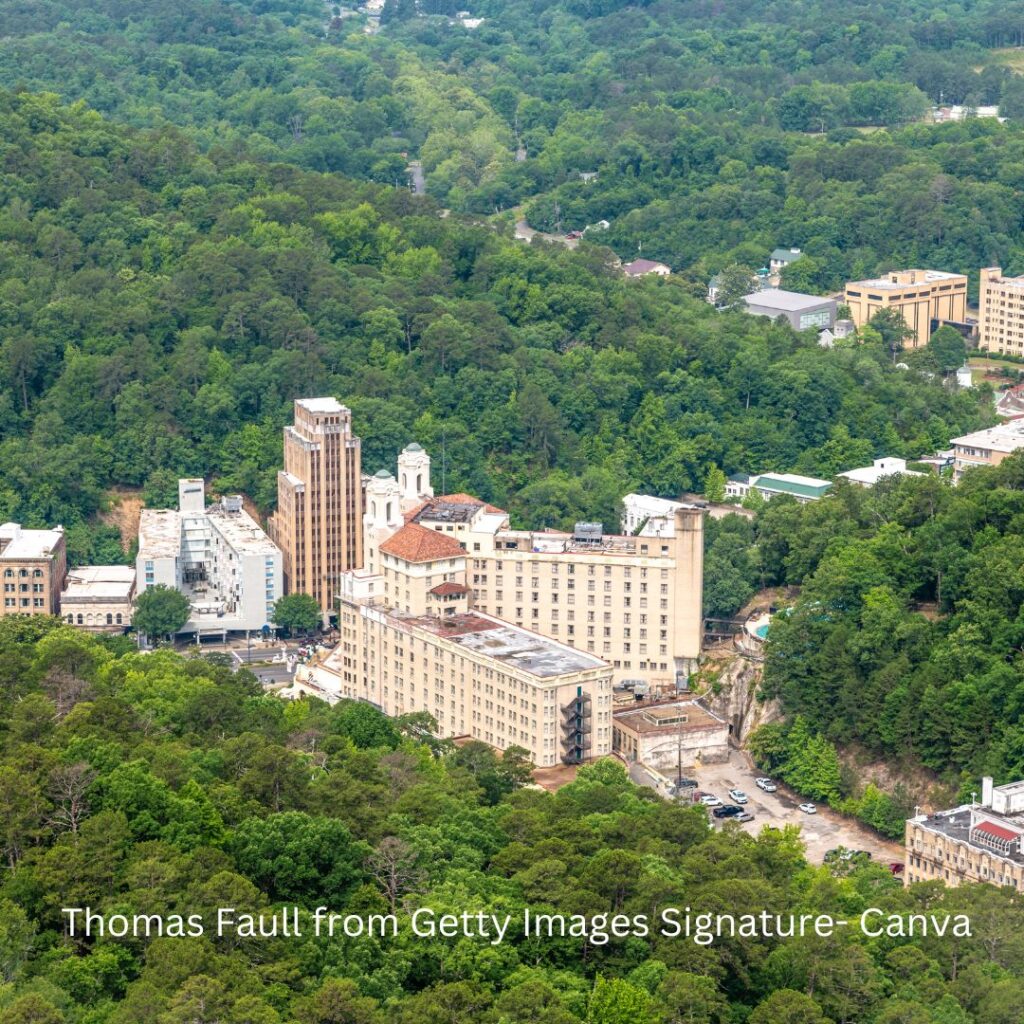
Hot Springs became an official national park in 1921, but the land itself has been federally protected since 1832 — the oldest area in the entire National Park System, set aside four decades before Yellowstone. That history shapes everything about a visit. There’s no gate to drive through and no wilderness to hike into to find the park’s main attraction; Bathhouse Row, a row of eight historic bathhouses, runs along Central Avenue in the middle of downtown Hot Springs, Arkansas.
The park does have 26 miles of hiking trails through the surrounding mountains, and they’re worth doing if you have time. But the hiking here is a bonus, not the reason to come. The reason to come is the water — natural thermal springs that surface at a scalding 143°F and get cooled before reaching any of the tubs, pools, or public fountains.
Best Time to Visit
Spring and fall bring the most comfortable weather for walking Bathhouse Row and hiking, with mild temperatures and, in fall, decent color in the surrounding Ouachita Mountains. These are the best all-around months to plan a trip.
Summer works fine too — most of what you’re doing is indoors (the bathhouses, the museum) or a short walk between downtown stops — but Arkansas summer heat and humidity make the hiking trails a lot less appealing.
Winter is the quietest season, and the bathhouses stay open year-round, which makes it a legitimate pick if avoiding crowds matters more to you than weather. One thing to plan around: Garvan Woodland Gardens shifts to holiday hours, and its Holiday Lights display (mid-November through December) draws its own separate evening crowd.
If we had to pick: late spring or early fall. You get comfortable walking weather without the summer humidity, and the bathhouses and gardens are equally good in either window.
Entrance Fees & Costs (2026)
Entrance fee: none. Hot Springs is one of roughly 20 national parks with no entrance fee at all — no gate, no pass required. You’re in the park as soon as you’re downtown.
Here’s where the actual costs show up:
- Quapaw Bathhouse public thermal pools: ~$20–25/person, all-day access
- Buckstaff Bathhouse traditional soak: ~$35–45/person walk-in; deluxe package with massage ~$100–116
- Fordyce Bathhouse Museum (NPS visitor center): free
- Hot Springs Mountain Tower: ~$9–12/person
- Garvan Woodland Gardens: ~$15–22/adult, higher during the Holiday Lights season
- Gulpha Gorge Campground: $34/night
Bathhouse and attraction pricing changes fairly often, so double-check current rates on each business’s site before you go — we’re linking directly to them throughout this guide.
Getting There & Getting Around
The closest major airport is Bill and Hillary Clinton National Airport (LIT) in Little Rock, about 55 miles away — figure an hour by car. There’s no public transit into the park from Little Rock, so you’ll want a rental car for the drive in on I-30 and US-70.
Once you’re downtown, Bathhouse Row and most of what’s covered in this guide is walkable. A car is really only necessary to reach Garvan Woodland Gardens (about 20 minutes away) or the campground.
Park hours: Bathhouse Row, the sidewalks, and Arlington Lawn are open daily from 5 a.m. to 10 p.m. The mountain summit roads (Hot Springs Mountain Drive and West Mountain Drive) are open 8 a.m. to 10 p.m., and the Fordyce Bathhouse Museum/visitor center runs 9 a.m. to 5 p.m.
Bathhouse Row: Soaking in the Springs
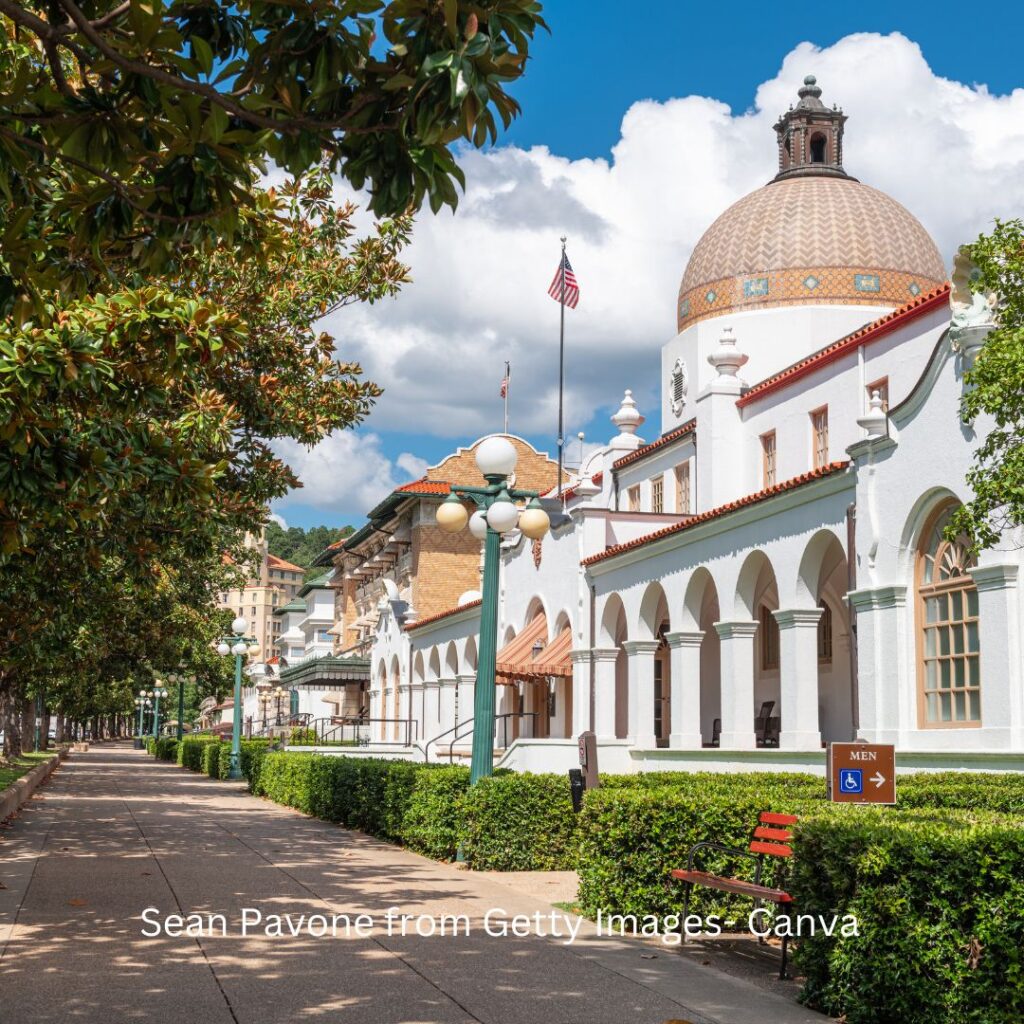
This is the one thing not to skip on a trip to Hot Springs. One thing worth knowing going in: you can’t soak in the springs themselves — the water is channeled into the historic bathhouses, and that’s the only place you’ll actually get in it. Two bathhouses on Bathhouse Row are open to the public for soaking, and they’re genuinely different experiences.
Buckstaff Bathhouse has run continuously since 1912 and is the traditional pick — a private tub, hot towels, a steam cabinet, and an optional massage upgrade. Walk-in only, and guests must be 10 or older.
Quapaw Bathhouse is a more modern spa with communal thermal pools set at different temperatures. Also walk-in for the public pools, open Wednesday–Monday, 10 a.m.–6 p.m., closed Tuesdays, last entry 5 p.m. Guests must be 14 or older.
We soaked at Quapaw, going right at opening, and had the pools mostly to ourselves before it filled up — moving between temperatures under the stained-glass dome is a genuinely fun way to spend a morning. Quapaw is the better fit if you want a shared-pool spa feel and don’t mind it being public; it’s also generally the cheaper of the two. Buckstaff is the pick for the private, old-school bathhouse experience. Both draw from the same spring water, so the difference is really about style, not quality.
Fordyce Bathhouse Museum
The park’s free visitor center is set inside the most ornate building on the row — a walk-through museum showing what a working 1915 bathhouse looked like, complete with original tubs, a gymnasium, and a music room. It’s a good stop either before or after your own soak for context on what you just experienced, and it’s the only bathhouse you can tour without paying to bathe.
The Fountains: Drinking the Spring Water
Public fountains along Bathhouse Row let you fill a bottle with the actual thermal spring water, free, and people have been doing it since the 1800s. We tried it ourselves — it comes out genuinely hot, which catches most first-timers off guard – including us, and it’s one of the small, specific details that makes this park different from anywhere else in the system. Bring a bottle that can handle hot liquid.
Chances are you’ll run into someone filling multiple 5-gallon jugs at the fountains — plenty of locals drive out specifically for this water, some from well outside Hot Springs. Most grew up drinking it and will happily tell you about the quality and the health benefits they swear by. It’s worth striking up a conversation if you get the chance; it’s one of the more unexpected ways this park connects to the community around it.
Hiking in Hot Springs National Park
The park has 26 miles of trails through the mountains ringing downtown, though hiking isn’t the main draw for most visitors. We hiked the Hot Springs Mountain Trail (~1.5 miles) and found it just alright — worth doing if you have an afternoon free, but not worth prioritizing over bathhouse time if you’re short on it. The Goat Rock Trail (also ~1.5 miles, easy) is the other popular short option, and both work as an hour or two of movement between soaks rather than a full hiking day.
The Hot Springs Mountain Tower, near the trailhead, adds a quick observation-deck stop with panoramic views over the Ouachita Mountains if you’re already up that way.
If hiking isn’t the plan, or you’re short on time, both mountain summits are drivable. Hot Springs Mountain Drive and West Mountain Drive wind up to overlooks and picnic areas without requiring a single step on a trail — a good option for anyone who wants the views without the effort, or as a quick add-on between bathhouse sessions.
Beyond the Park: Garvan Woodland Gardens
Garvan Woodland Gardens isn’t technically part of the national park — it’s about 20 minutes away on Lake Hamilton — but it’s worth the drive. It’s a 210-acre botanical garden, and the standout is Anthony Chapel, a glass-and-wood chapel built into the trees that’s gone semi-viral on Pinterest and Instagram. We walked through ourselves, and it’s easy to see why once you’re standing inside it. Budget two to three hours for all of the gardens.
Combining Hot Springs with another park? Our guide to the America the Beautiful Pass breaks down when the annual pass is worth it — not needed for Hot Springs itself since it’s free, but useful if you’re pairing this trip with a fee-charging park.
Where to Eat & Drink
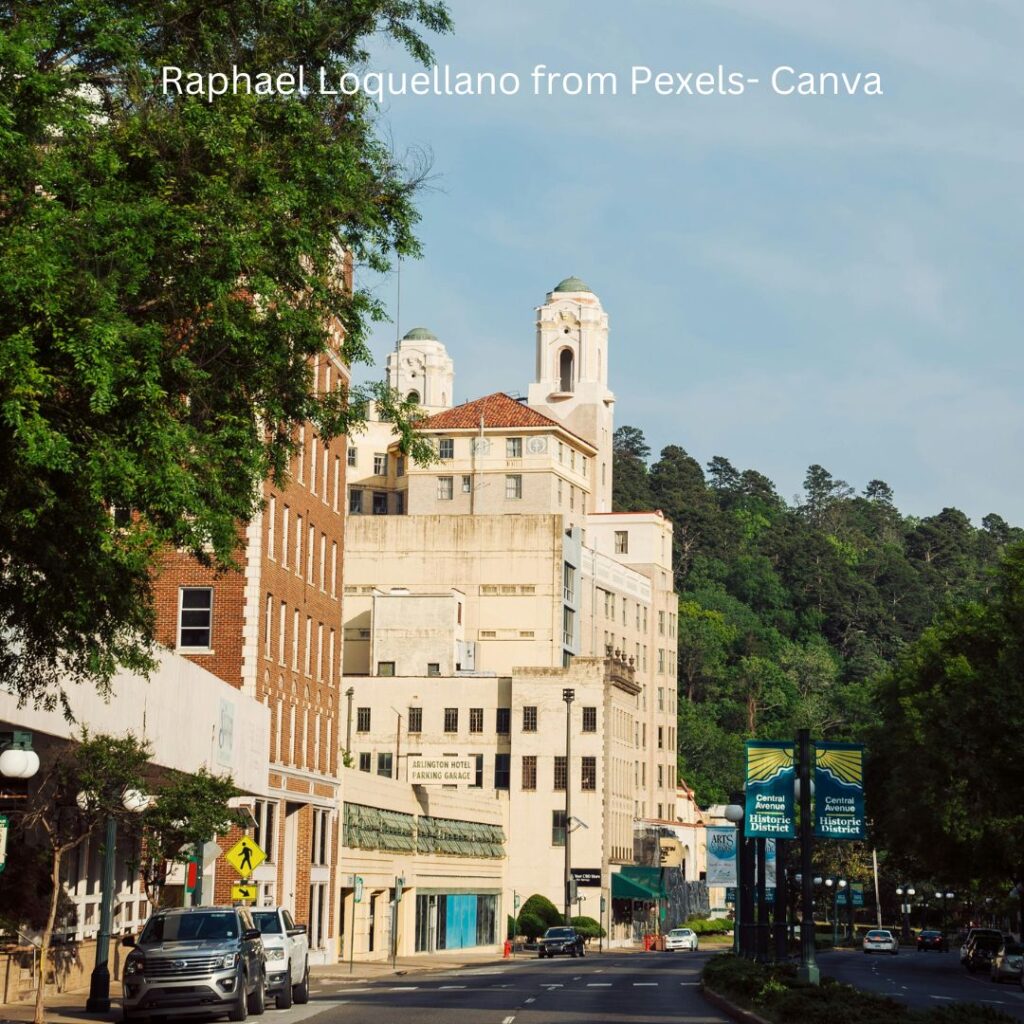
Superior Bathhouse Brewery is the only brewery inside a U.S. national park, and the only one in the world brewing with actual thermal spring water. We did a tasting flight — with close to 18 beers typically on tap, a flight is the easiest way to find one you like.
For dinner, DeLuca’s Pizza was genuinely some of the best pizza we’ve had on a national park trip — brick-oven, New York-style. One thing to plan around: DeLuca’s downtown location is only open Thursday through Sunday.
Downtown also has the Ohio Club and Luna Bella for a sit-down dinner within walking distance of Bathhouse Row, and the Gangster Museum of America, covering Hot Springs’ Prohibition-era history as a hideout for organized crime, if you want a stop that isn’t food, water, or nature.
Where to Stay
Almost everything in this guide is within walking distance of Bathhouse Row, so staying downtown is worth the small premium over a chain hotel further out.
- Arlington Resort Hotel & Spa — the classic pick, a historic property directly across from Bathhouse Row with its own thermal water spa. Check rates on Booking.com (add your Booking.com affiliate link for Hot Springs, AR here).
- Gulpha Gorge Campground — the only campground inside the park, 40 full-hookup sites a few minutes from downtown, $34/night. Reservation-only through Recreation.gov, and it books up on a rolling six-month window, so grab a site early. Full details on the NPS campground page.
What to Pack
A swimsuit is the one non-negotiable — you’ll want it for either bathhouse. Bring sandals or flip-flops for moving around the bathhouse locker rooms and pool decks, and a heat-safe water bottle for the spring water fountains. Downtown is walkable, so comfortable everyday shoes cover most of the trip; save hiking shoes only if you’re planning to do Hot Springs Mountain Trail or Goat Rock Trail.
A Sample Weekend Itinerary
Day 1: Check in, soak at Buckstaff or Quapaw, walk through Fordyce Bathhouse Museum, fill a bottle at the fountains, dinner at Superior Bathhouse Brewery or DeLuca’s Pizza (Thursday–Sunday only).
Day 2: Hike Hot Springs Mountain Trail or Goat Rock Trail in the morning, then Garvan Woodland Gardens and Anthony Chapel in the afternoon before heading out.
FAQ
Is there an entrance fee for Hot Springs National Park? No. Hot Springs is one of roughly 20 national parks with no entrance fee. There’s no gate or entrance station — the park is woven directly into downtown Hot Springs, Arkansas.
Should I do Buckstaff or Quapaw Bathhouse? Quapaw is the better fit if you want a modern spa feel and don’t mind a shared public pool — it’s also generally cheaper for a basic soak. Buckstaff is the pick for the traditional, private, old-school bathhouse experience from 1912. Both use the same spring water, so it’s a difference in style, not quality.
Can you actually drink the hot spring water? Yes — public fountains along Bathhouse Row let you fill a bottle with the thermal spring water for free. It comes out hot, which surprises most first-time visitors.
How many days do I need for Hot Springs National Park? A weekend (two full days) is enough to hit Bathhouse Row, soak, walk a trail or two, and add Garvan Woodland Gardens. You could compress it into a long day if you’re just passing through, but you’d have to skip either the bathhouse experience or the gardens.
Is Hot Springs National Park good for a trip that isn’t focused on hiking? Yes — arguably more than most national parks. The 26 miles of trails are there if you want them, but the core experience (bathhouses, the museum, the gardens, the brewery) is walkable and doesn’t require any real hiking fitness.
Is Hot Springs National Park kid-friendly? Partially. Fordyce Bathhouse Museum, Bathhouse Row, and the fountains are fine for all ages. The bathhouses themselves have age minimums — Buckstaff requires guests to be 10 or older, Quapaw requires 14 or older — so soaking isn’t an option for younger kids.
Ready to explore more national parks? Check out our guides on planning a national park trip and avoiding crowds at national parks.