
The Death Valley superbloom 2026 is shaping up to be one of the most unique spring seasons the park has experienced in years. With rare standing water at Badwater Basin forming Lake Manly and widespread wildflower activity across lower elevations, conditions are creating an unusually vibrant desert landscape.
While Death Valley is known as the hottest and driest national park in the United States, occasional wet winters can transform the desert into fields of color. When rainfall lines up with the right temperatures, dormant wildflower seeds germinate across the valley floor and surrounding foothills.
That’s exactly what’s happening during the Death Valley superbloom 2026, and visitors currently have a limited window to experience it.
Spring is also the most comfortable time of year to explore the park before extreme summer heat arrives.
What Is a Superbloom in Death Valley?
A superbloom occurs when a desert ecosystem receives enough rainfall to trigger large-scale wildflower growth across the landscape.
Death Valley contains thousands of dormant seeds buried in the soil that can remain inactive for years or even decades. When substantial winter rain arrives, those seeds germinate and begin blooming across the valley floor and lower mountain slopes.
The Death Valley superbloom 2026 is being driven by heavy rainfall events that occurred during late 2025. Moist soil combined with warming spring temperatures allowed many desert wildflowers to begin blooming earlier in the season.
Because desert blooms are extremely sensitive to temperature, wind, and rainfall patterns, no two bloom seasons look exactly the same.
Best Time to See the Death Valley Superbloom 2026
The best time to visit the Death Valley superbloom 2026 is now through early April.
Wildflowers in Death Valley bloom based on elevation. Lower elevations bloom first because they warm up earlier in the season.
Early Bloom Areas
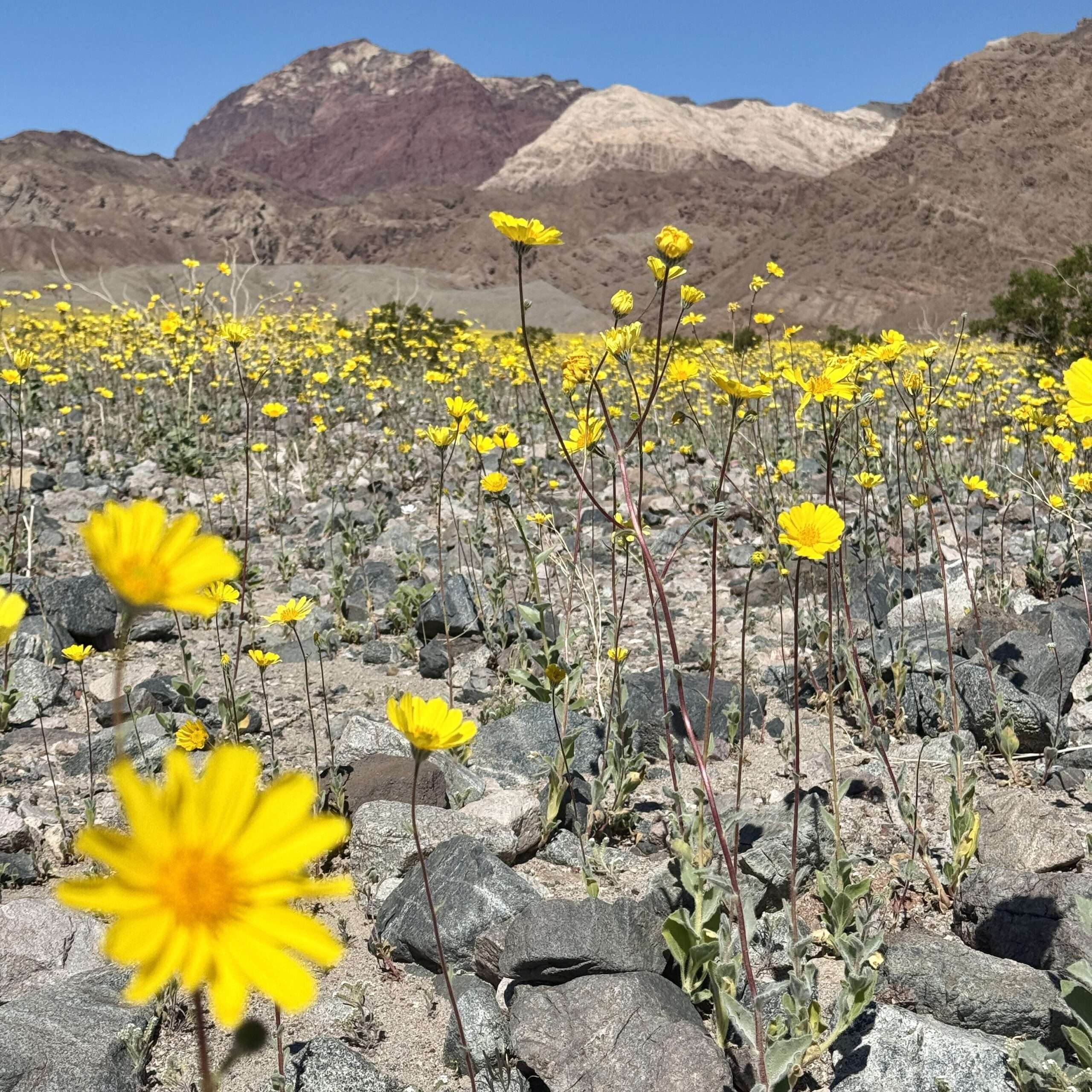
These lower areas are already seeing flowers during the Death Valley superbloom 2026, but blooms here may only last a few more weeks if temperatures rise quickly.
Mid-Elevation Bloom Areas
As spring continues, flowers will gradually move higher into the surrounding foothills.
These areas often peak slightly later:
- Jubilee Pass
- Daylight Pass
- Towne Pass
- Panamint Valley foothills
Because the Death Valley superbloom 2026 is progressing quickly at lower elevations, visitors planning trips later in spring may have better luck exploring slightly higher terrain.
Why the Death Valley Superbloom 2026 Is Especially Unique
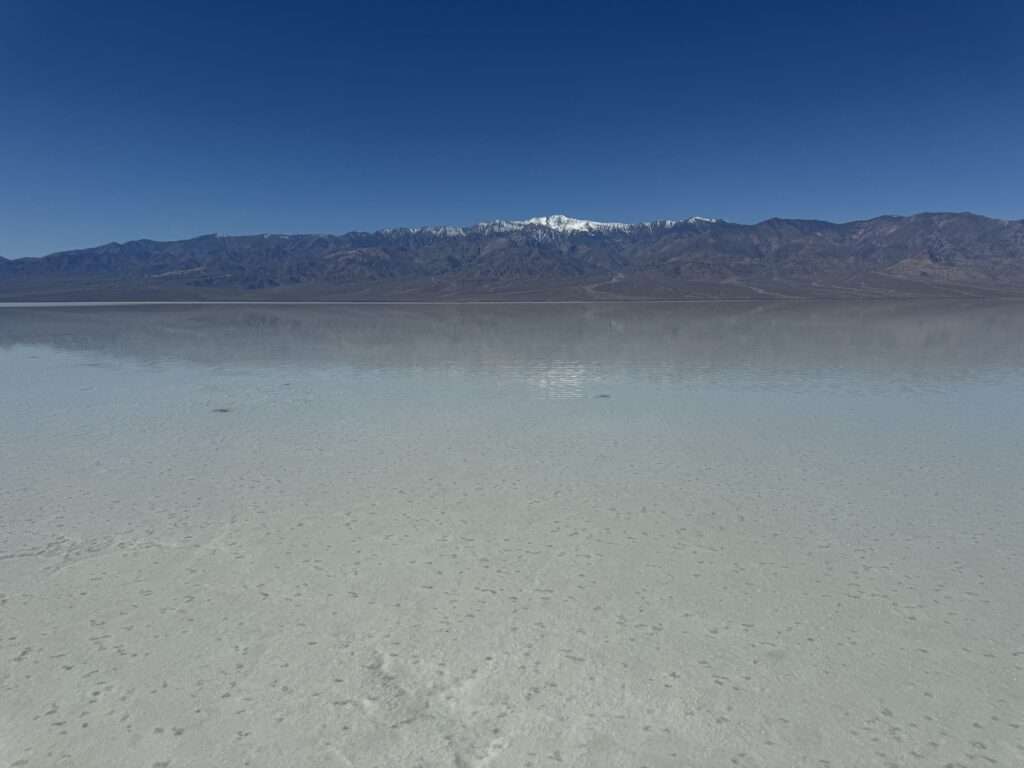
Large wildflower blooms in Death Valley are already uncommon, but the Death Valley superbloom 2026 is particularly unusual because of the presence of Lake Manly.
Lake Manly forms when heavy rain floods Badwater Basin, the lowest point in North America at 282 feet below sea level.
In most years the basin is completely dry and covered in salt flats. However, intense storm systems can occasionally send large amounts of water into the valley.
These flooding events are rare and unpredictable. Significant lakes at Badwater Basin have only appeared a handful of times in recent decades.
Seeing wildflowers across the desert landscape while water fills the basin makes the Death Valley superbloom 2026 an especially rare combination of conditions.
Wildflowers Blooming During the Death Valley Superbloom 2026
A wide variety of desert wildflowers are currently appearing throughout the park. During the Death Valley superbloom 2026, visitors may encounter several colorful species across different areas of the valley.
Desert Gold
Desert gold is one of the most recognizable flowers in Death Valley. These bright yellow blooms often form large clusters that can cover sections of the valley floor.
They typically bloom early in the season and are frequently seen around Furnace Creek during the Death Valley superbloom 2026.
Desert Five-Spot
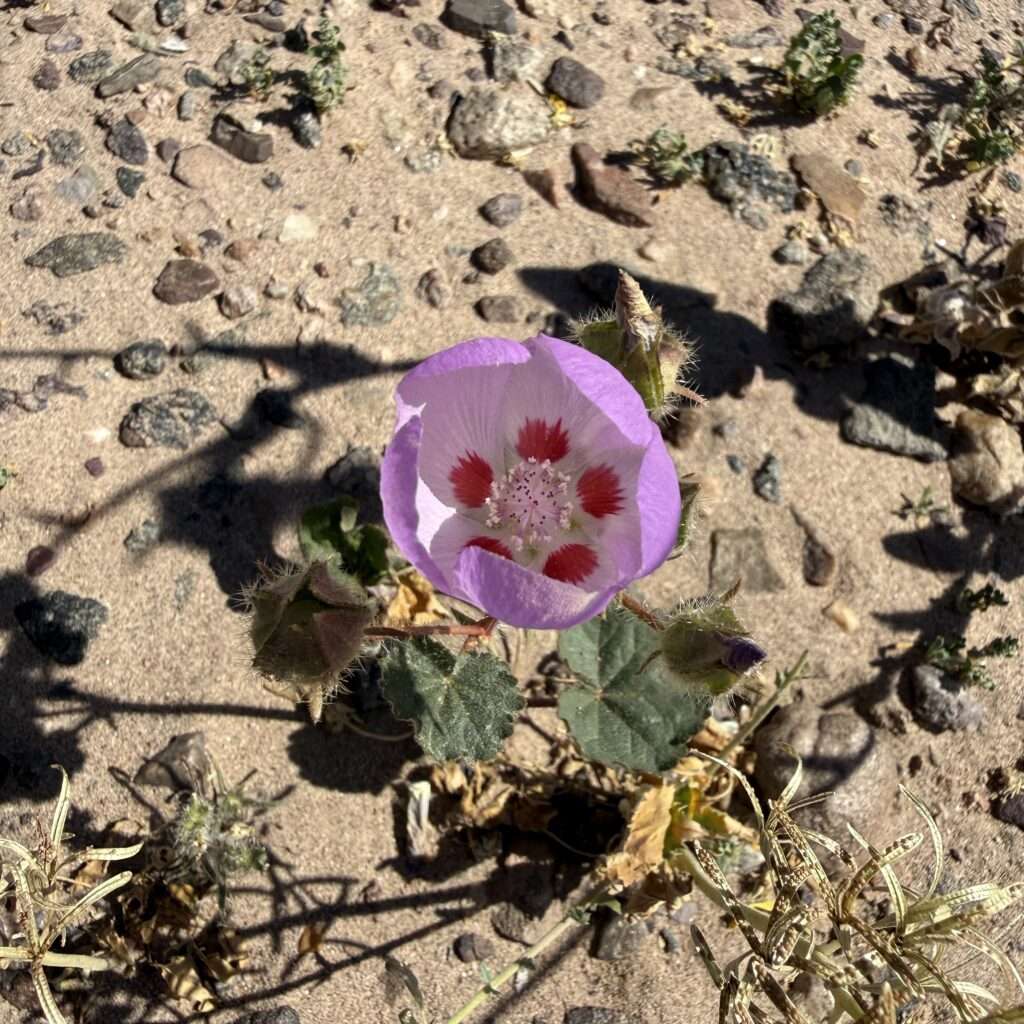
Desert five-spot is a small white flower with deep purple spots inside the petals.
Despite its delicate appearance, this plant thrives in harsh desert environments and often grows along roadsides and gravel slopes. During the Death Valley superbloom 2026, these flowers are adding small but vibrant pops of color throughout the landscape.
Bear Poppy
Bear poppy is one of the more striking wildflowers that may appear during the Death Valley superbloom 2026.
These large white flowers grow on silvery leaves and can reach several inches in diameter. They are less common than some other species but are particularly photogenic when found in bloom.
Desert Chicory
Desert chicory produces soft purple or lavender petals with bright yellow centers.
These flowers often grow in clusters and can be seen along desert roads and open flats during the Death Valley superbloom 2026. They add a distinct purple hue to the otherwise warm-toned desert scenery.
Desert Dandelion
Desert dandelions resemble traditional dandelions but are specially adapted for arid conditions.
Their bright yellow blooms appear low to the ground and frequently grow alongside other wildflower species during the Death Valley superbloom 2026.
Lilac Sunbonnet
Lilac sunbonnet is a small purple wildflower that grows close to the ground.
When large groups bloom together they create patches of violet color across sandy desert soils. During the Death Valley superbloom 2026, these flowers can be spotted in open desert areas and along trail corridors.
Mariposa Lily
Mariposa lilies are elegant flowers known for their cup-shaped petals and intricate patterns.
These blooms often appear later in the season and may continue blooming toward the end of the Death Valley superbloom 2026, especially at slightly higher elevations.
Weakstem Mariposa Lily
Weakstem mariposa lily is a smaller relative of the mariposa lily family and features delicate pale petals with subtle markings.
These flowers can appear scattered across desert slopes during the Death Valley superbloom 2026, particularly in areas that received strong winter rainfall.
Best Places to See Wildflowers in Death Valley
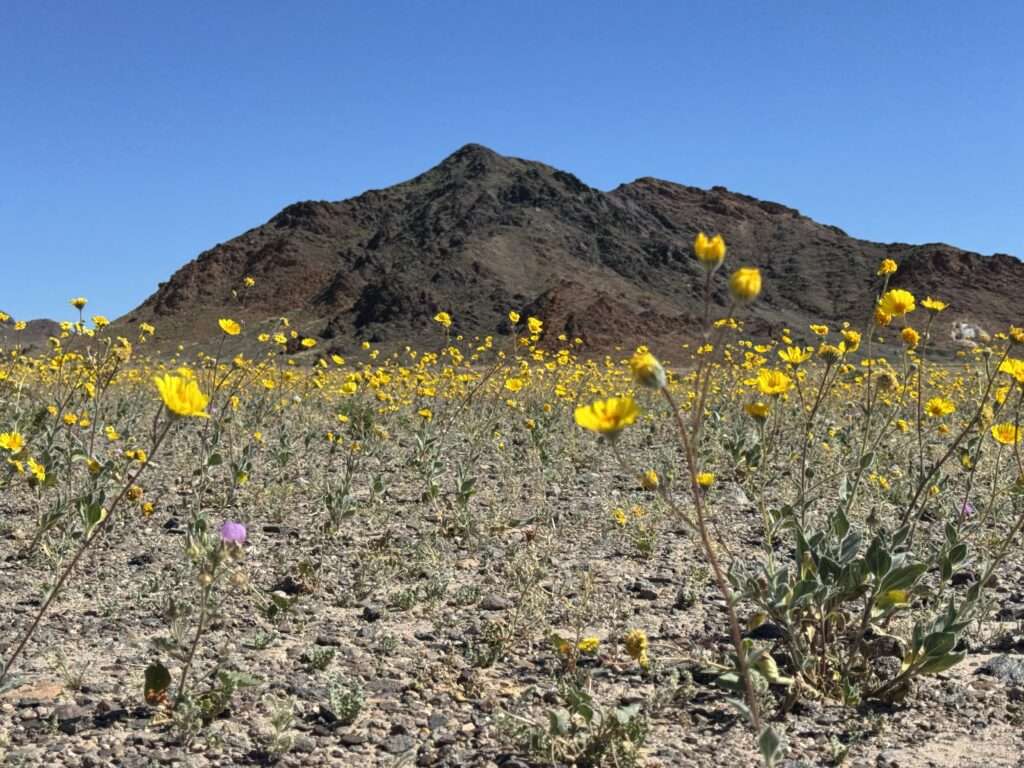
The Death Valley superbloom 2026 is currently producing flowers across multiple areas of the park.
Badwater Basin
Badwater Basin is one of the most unique locations to visit during the Death Valley superbloom 2026 because of the temporary return of Lake Manly.
Furnace Creek Area
Furnace Creek is often one of the first places to see wildflowers in spring.
Artist’s Drive
Wildflowers frequently grow along the roadside and surrounding slopes here during seasons like the Death Valley superbloom 2026.
Golden Canyon
Golden Canyon provides one of the best hiking areas for spotting blooms during the Death Valley superbloom 2026.
Tips for Visiting Death Valley During Wildflower Season
The Death Valley superbloom 2026 is drawing increased interest from visitors, so planning ahead can help ensure a smooth trip.
Visit Early in the Day
Morning conditions typically offer calmer winds and better lighting.
Bring Plenty of Water
Even during spring, Death Valley remains an extremely dry desert environment.
Stay on Designated Roads and Trails
Wildflowers are fragile and easily damaged.
Check Road Conditions
Storms that helped create the Death Valley superbloom 2026 also caused road damage in some areas.
Final Thoughts on the Death Valley Superbloom 2026
The Death Valley superbloom 2026 is creating a rare opportunity to see one of the driest landscapes in North America transformed by color.
With wildflowers spreading across the valley floor and the temporary return of Lake Manly at Badwater Basin, this season offers a unique glimpse into how dramatically the desert can change after major rainfall events.
However, desert blooms are short-lived. As temperatures rise through spring, flowers at lower elevations will fade quickly.
For travelers hoping to experience the Death Valley superbloom 2026, the best time to visit is right now while conditions remain favorable.