
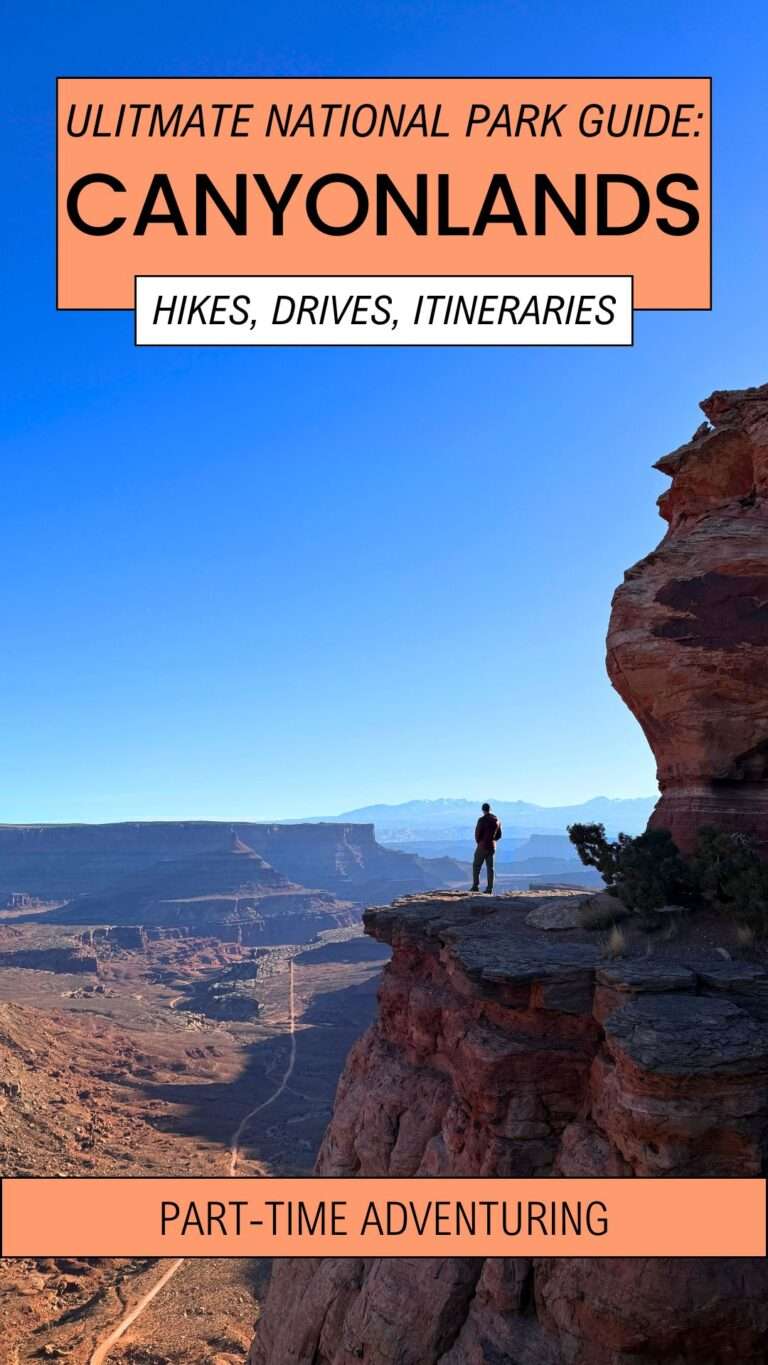
Why Canyonlands National Park Is One of Utah’s Most Incredible Parks
Located in southeastern Utah near Moab, Canyonlands National Park protects a massive landscape of deep canyons, towering mesas, sandstone spires, and winding rivers carved by the Colorado and Green Rivers. Unlike many national parks where major attractions are concentrated in one place, Canyonlands is divided into multiple districts separated by the rivers themselves, which means each area offers a completely different experience.
Because of this layout, many visitors only explore the Island in the Sky district, which is the easiest area to access from Moab. But Canyonlands is far bigger and more diverse than most people realize. From scenic overlooks thousands of feet above the canyon floor to remote wilderness areas that require serious backcountry skills, the park offers everything from quick viewpoints to multi-day adventures.
This guide covers everything you need to know to plan a trip to Canyonlands National Park, including the best viewpoints, hikes, scenic drives, and tips for exploring each district.
Where Canyonlands National Park Is Located
Canyonlands National Park sits in southeastern Utah just outside the adventure hub of Moab. The park is part of the Colorado Plateau, a region known for dramatic desert landscapes, towering sandstone formations, and deep canyon systems.
One of the reasons Canyonlands is so popular on road trips is its proximity to several other iconic destinations in Utah.
Typical driving distances include:
- Moab to Island in the Sky: about 35–40 minutes
- Moab to The Needles district: about 1.5 hours
- Arches National Park to Canyonlands: about 40 minutes
- Capitol Reef National Park: about 2.5 hours
Because of this location, Canyonlands is often combined with nearby parks on a Utah Mighty 5 road trip itinerary.
How Canyonlands National Park Is Divided
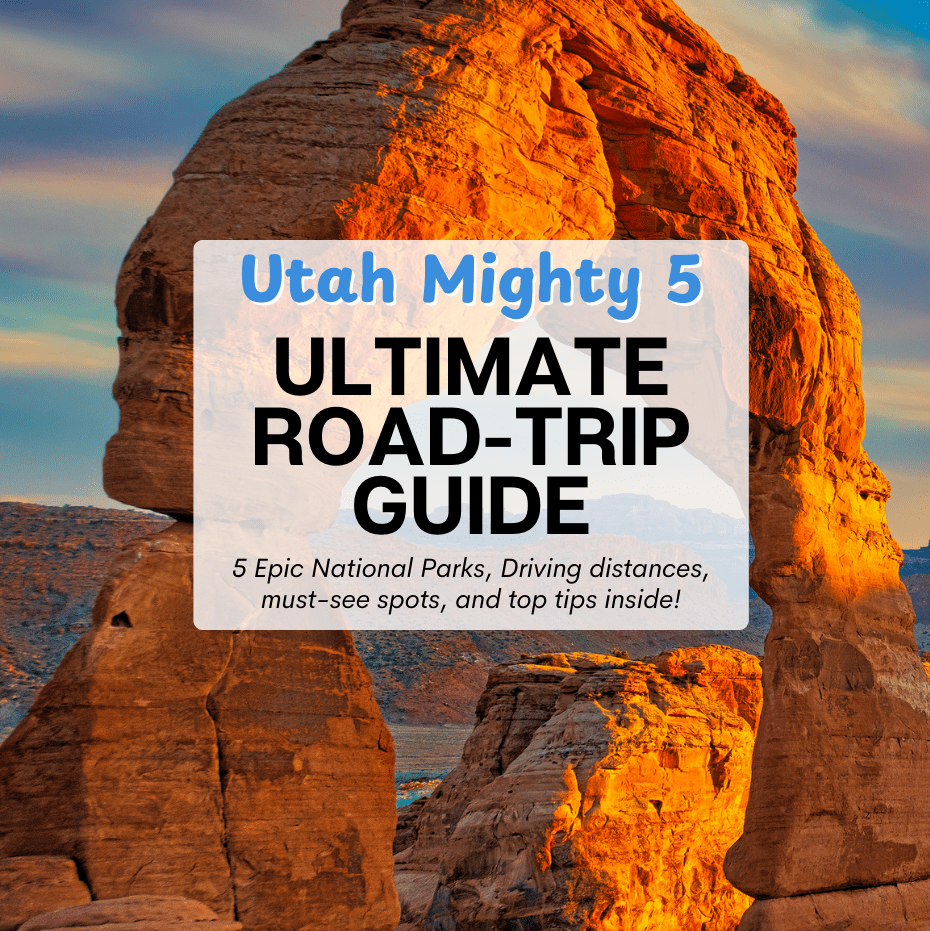
One of the most unique aspects of Canyonlands is that it is divided into multiple districts by the Colorado and Green Rivers. There are no roads connecting the districts inside the park, meaning you must drive around the rivers to reach each section.
This makes the park feel much larger and more remote than most national parks.
Island in the Sky
Island in the Sky is the most accessible and most visited district in Canyonlands. The area sits on top of a massive mesa roughly 1,000 feet above the surrounding desert, offering panoramic views into an intricate network of canyons carved by the rivers below.
Visitors can drive a paved scenic road with multiple overlooks and short hikes, making it perfect for first-time visitors or anyone with limited time.
The Needles
The Needles district is located south of Moab and is named for its colorful sandstone spires that rise dramatically from the desert floor.
This area offers more than 60 miles of interconnected hiking trails, many of which pass through slickrock benches, narrow canyons, and open desert landscapes surrounded by towering rock formations.
Compared to Island in the Sky, the Needles feels quieter and more remote, and it’s widely considered the best district for hiking in Canyonlands.
The Maze
The Maze is the most remote district in the park and one of the most isolated areas in the entire U.S. National Park system.
Reaching this district requires navigating long dirt roads with a high-clearance four-wheel-drive vehicle, and visitors must be completely self-sufficient since there are no services, water sources, or gas stations anywhere nearby.
Because of its difficulty to access, very few people visit this district each year.
The Rivers District
The Colorado and Green Rivers form another unique way to explore Canyonlands. Multi-day rafting trips travel through deep canyon corridors including the famous Cataract Canyon, which features some of the largest whitewater rapids in North America.
These river trips offer a completely different perspective of the park from the canyon floor.
Best Time to Visit Canyonlands National Park
- Spring (March–May): Spring is generally considered the best time to visit Canyonlands. Temperatures are comfortable for hiking, wildflowers occasionally bloom across the desert, and longer daylight hours allow visitors to explore more of the park.
- Fall (September–October): Fall is another excellent season to visit Canyonlands. Temperatures are cooler than summer, and crowds are usually smaller compared to the peak spring travel season.
- Summer: Summer in Canyonlands can be extremely hot, with temperatures frequently exceeding 100°F in exposed areas of the park. Hiking is still possible but should be done very early in the morning to avoid the worst heat of the day.
- Winter: Winter is the quietest time to visit Canyonlands. Snow occasionally dusts the mesas and canyon rims, creating a beautiful contrast with the red rock landscape. However, cold temperatures and icy roads can make travel more challenging.
Island in the Sky District
Island in the Sky is the most popular district in Canyonlands and the area most visitors see during their trip. A paved road runs along the top of the mesa and leads to several scenic overlooks and trailheads.
Because the views are so dramatic and many attractions are located close together, you can experience the highlights of this district even if you only have one day.
Best Viewpoints in Island in the Sky
Mesa Arch
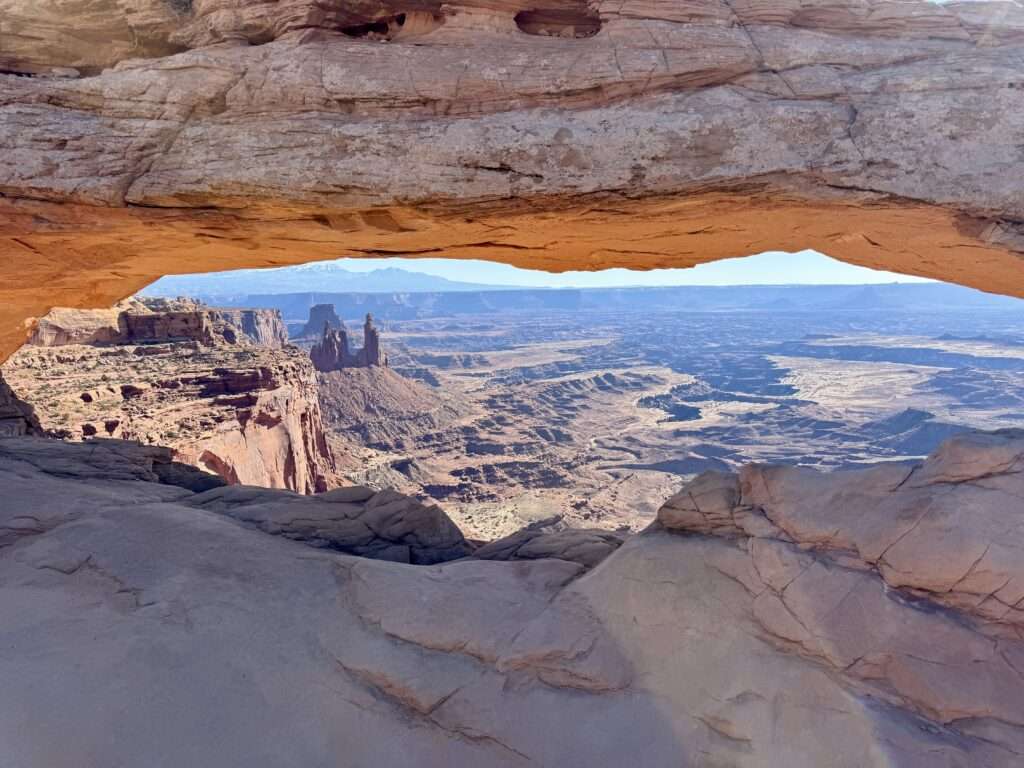
Mesa Arch is one of the most iconic viewpoints in Canyonlands and one of the best sunrise photography spots in Utah.
A short half-mile trail leads to a dramatic arch perched on the edge of a cliff overlooking a vast canyon system. At sunrise, the underside of the arch glows bright orange as the first sunlight reflects off the canyon walls below.
Despite its popularity, the hike is short and relatively easy, making it accessible to most visitors.
Grand View Point Overlook and Rim Trail
Grand View Point sits at the southern tip of Island in the Sky and offers one of the most expansive views in the entire park.
A roughly 2-mile round-trip trail follows the edge of the mesa and provides sweeping views across thousands of square miles of canyon landscape. From this vantage point, you can see features stretching across multiple districts of the park. (International Parks)
This is one of the best places in Canyonlands to fully appreciate the massive scale of the park.
Green River Overlook
Green River Overlook provides a dramatic view of the canyon carved by the Green River as it winds through the desert far below.
The overlook is located just a short walk from the parking area, making it one of the easiest viewpoints to reach in the park. Despite the minimal effort required, the layered canyon walls and winding river create one of the most memorable views in Island in the Sky.
Shafer Canyon Viewpoint
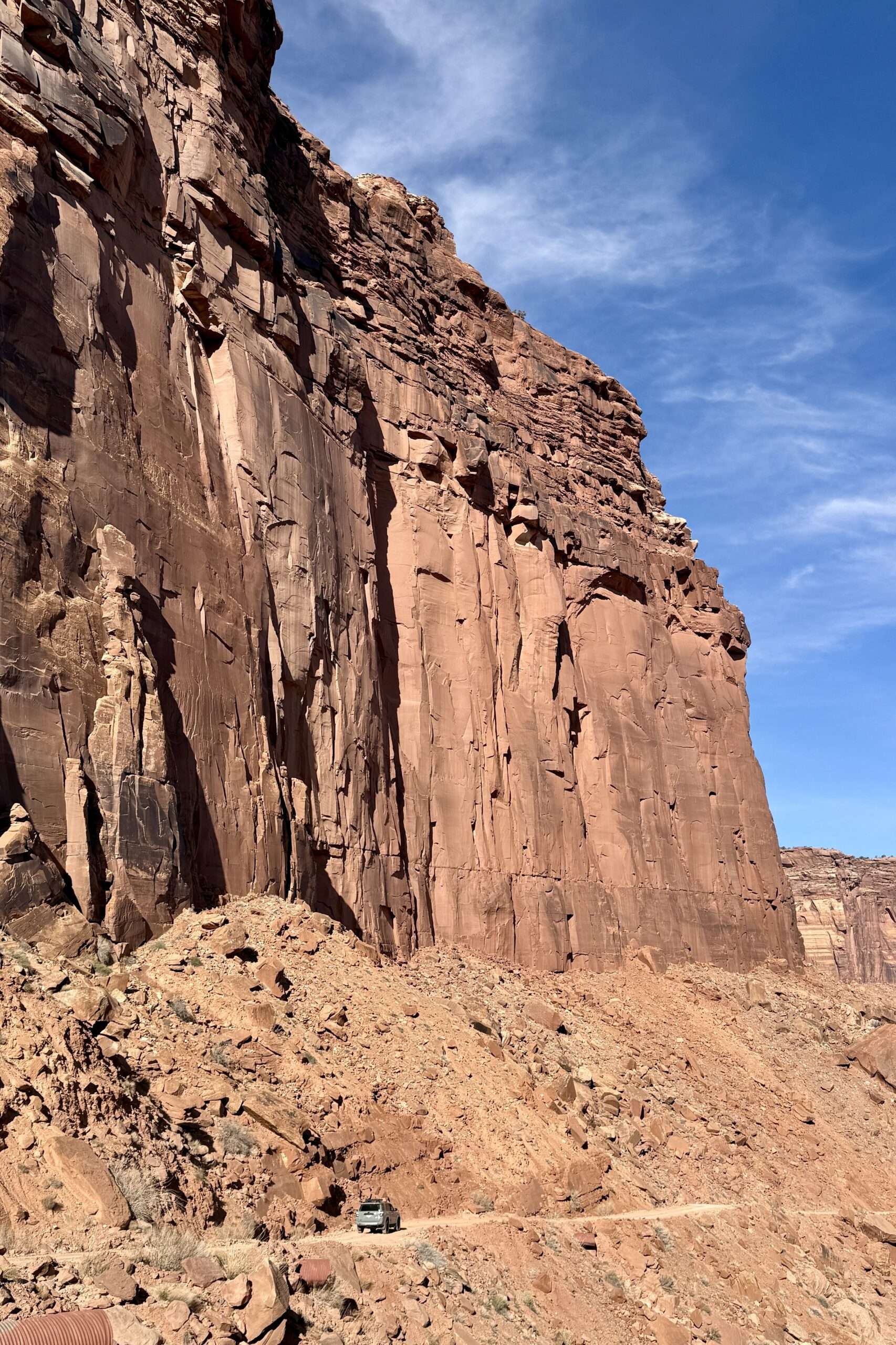
Shafer Canyon Viewpoint overlooks the famous Shafer Trail Road, a narrow dirt route that descends from the top of the mesa through a series of dramatic cliffside switchbacks.
From above, the road looks almost unreal as it zigzags down the canyon wall toward the White Rim Road below.
Even if you don’t plan to drive the road itself, the overlook provides one of the most striking views in the park.
White Rim Overlook
White Rim Overlook is one of the quieter viewpoints in Island in the Sky and offers expansive views across the canyon toward the White Rim Road far below.
Because it requires a short hike to reach the overlook, it tends to be less crowded than many of the roadside viewpoints.
Best Hikes in Island in the Sky
Navigation is especially important when hiking in remote desert parks like Canyonlands. Many trails cross slickrock, sandy washes, and open terrain where the path isn’t always obvious, so having a GPS tool can help ensure you stay on route. We personally use AllTrails both to discover new hikes and to track our route while we’re on the trail. It’s a great way to filter trails by distance, difficulty, and reviews, and the GPS tracking feature helps confirm you’re following the correct path. Just be sure to download maps offline before heading out since cell service is extremely limited throughout the park.
Grand View Point Rim Trail
Distance: ~2 miles roundtrip
Difficulty: Easy to moderate
This trail follows the edge of the mesa and offers continuous views of the canyon system below. It’s one of the easiest ways to experience the dramatic landscape of Canyonlands without committing to a long hike.
Murphy Point
Distance: about 3–4 miles roundtrip
Murphy Point is one of the best sunset hikes in Island in the Sky. The trail leads across open desert terrain before reaching a dramatic viewpoint overlooking the canyon and the White Rim Road far below.
Because it requires a short hike to reach the viewpoint, it is usually much quieter than some of the more popular sunset spots in the park.
Upheaval Dome
Distance: about 1.6 miles roundtrip, first viewpoint 0.7 miles
Upheaval Dome is one of the most unusual geological features in Canyonlands. The crater-like formation is believed to have been created either by a meteor impact or by the collapse of underground salt deposits, and scientists still debate its exact origin.
Two overlooks along the trail provide views into the center of the formation.
Syncline Loop
Distance: about 8 miles
For experienced hikers looking for a challenge, the Syncline Loop offers a strenuous hike around the outer edge of Upheaval Dome. The route includes steep descents, scrambling sections, and navigation across rugged terrain.
Because of its difficulty, it’s considered one of the most challenging hikes in the Island in the Sky district.
Shafer Trail: One of the Wildest Roads in Utah
Shafer Trail is one of the most famous backcountry roads in Canyonlands.
This rugged dirt road descends more than 1,500 feet from Island in the Sky down to the canyon floor, weaving through steep switchbacks carved into the cliffs. Once at the bottom, the route connects to White Rim Road, a 100-mile backcountry route that circles the base of the mesa.
Driving Shafer Trail requires:
- A high-clearance 4WD vehicle
- Experience with off-road driving
- Checking road conditions with the park before attempting the route
When conditions are dry and safe, the drive offers some of the most dramatic views in Canyonlands.
The Needles District
Located about 75 miles south of Moab, the Needles district offers a completely different experience compared to Island in the Sky.
Instead of high mesa viewpoints, the landscape here is defined by colorful sandstone spires, narrow canyons, and expansive slickrock benches. The district contains more than 60 miles of hiking trails, making it the best area of the park for longer hikes and backcountry exploration. (National Park Service)
Crowds are significantly smaller here, which makes it feel much more remote.
Best Hikes in The Needles
Chesler Park Loop + Joint Trail
Distance: about 10–11 miles
This is widely considered one of the best hikes in Canyonlands.
The route travels into the heart of the Needles formations where colorful sandstone spires surround a large grassy basin. Along the way, hikers pass through the Joint Trail, a narrow fracture in the rock that forms a natural slot canyon.
The variety of terrain and constantly changing views make this hike unforgettable.
Druid Arch
Distance: 10.8 miles roundtrip
The hike to Druid Arch begins near Elephant Hill and follows Elephant Canyon through sandy washes and towering canyon walls.
The final section climbs steeply to a massive stone arch that resembles a natural cathedral. The last portion of the trail includes scrambling and a ladder climb before reaching the viewpoint.
Druid Arch is one of the most impressive formations in Canyonlands.
Confluence Overlook
Distance: about 11 miles roundtrip
This hike leads to a dramatic viewpoint overlooking the point where the Green River and Colorado River meet nearly 1,000 feet below. (National Park Service)
While the trail crosses relatively open desert terrain, the final viewpoint offers one of the most dramatic perspectives in the park.
Cave Spring
Distance: 0.6 mile loop
This short trail includes two ladders that lead to a historic cowboy camp and ancient rock art panels. It’s one of the most interesting short hikes in the Needles district.
The Maze District
The Maze is the most remote and least visited district in Canyonlands National Park.
Getting there requires navigating long dirt roads that often take several hours to drive, and visitors must bring all necessary supplies including water, food, fuel, and emergency equipment.
Because trails are often unmarked and conditions are rugged, most trips into the Maze are multi-day backcountry adventures.
Horseshoe Canyon and the Great Gallery
One of the most famous features near the Maze district is the Great Gallery in Horseshoe Canyon.
This area contains one of the most significant collections of prehistoric rock art in North America, including large pictographs created thousands of years ago by ancient Indigenous cultures.
The hike to the Great Gallery is roughly 7 miles roundtrip.
Where to Stay Near Canyonlands
Most visitors base themselves in Moab, which offers the largest selection of hotels, restaurants, and outdoor gear shops.
Camping options inside the park include:
- Willow Flat Campground (Island in the Sky) – small first-come campground near the mesa rim
- Needles Campground – larger campground with more services
- Backcountry campsites along White Rim Road
How Many Days Do You Need in Canyonlands National Park?
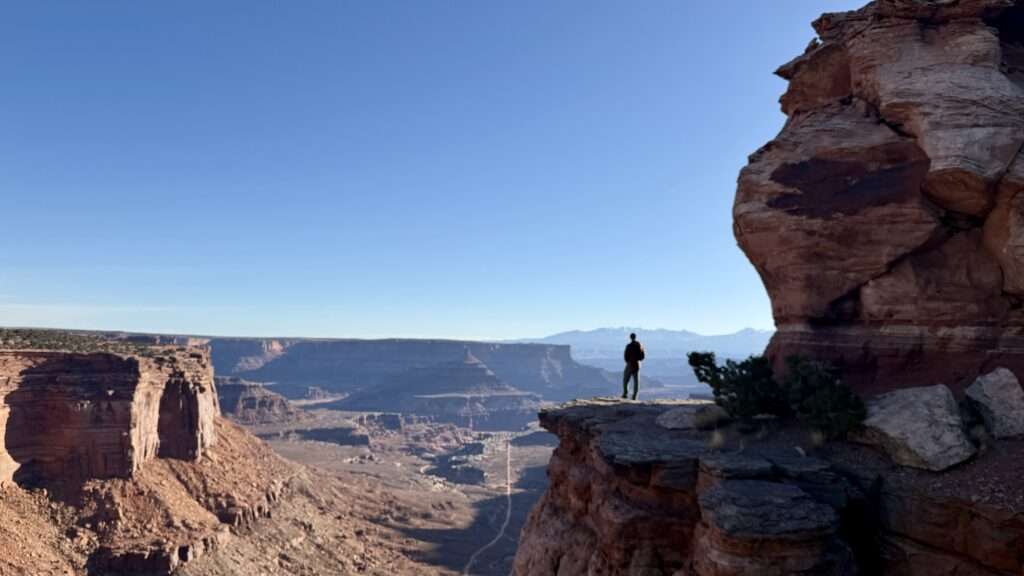
The amount of time you need in Canyonlands National Park depends largely on how much hiking or backcountry exploration you want to do. Because the park is divided into multiple districts that are not connected by road, you typically need to dedicate separate days to each area you want to explore.
Most visitors focus on the Island in the Sky district, which is the easiest area to reach from Moab and contains many of the park’s most famous viewpoints. However, if you want to experience the park’s best hiking trails or explore the backcountry, you’ll likely want to spend more time.
Here’s how much time most travelers should plan for.
1 Day in Canyonlands National Park
If you only have one day in Canyonlands, the best option is to visit the Island in the Sky district. This section of the park is located about 35–40 minutes from Moab and offers incredible views with minimal hiking.
The scenic drive through Island in the Sky is about 34 miles round trip, and without stops it takes roughly 1.5 hours. However, once you factor in overlooks, short hikes, and photo stops, most visitors spend 6–8 hours exploring the area.
With a full day here, you can comfortably see the district’s major highlights, including:
- Mesa Arch – The park’s most famous sunrise viewpoint where the arch glows orange as sunlight reflects off the canyon walls below.
- Grand View Point Overlook and Rim Trail – A short hike along the edge of the mesa that offers expansive views across an enormous canyon network.
- Green River Overlook – One of the most dramatic viewpoints in the park, overlooking the winding Green River far below.
- Shafer Canyon Viewpoint – A classic view of the steep switchbacks of Shafer Trail descending toward the canyon floor.
- Upheaval Dome – A mysterious crater-like geological formation that scientists believe may have been caused by either a meteor impact or underground salt movement.
Even with just one day, Island in the Sky offers some of the most impressive panoramic canyon views anywhere in the Southwest.
2 Days in Canyonlands National Park
Two days gives you a much more complete experience of Canyonlands by allowing you to visit two different districts.
A great way to structure a two-day trip is:
Day 1: Island in the Sky
Spend your first day exploring Island in the Sky’s scenic overlooks and shorter hikes. Because many of the viewpoints are close together, you can see a lot of the park without covering huge distances on foot.
Start with sunrise at Mesa Arch, then spend the rest of the day visiting overlooks and hiking trails along the mesa rim.
Day 2: The Needles District
The Needles district is about 1.5 hours south of Moab, and the landscape here feels completely different from Island in the Sky.
Instead of looking down into canyons from above, visitors hike among towering sandstone spires, narrow rock corridors, and wide slickrock benches.
This district is best known for its longer and more adventurous hiking trails, including:
- Chesler Park Loop and Joint Trail – One of the most spectacular hikes in the entire park, passing through narrow sandstone fractures and surrounded by colorful rock towers.
- Druid Arch Trail – A longer hike ending at a massive arch deep in the canyon that resembles a stone cathedral.
- Cave Spring Trail – A short but fascinating trail featuring ladders, historic cowboy camps, and ancient rock art.
Spending a day in each district allows you to experience both the dramatic canyon viewpoints and the immersive desert hiking that make Canyonlands so unique.
3+ Days in Canyonlands National Park
If you have three or more days, you can start exploring some of the park’s more adventurous experiences.
This is where Canyonlands really starts to shine for travelers who enjoy hiking, off-road driving, or backcountry exploration.
Additional experiences to consider include:
- White Rim Road – A legendary 100-mile off-road route that circles the base of Island in the Sky. Many travelers spend two or three days driving the road and camping at backcountry sites along the way.
- Longer hikes in the Needles district, such as the Confluence Overlook Trail, which leads to a dramatic viewpoint where the Colorado and Green Rivers meet.
- Backcountry trips in The Maze district, one of the most remote areas in the entire National Park system.
For adventurous travelers, spending multiple days exploring Canyonlands reveals landscapes and experiences far beyond the typical viewpoints.
Tips for Visiting Canyonlands National Park
Because Canyonlands is a remote desert park with limited services, preparation is important before visiting.
Bring Plenty of Water
The desert climate is extremely dry, and temperatures can rise quickly during warmer months. Park officials often recommend bringing up to one gallon of water per person per day for strenuous activities.
Services Inside the Park Are Very Limited
Unlike many national parks, Canyonlands does not have lodges, restaurants, or gas stations inside the park. Visitors should plan to bring all necessary food, water, and supplies with them.
Fill Up Gas in Moab
Moab is the closest town with full services including gas stations, restaurants, and grocery stores. It’s a good idea to fill up your gas tank before driving into the park, especially if you plan to explore remote areas.
Download Maps Before You Go
Cell service is extremely limited throughout most of Canyonlands. Downloading offline maps or bringing a physical park map can help prevent navigation issues.
Check Road Conditions
Many backcountry roads in Canyonlands become impassable after rain due to mud or flooding. Always check current conditions with the park before attempting routes like Shafer Trail or White Rim Road.
Start Hikes Early in Summer
Summer temperatures can exceed 100°F in exposed desert terrain. Starting hikes early in the morning helps avoid the hottest part of the day and makes the experience much safer.
Final Thoughts: Why Canyonlands Is One of Utah’s Most Incredible National Parks
Canyonlands National Park is one of the most dramatic landscapes in the American Southwest.
The park’s massive scale, deep canyon systems, and remote wilderness create a sense of adventure that is difficult to find in many other national parks. While nearby Arches often gets most of the attention, Canyonlands offers something many travelers are searching for — vast open landscapes and fewer crowds.
Whether you’re watching the sunrise through Mesa Arch, hiking among sandstone spires in the Needles, or driving a rugged backcountry road deep into the desert, Canyonlands delivers unforgettable experiences for every type of traveler.